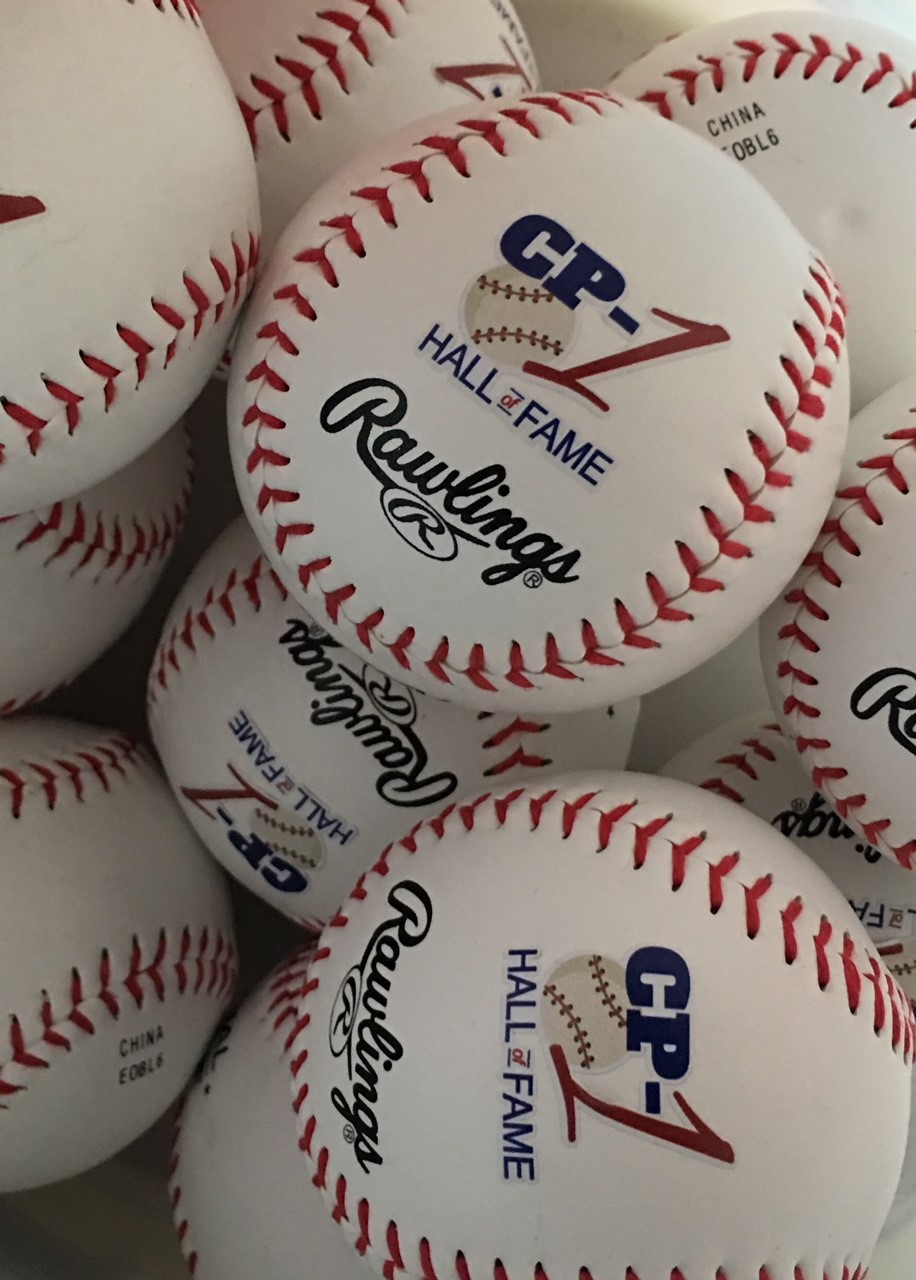
Until next summer: A salute to the 2020 CP-1 Hall of Fame class

ASHLAND, Ky. – Today was supposed to be the day the Ashland Baseball CP-1 Hall of Fame opened its doors to the 2020 class.

But COVID-19 forced us to postpone the ceremony until August 2021. Maybe it was fitting that it rained this afternoon. It would have been about the time we were wrapping up the ceremony.

We’ve never had a rainout for a CP-1 ceremony. That record remains intact.

Just because we couldn’t have the ceremony today – and we’ll do our best to make up for it next summer – doesn’t mean we can’t take a second to honor this outstanding group of baseball players and coaches.

This class had some memorable names with it, including one man who has been described as the best athlete ever in Ashland. That would be Wilson Barrow, the flame-throwing black pitcher from the 1960s. His fastball ranked with lefties Bill Lynch and Don Gullett- now that’s fast.

In high school, Barrow bridged Booker T. Washington and Paul G. Blazer High School during the days of integration in 1962.

Barrow is part of a 10-man class that includes a mix of players and coaches and a few who did a little of both. Joining him are: Scott Crank, Mike Delaney, Brian Finkbone, Bill Hammond, French Harmon, Jon Hart, Cabot Keesey, Mark Moore and Mike Tussey.

The 10 inductees will bring the total to 70 on the way to 100 selections.

Here is a closer look at the 2020 inductees:

-Wilson Barrow, who played in Ashland’s inaugural Little League season in 1955, could make the mitt pop like few others who ever played in the park. Barrow’s fastball was compared to how Bill Lynch and Don Gullett threw later in the decade.

-Scott Crank was one of Ashland’s best three-sport athletes. He starred in football (quarterback), basketball (point guard) and baseball (shortstop) for the Tomcats in the late 1970s and early 1980s. He was a clutch hitter and slick-fielding shortstop for the Tomcats and Post 76.

-Mike Delaney is going in for his longtime coaching role with Post 76, basically keeping the program alive, but he was an outstanding player in his own rights as a middle infielder in the mid-1970s for the Ashland Tomcats and Post 76.

-Bryan Finkbone was the consummate leadoff hitter and the sparkplug for the Tomcats in the mid-1970s. His speed made him a pest for opposing pitchers who had a hard time keeping him off the bases. His all-out style made him a favorite with teammates.

-Bill Hammond has coached at CP-1 for many summers and continues as a co-coach with Delaney for Post 76. He was also a standout pitcher for the Tomcats and Post 76 in the mid-1970s and became an outstanding teacher of the pitching craft.

-French Harmon was a solid contributor as a player for the Tomcats in the late 1970s, but it was his coaching skills that make him a CP-1 Hall of Famer. He led a Connie Mack League resurgence in the late 1980s and early 1990s and was instrumental in CP-1 Hall of Famer Juan Thomas’ career, along with many others.

-Jon Hart’s smooth swing made him a feared hitter for the Tomcats, Post 76, Stan Musial and Marshall University. If he didn’t beat you with his bat, he’d do it with the glove. Hart was one of the top all-around players wherever he played in his career.

-Cabot Keesey spanned the late 1970s and early 1980s as well and was a pure hitter who swung the bat as well as anyone and was also a strong defensive player, both in the infield and outfield, throughout his playing career that included the Tomcats, Post 76 and Stan Musial.

-Mark Moore played for the Tomcats and Post 76 and then another 10 years on the Stan Musial level, making him one of the all-time veterans of the park. He hit for power and played flawlessly at shortstop, making every team he played for better.

-Mike Tussey, who coached youth league baseball for 22 years and won a state championship in 1988 with the Stan Musial adult league where he won more than 200 games in 10 seasons, was also a cable television broadcaster who was in the booth for countless high school and American Legion games in the 1970s and 1980s.
Oldest Tomcat was part of ‘Greatest Generation’ and great football team

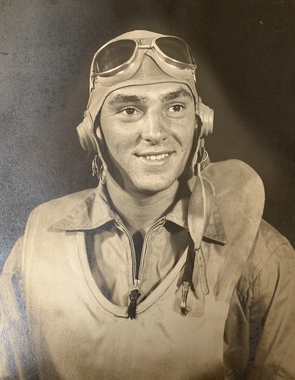
ASHLAND, Ky. – An obituary in Friday’s Ashland newspaper may have caught your attention because of the photograph with it.

It was a photo of Paul DeHart Sr. in his fighter pilot uniform from his days in World War II. Mr. DeHart was a member of the Greatest Generation and played on Ashland’s 1942 undefeated football team that claimed itself as state champion.

The Tomcats defeated previously undefeated Louisville Manuel 7-6 in a showdown of unbeatens in the ninth game of the season as J.C. Kennard zigged and zagged his way for a touchdown on a the second-half kickoff return and Jim Stith kicked the winning extra point. Ashland clobbered Russell 70-0 to finish the perfect season since there were no playoffs.

It was seven years ago that I was fortunate enough to speak on the telephone for an hour with Mr. DeHart, who was visiting with Mr. Kennard, a Tomcat and Marine teammate. He joined the Marines the year after Mr. DeHart and they had a special reunion in Columbus with their sons of the same name in May 2013.

Mr. DeHart died at the age of 95 but what a life he led. He was also the oldest living Tomcat. I call him Mr. DeHart out of complete respect for what he did in serving our country. He was in the service for 33 months, including the last battle at Okinawa. Before he was a military hero, he was a Tomcat hero, playing halfback on a “scrawny, scrappy team” that went undefeated.

He played his junior season at Ashland, when the Tomcats went 10-0 in 1942. The following spring, on May 8, 1943, Mr. DeHart joined the Marines after turning 18. Another classmate and teammate, Vernon Dessinger, did the same thing. John McGill, a former sports editor at the Ashland Daily Independent, wrote about the departure of these two great players and put it under a banner headline in the sports section. Both would have been eligible to play in 1943, so the country’s gain would be the Tomcats’ loss.

Tomcat coach Charles Ramey, who also left for the Marines following the 1942 season and had a highly decorated military career, had hoped DeHart and Dessinger could have their deployments delayed and play that fall at Ashland High School.

But the war was already calling their names, as it did so many of that day. Mr. DeHart was stationed at Pearl Harbor for a time after the Japanese attack. Before he went overseas and while in basic training in California, he was involved in two accidents on back-to-back weekends. They were both traumatic, he said, but neither life-threatening. Eventually he saw action in the Pacific Theater as a turret gunner on a Grumman TBF Avenger and served his country with pride. By doing that, he also did his hometown of Ashland proud.

He is listed as a graduate of Ashland Senior High School and graduated from Ashland Junior College in 1948 before embarking on a 38-year career at Ashland Oil, Inc.. He and wife Bettie retired to Port Charlotte, Florida, where he lived for 27 years. He was ordained as a deacon by the First Baptist Church at Punta Gorda, Florida, in 1988 and served the Lord faithfully.

Here is one last salute to Mr. DeHart and other members of “The Greatest Generation.” Thank you for your service. You are not forgotten.


TOMCAT TALES podcast launched

ASHLAND, Ky. – A new podcast that will explore the history of Ashland Tomcat sports launched Thursday afternoon.

Mark Maynard is producing and hosting the podcast which will feature some of the all-time greats in Tomcat football, basketball and baseball.

The first 10 episodes will center around Herb Conley, the legendary football coach. The first nine shows will go through Conley’s nine seasons as head coach from 1968 to 1976.

The first episode rehashes the 1968 Tomcats that finished 7-3-1 with four shutouts but may be best remembered by a 61-0 loss to Fort Thomas Highlands near the end of the season at Putnam Stadium.

Besides that game, though, an Ashland program coming off a senior-dominated state championship team in 1967 played extremely well.

Conley talks about how he became the head coach and what happened during the season, including the infamous game with Highlands.

Click HERE to watch the first episode!

1987 Tomcats survive wild shootout with 1997 Tomcats

ASHLAND, Ky. – Two of Ashland’s greatest running back duos met in Putnam Stadium on Tuesday night and, as could have been predicted, it was a shootout.

But, in the end, it came down to one defensive play.

Safety David Hicks of the 1987 Tomcats pulled down 1997 Tomcat great Jason Nichols just shy of the goal-line on a 2-point conversion attempt that would have tied the game with 3:39 remaining in the TOMCAT TALES simulated battle.

With the 1997 Tomcats trailing 38-36 after Nichols scored his fourth touchdown of the game, coach Vic Marsh called on his star running back one more time to try and tie it up.

Nichols took the handoff on a counter, saw the hole was plugged, and bounced it outside. Hicks stretched out the play and dove for Nichols’ ankles at about the 5 and held on tight. Nichols pulled him to the 1 before being going down.

The 87 Tomcats then turned to bulldozing Mike Johnson to run out the clock with some chunky running to preserve the 38-36 victory. He gained 230 yards on 22 carries with two touchdowns. Ryan Blake, his speedy running mate, had 114 yards on 19 carries.

Nichols (172 yards on 27 attempts) and Jack Smith (123 yards on 18 carries) combined for 295 yards rushing.

“These were my kind of teams,” Marsh said. “They showed why again tonight. Running backs like these four guys didn’t come along often but when you had them, it sure was fun. The fans had to love watching big Mike run again and nobody in Tomcat history probably ran any harder than Jason Nichols. Probably nobody makes that defensive play that David Hicks made either. What a huge stop.”

Nichols had eight runs of more than 10 yards and ran for first downs on 14 occasions. Johnson ran for 15 yards and had 11 runs of double figures with a long of 27.

The game itself was a shootout of high-powered running attacks. The 87 Tomcats broke ahead 14-0 on a pair of touchdown runs from Johnson but it wasn’t long until Nichols and Smith put the 97 Tomcats on the scoreboard.

The game was tied at 14 early in the second quarter and the 87 Tomcats held a 24-20 halftime lead. The second half was a little better for the defenses.

Nichols scored on a 9-yard run five minutes into the third quarter, capping a four-play 49-yard drive, to put the 97 Tomcats in front for the first time at 27-24.

On the first play after the ensuing kickoff, the 87 Tomcats fumbled, setting up a 31-yard field goal from Kevin Hammonds as the lead stretched to 30-24.

The 87 Tomcats turned back to Johnson and Blake, who carried four times apiece on a 57-yard drive that culminated with Art Boyd plunging into the end zone on a 1-yard run. Stewart’s extra point made it 31-30 and the 87 Tomcats never trailed again.

Blake snared a 20-yard touchdown pass from Hicks to make it 38-30 until Nichols scored his last touchdown.

Hicks said he was fortunate to bring down Nichols on the crucial 2-point conversion.

“If you watched the game, Jason hardly ever went down without two or three of us hitting him,” he said. “I reached for his ankles and wouldn’t let go. My fingers were getting stomped on but I finally was able to trip him up. That was probably the best tackle of my life.”

Marsh, who was the head coach of both teams, called plays for teams from the press box.

“Well, I gotta tell ya, that was fun,” he said. “I don’t think our defensive coaches would agree with that statement though.”

There was plenty of defense played. Joe Avila racked up 13 tackles and Stewart 11 for the 1987 Tomcats. Eric Broomall (16), Scott Wilson (14) and Dustin Stakely (10) led the 1997 Tomcats.

Real life

Ashland’s 1987 team finished 8-5 behind the rushing of Johnson (1,480 yards) and Blake (1,398 yards). They combined for 24 TDs.

Ashland’s 1997 team finished 6-5 with Nichols having a season to remember after Smith went down with an injury early in the season. Nichols had 2,103 yards and 24 touchdowns.

1987 ASHLAND       14         10         7        7            –              38

1997 ASHLAND         7        13       10         6            –              36

FIRST QUARTER

1987 – Mike Johnson 3 run (Barry Stewart kick)

1987 – Johnson 15 run (Stewart kick)

1997 – Jack Smith 8 run (Kevin Hammonds kick)

SECOND QUARTER

1997 – Jason Nichols 19 run (Hammonds kick)

1987 –Stewart 28 FG

1997 – Nichols 19 run (kick failed)

1987 – Bill Keaton 13 run (Stewart kick)

THIRD QUARTER

1997 – Nichols 9 run (Hammonds kick)

1997 – Hammonds 31 FG

1987 – Art Boyd 1 run (Stewart kick)

FOURTH QUARTER

1987 – Ryan Blake 20 pass from David Hicks (Stewart kick)

1997 – Nichols 8 run (run failed)

INDIVIDUAL STATS

1987 RUSHING: Johnson 22-230, Blake 19-114, Hicks 13-54, Salyer 4-29, Keating 90-2, Keaton 2-16.

1997 RUSHING: Nichols 27-172, Smith 18-123, Boyd 16-52, Stakely 8-27, Messer 1-8.

1987 PASSING: Hicks 5 of 7 for 56 yards.

1997 PASSING: Messer 3 of 3 for 48 yards.

1987 RECEIVING: Blake 3-43, Hyre 1-5, Hall 1-8.

1997 RECEIVING: Broughton 1-13, Wilson 1-15, Frazier 1-20.