
David Sullivan was enshrined in the Capital Area Chapter Sports Hall of Fame in Pennsylvania on June 17. It was a well-deserved and long overdue recognition for a tremendous football player who broke receiving records at the University of Virginia before going on to play two seasons in the National Football League with the Cleveland Browns in 1973 and 1974.
His determination and grit gave him the opportunity to succeed at the highest level of football. That same can-do attitude turned him into a dynamic businessman in the death care business, where he worked tirelessly and with integrity and compassion while carving out an incredible career that would be Hall of Fame worthy in that field.
Sullivan was overlooked by colleges when he was a high school senior who put up big numbers at the receiving position despite his inexperience at the position (he played only one year as a receiver in high school) and size. They forgot to measure the heart. And as people later learned in the business world, underestimate this man at your own risk.
He was 6-foot-1 and 186 pounds as a high school senior, but Virginia saw something in him that made his size a non-issue. Sullivan became a superstar for the Cavaliers, making all-conference first team in the ACC and setting receiving records along the way. Sullivan’s drive separated him from the pack. It did then, and it does now.
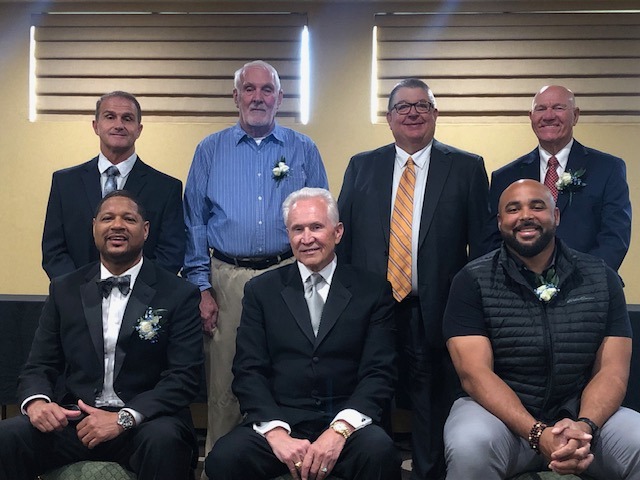
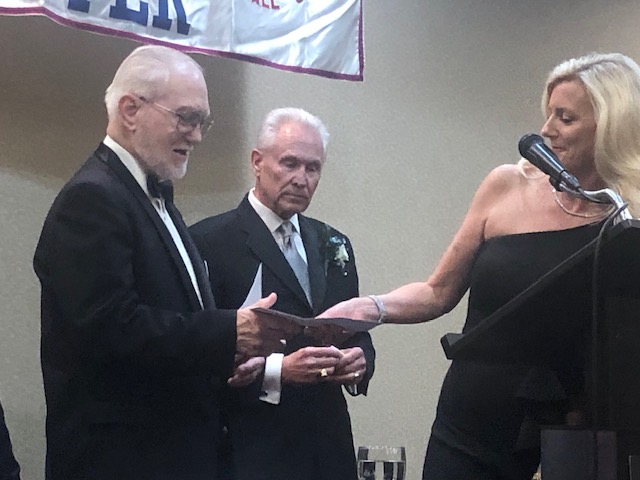
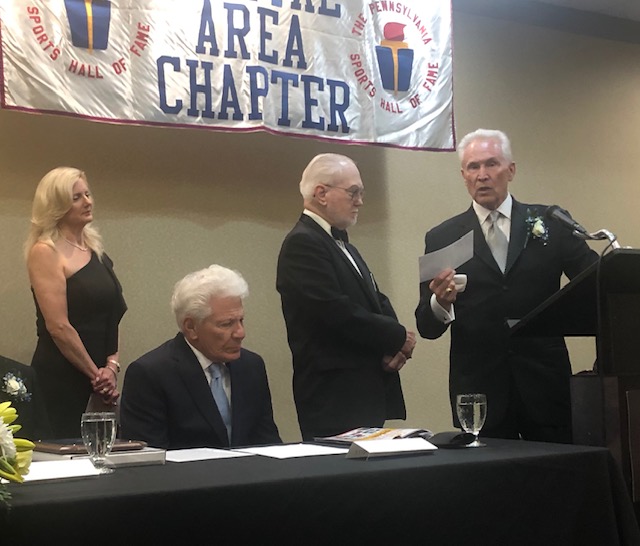
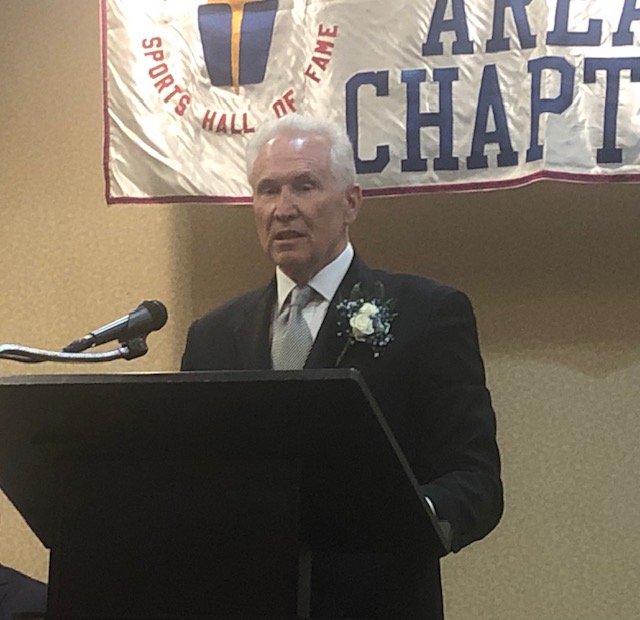
His generosity was also on display Saturday when he and wife Sara gave a sizable donation to the student scholarship fund of the Capital Area Chapter Hall of Fame. It didn’t surprise any of us who know the Sullivans that they made a donation. They both have huge hearts and understand the burden that students face in paying for college. It’s merely one more example of how this philanthropic couple helps others. Their spirit of giving is often contagious in the companies that he has spearheaded.
To be honest, Sullivan probably should have been in this Hall of Fame years ago. His credentials were impeccable. And maybe it was because nobody nominated him. But when the time did come, there was no bitterness, only thankfulness. Dave Sullivan accepted the invitation to be part of this incredible Hall of Fame with humbleness and class, and they will have no better friend than Dave Sullivan.
He succeeded in football and business through a strong faith, dedication, and a remarkable belief in himself and his teammates that they could accomplish anything.
Sullivan was one of the greatest overachieving athletes in Harrisburg, Pennsylvania, high school football history and that was only the start of his story.
In his first season as a prep receiver, Sullivan caught 35 passes for 672 yards and five touchdowns during Steelton’s 1967 season. A star was born and he caught the eye of the University of Virginia, which overlooked his frame and looked into the heart. They signed him to a college scholarship, believing they had found a diamond in the rough.
Indeed, they did. Sullivan’s intellect and determination to succeed would take him all the way to the NFL. He proved himself invaluable on the college level, becoming an AP honorable mention All-American and first-team Atlantic Coast Conference wide receiver his senior year at the University of Virginia. Some have called him one of the greatest players in school history. The first-team All-America wide receiver in Sullivan’s senior year was Heisman Trophy winner Johnny Rodgers and at that time they only named one for the first team. He may have moved further up the All-America ladder had the Cavaliers produced a winning season.
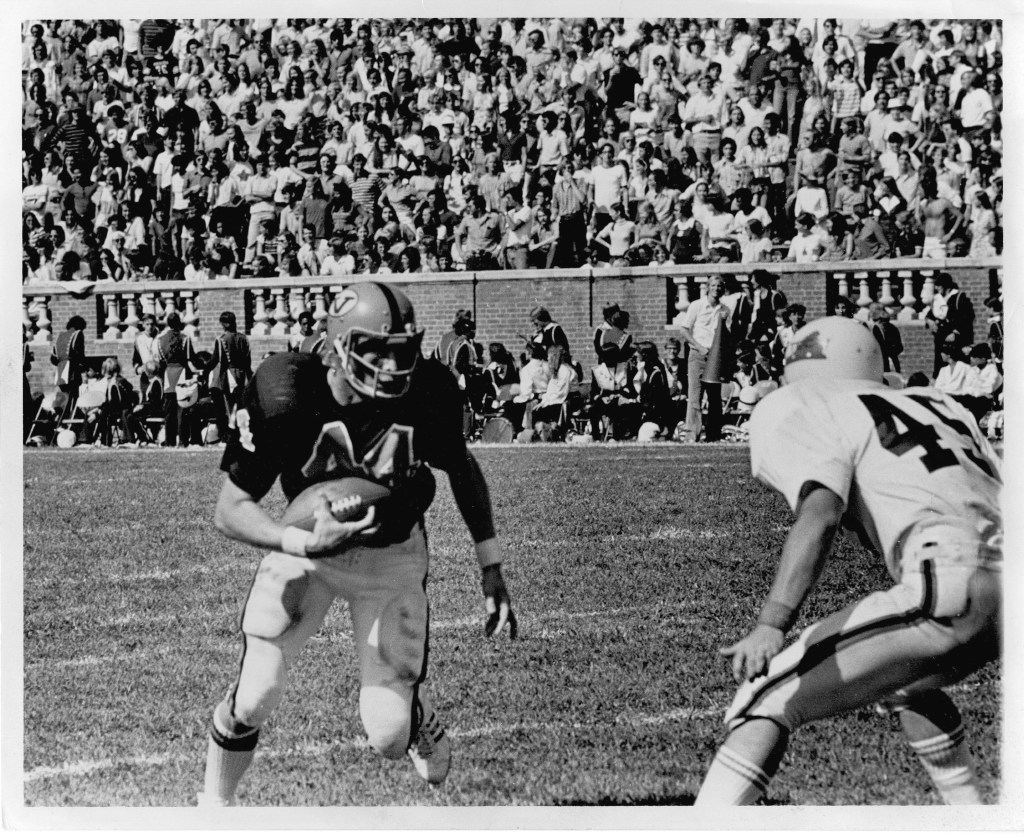
Sullivan led the ACC in catches and receiving yards, becoming the only Virginia all-league player that season. He had 51 catches for 662 yards and seven touchdowns – all top marks for Virginia receivers in a single season – despite a revolving door of quarterbacks. He was often the player that opposing defenses tried to take away but his uncanny route-running and good hands overcame many double-teams.
For his career, Sullivan amassed 120 catches for 1,568 yards and 12 touchdowns, the first two setting Virginia records. He played in the Blue-Gray and Senior All-Star Games and began to draw the attention of professional scouts.
Another characteristic for Sullivan was his leadership abilities. Even though he was one of the best receivers in college football in 1972, teammates saw the same man they knew when he entered college. He was humble and generous – traits that would serve him well later in the business world. Sullivan was a winner who he did it within the team concept. He took that same attitude into his professional life after football was no longer an option.
When Sullivan signed out of high school to Virginia, he was only 16 years old. He worked hard in the classroom too, ranking 22nd in a class of 152 in 1968.
By the time he was a senior at Virginia, he was 6-foot and 185 pounds – a far cry from the 155-pound receiver that went mostly unwanted by most major colleges. His size and speed – he ran 40 yards in 4.7 seconds – was under the radar by most pro scouts. But few in college ran routes better or had better hands than Sullivan, giving him a chance to become an NFL player.
Sullivan has been defying odds since he was a slender 115-pound sophomore trying to make the varsity at Steel-High. Two years later, college after college passed on him because he was too small. All except for Virginia, which found a playmaking receiver.
Cleveland took Sullivan late in the 1973 NFL Draft, taking him in the 15th round. That didn’t deter him from believing he could make the team and contribute or even start. He played in seven NFL games, starting three and would have had a much longer career if not for a third knee surgery that proved too much. He caught five passes for 92 yards in his two-year career with the Browns.
In his finest game with the Browns, he caught two passes for 52 yards from Brian Sipe in a 26-16 loss to the Steelers. Sullivan was being defended by Hall of Fame cornerback Mel Blount in that game at Cleveland Stadium in 1974.
His degree from Virginia was in educational psychology, but he quickly learned the business side of the death care business. He liked the competitiveness aspect along with the traits of strong character, integrity and compassion for the customer.
He joined Gibraltar Mausoleum Corp. in Indianapolis in 1977 and rose to become the executive vice president of sales and marketing. He stayed there 18 years. Sullivan has 47 years in the sales and marketing end of the business and formed Saber Management in January 1998.
He was named the 2002 Ernst & Young Heartland, Indiana, Entrepreneur of the Year and led Saber Management to even bigger successes over the next 15 years before selling to Park Lawn Corp. in 2017 for $65 million.
Sullivan is also recognized for his philanthropy. He and his wife have been a consistent and generous donor to the nonprofit Amy For Africa, a Christian organization serving Uganda, since 2014. He has also been involved in many other charities promoting needs for children and others in need through both his business contributions and personal ones.
David Sullivan is an uncommon man who has led a Hall of Fame life from the athletic fields to the business world and beyond.
 MARK MY WORDS 2