Humble Gary Wright’s impact was far-reaching to the end

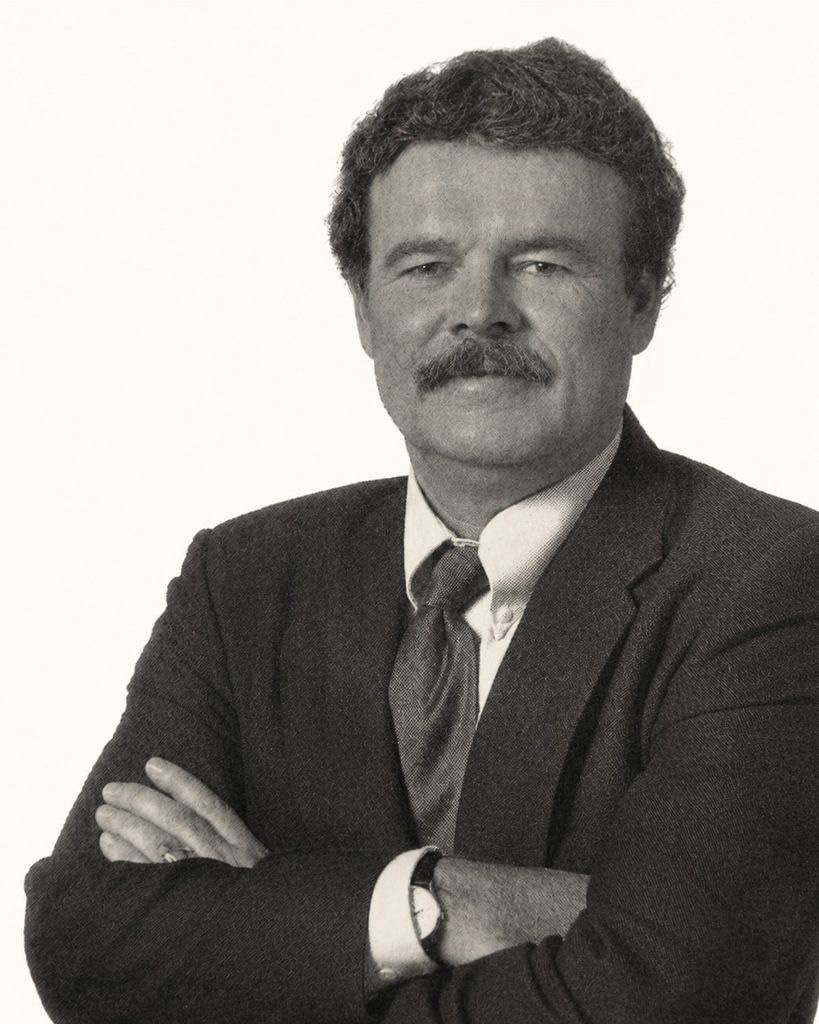
Gary Wright was an accomplished man, although his humble nature kept many people from fully realizing just how much he had achieved.

He was a tremendous businessman and entrepreneur who, after obtaining his master’s degree from Xavier University in Cincinnati, established the Southwestern College of Business in the Cincinnati area. By the time he retired to St. Pete Beach, Florida, in 2004, the college had grown to five locations.

Gary was successful in family life, too. He was married to Jean for 54 years and cared deeply for his daughters, Christine and Holly. Family was of utmost importance to him.

He was also a two-sport star at Ashland High School, starting at second base as a freshman in 1957 through the 1960 spring season. He would walk from Coles Junior High to practice during an era when it was unheard of for freshman to even make the varsity team. Most sophomores never saw a spot on a varsity roster. Gary was invited to try out because he was that good.

Gary Wright, a former Ashland Tomcat baseball and basketball star, started the CP-1 movement with a donation to renovate the big diamond at Central Park in 2008. Through his generosity, hundreds were able to relive their baseball memories.

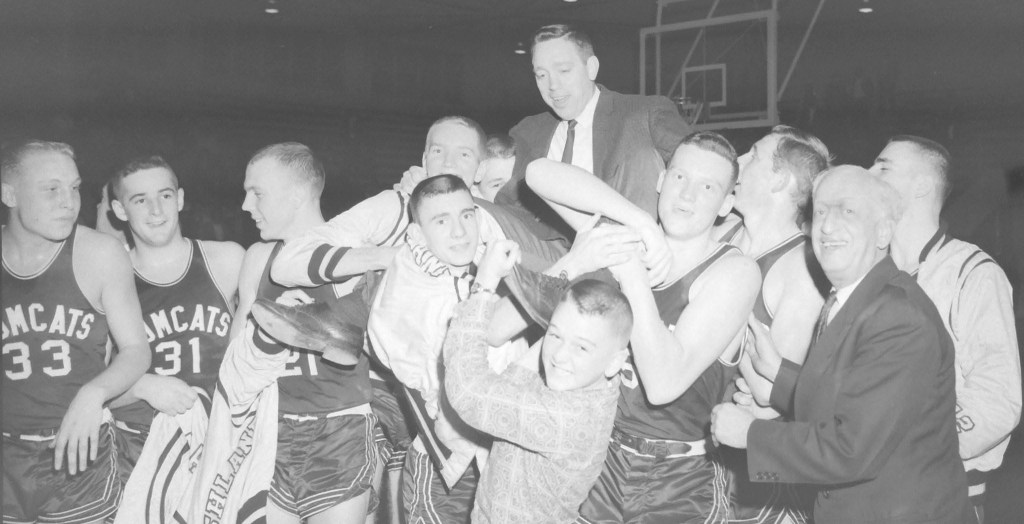
And then there was basketball. He played two years and helped coach Bob Wright’s first team at Ashland in 1960 win the 16th Region title and earn a berth in the Sweet Sixteen, where a first-round loss to Maysville ended the campaign. His teammates included Larry Conley, Harold Sargent, Gene Smith and the other stars from the 1961 state championship team.

He was instrumental in getting them to the Sweet Sixteen in 1960, scoring double figures in four of his final seven games and making the All-District team.

The two-sport athlete was good enough to earn a scholarship to Centre College, where he played both sports for four years while earning his undergraduate degree. Gary’s love of sports was paying off handsomely.

Among Gary’s many attributes was his love of family, friends and teammates. He also loved growing up in Ashland with his brothers, Robert and Tony, and with a mother (Geneva) and father (T.R.) who did what they could to help their boys succeed. All three brothers were good athletes, and that upbringing helped set Gary on a path that would serve him well.

He cherished his days in Ashland during the 1950s. Like many boys of that time, Central Park was his playground, a place where all worries went away, where skills were learned and then showcased on the big diamond they called CP-1. His father knew how important it was to get boys started young, putting together Pony League teams, taking them all over to play. He had a hand in bringing Babe Ruth baseball and American Legion baseball to town.

T.R. Wright coached his son — and many other boys — during the 1950s and helped lay the groundwork for a tremendous youth baseball program that brought state and even national acclaim to Ashland. He did it on the fields at Central Park, and the cathedral of them all was CP-1. It was called that because of the newspaper. When they ran the list of schedules for the week, they listed the fields as CP-1 and CP-2, which was later mostly used for softball and now soccer.

With Gary’s career established and retirement just beginning, he returned to Ashland in 2008 and visited that big diamond again. He ran onto the field, breathed in the air, ran his fingers through the sand, and the memories of those good days flooded his mind. He could picture scooping up the grounder – and a handful of sand – or delivering the game-winning hit with the crack of bat – not the ping we hear now. He could see how pleased his father was with all the boys as they practiced what he had preached.

Gary was overwhelmed by the emotions that came from his visit, and in true Gary Wright fashion, he did something about it. The field was badly in need of renovation, but talk wasn’t going to make that happen. He put $125,000 behind a renovation project that included a new press box named in his father’s honor.

That same day, when Gary visited his old playing grounds, he ran into his friend David Carter, who had similar experiences at CP-1. Together, they began what was coined the “CP-1 Movement,” and boy, did it ever move.

There were annual reunions for former players, coaches, umpires and fans who remembered playing on that diamond.

Carter, an entrepreneur himself, had the vision for a documentary. He put together “Ashland’s Field of Dreams,” and it aired on KET. It was so well done that it continues to air every year. Interviews with people who played at the park brought out raw emotion, and Carter, who passed away a couple of years ago, captured it brilliantly.

The reunions eventually evolved into the CP-1 Hall of Fame. That is when I became intimately involved, spearheading the event from 2015 through 2024, when 101 former players, coaches, umpires and one sportswriter were recognized each August.

It became a summer event that everybody looked forward to — a time for the reunion of teams and the reliving of days gone by. Treasured memories spilled out around that field again. There were tales of long home runs, bad hops in the sandy infield and the short right-field fence that gave us some cheap home runs.

You could almost see the kid come out in these men who may have played there decades earlier.

It never would have happened without Gary Wright’s compassion for what he had experienced there and his wildly generous donation that helped turn what had become a rundown baseball field into a showcase. When the old players came home, they could not believe their eyes.

This wasn’t the first time Gary’s generosity brought joy through baseball. His name adorns the baseball field at Centre College to this day.

But Gary was much more than a generous and kind man. He gave of himself — not just his money — to projects he cared deeply about helping. When I told him about a Christian ministry called Amy for Africa that was educating children in Uganda, he sent a large donation. Nobody asked him for it.

He simply wanted to make an impact wherever he could, and he had a soft spot for children.

You only get so many chances in life to make a difference, and it’s not always about finances. If you counted Gary Wright as a friend — and anybody who ever met him did — consider yourself fortunate.

His life had the kind of meaning everybody chases. He modeled a compassionate life in every way. How could he make his hometown — and, for that matter, the world — better? He did it with action, with thought and with confidence.

What he did by starting the CP-1 Movement brought joy to countless people. He stirred an abundance of memories and gave those who often thought they had been forgotten one more chance to be in the spotlight.

But not once did he want that spotlight on himself.

It was never about him.

It was always about others.

I loved calling him and talking about how the latest class of the CP-1 Hall of Fame reacted to the celebration — how some were overcome with emotion, choking back tears while giving their induction speeches.

“Chills!” he would say to me.

Gary died on August 20 at the age of 84 after a courageous battle with Parkinson’s. There will be no memorial service, per his wishes.

Gary Wright stayed humble to the end, but his impact will not be forgotten.

Was Terry Fish’s field goal in 1974 a state record?

Rick Sang and I took a deeper dive on the photograph of Terry Fish’s reported 47-yard field goal in 1974 for the Ashland Tomcats.

If you look at the photo, the 40-yard marker painted on the wall is clearly shown behind the Bryan Station bench. So, it was probably kicked from about the 44. Greg Estep’s hold looks to be on or about that spot. BUT the reported distance doesn’t account for the extra 10 yards from the goal line to the back of the end zone. That would make it a 54-yard field goal, which would have been a state record and still would rank sixth all-time in Kentucky high school football history.

A newspaper story about the game reveals the line of scrimmage was the 32 and then there was a 5-yard penalty on the Tomcats pushing it back to the 37. The standard from the snap to holder is seven yards, putting the hold on the 44, and the photograph shows that to be true.

My best guess is that the ball was on the 37 and they added 10 yards for the goal line-to-end zone distance to make it a 47-yard kick. But that’s now how it should have been scored. Ten yards is added from the point of the kick, not the line of scrimmage, making it a 54-yard kick.

The photo also shows the perfect technique on display. His kick made it 3-0 and Wendell Fugitt returned a fumble for a touchdown for a 9-0 lead. The extra point was blocked, which again shows you how much had to go right for Fish to boom a field goal of that distance. It took a perfect snap, perfect hold, perfect blocking and perfect kick.

And if he kicked it from the 44, which sure looks like happened, it was a 54-yard kick. He would have had the record until 2004 when Taylor Long kicked a 55-yard field goal for Christian County. That would mean Fish had the state record for 30 years before it would have been broken. But it was never recognized as such.

Schools must turn in a verified account of records for the KHSAA to consider them. Ashland apparently did not do that – or even think to do it – in 1974. I’m not even sure when the KHSAA began accepting records to be quite honest.

Tyler Pack of Johnson Central holds the state record of a 60-yard field goal. It was interesting because it came on a free kick in a game the Golden Eagles’ won easily. On a punt or kickoff, you can make a fair catch, and the coach can send out the kicker for a free kick from that spot. No rush from the opponents; just tee it up and kick. It usually happens with not much time remaining in a quarter, half or game. A missed kick can be returned, and the opponent takes possession if the kick is missed. (Note to coaches: It’s an interesting play to consider if you have a good kicker and if you have somebody who can fair catch a ball on the opponents’ side of the field).

Pack also had a 58-yard field goal and his 89-yard punt is also a state record. He had some kind of leg.

Aaron Pettrey of Raceland had field goals of 58 yards in 2003 and 52 in 2002. He went on to kick for Ohio State and had a cameo with the Cincinnati Bengals.

But Terry Fish’s long kick between the uprights on scoreboard side of the field in a 9-6 win over Bryan Station at Putnam Stadium remains the Tomcat record, but belongs in the state record book as well.

 I’m sure he would been proud to own the state record for so long.

Here is some Ashland Tomcat football history with some kick to it

There have been three sets of goalposts in the 89-year history of Putnam Stadium. The first ones were shaped like an H and that were the standard from 1937 to at least 1972 (still researching that one). There have been two sets of the t-shaped goalposts – the first coming in 1974 when the goalposts were moved from the goal line to the back of the end zone – and the second when the renovation took place following the 2013 season.

That set of goal posts are the same ones being used now and were donated by Rick and Jana Sang. They have one of the goal posts from 1974-2013 in pieces and would like to give it a good home somewhere. It needs some work done to put it back together again. Somewhere outside Putnam Stadium might be a good place for this great piece of history.

Some quick research revealed unusual statistics concerning field goals and the Putnam Stadium goalposts who, if they could talk, may remember the field goals missed more than the ones that were made. I may try and set up that interview later.

One of Ashland’s most famous field goals didn’t happen in a home game. That one belonged to John Paul Walters, AKA “The Toe,” who kicked a game-winning field goal against Ironton in a 3-0 victory at Beechwood Stadium in 1950. It was the only field goal of his career, but it was a big one. He did connect on a dozen extra points.

Walters’ game-winning kick from 15 yards out grazed the crossbar before tricking over. He used a square-toed shoe and he had to practically beg coach Charlie Eblen he could make it. The kick became so famous that it was rumored someone had offered him $500 for his cleats. Walters told me that was “misleading because they’d have sure got it.”

Paul Hill (kicker) and John Radjunas (holder) were part of the first field goal in Putnam Stadium history.

But the FIRST field goal made in Putnam Stadium didn’t come in the 1930s, 1940s or even the 1950s. It came during the state championship season of 1967 when Paul Hill connected on 24-yard field goal against Stonewall Jackson. It put the Tomcats ahead 3-0 in an eventual 13-3 loss. That was the only defeat in a 13-1 Class AA championship season.

Now, there were some extra point kicks in that 30-year span from 1937 to 1967 but that was the first field goal at Putnam Stadium. Hill was a straight-on kicker who tied the top of his cleat back to make a good kicking surface.

Here’s another inside story: The Tomcats didn’t have a kicker in coach Jake Hallum’s first season in 1966 when Hill and John Radjunas were juniors. They talked about it and decided they would sneak into Putnam Stadium and practice during the spring prior to the 1967 season. Whoever would make the first field goal would be the kicker and the other would be the holder.

But when they started to practice, Hill decided he would kick until he made one and settle the issue quicker. When he missed, he told Radjunas he was “bigger and meaner and he was going to get another turn.”

Radjunas was anything but stupid so he “allowed” Hill to have enough mulligans before he eventually made one.

That took hours and Speed Bailey, the Putnam Jr. High School janitor, spotted them on the field and chased them off. He lived in the white house that used to sit just outside the end zone. But the persistent duo kept trying to improve their skills (and increase their chances of having their name in the newspaper) so they kept sneaking into the stadium and Speed was there to shoo them off. He eventually went to Hallum and figured that would be the end of that stunt. But Hallum liked the idea and gave them keys to the stadium and a bag full of footballs.

They did a few more times but with the thrill of sneaking into the stadium gone, so was most of the fun.

Nearly 60 yards later, Hill still remembers making that 24-yard field goal against Stonewall Jackson. He had made his first one in the second game of the season against Boyd County, a 25-yard field goal in Cannonsburg.

It wasn’t the field goal that was most memorable about the Stonewall Jackson game to Hill though. It’s the nightmarish memory of Harry “Sugar Bear” Lyles, the dynamic Stonewall linebacker who was all over Putnam Stadium for 26 tackles.

“I’m an old man and I ain’t never forgot that man,” Hill said. “I’ve never seen anything like him.”

Hill didn’t have any professional kicking instruction except for a conversation with Bubby Payne, a former kicker for Ashland who played at UK years prior. Soccer-style had not arrived in America, so it was a straight-on approach. He ran a shoestring around the back of his shoe and then through his first single clean on the front of the shoe. He then pulled the string as tight as he could to force his ankle to be locked in a better kicking position. Hill did that regularly for kickoffs and many of them reached the goal line.

Hill remembers missing some field goals with line drive kicks that crashed into the crossbar and came right back at him. “I came up short,” he said. “Story of my life.”

Hill’s last field goal came against Covington Catholic the week after the Stonewall Jackson game and it was also at Putnam Stadium.

His most important kick though may have come in a 21-20 victory over McKell at Putnam Stadium. The extra point on the last touchdown provided the winning margin in one of Ashland’s toughest games of the season besides Stonewall Jackson.

Ashland was trailing 20-14 in the fourth quarter when Radjunas famously told Coach Hallum before the game-winning drive to save a timeout so Paul could have time to tie up his shoe. He did and then boomed it through the uprights for the narrow win in what Hill called “the best game we ever won.”

Don Gullett scored three touchdowns and ran for 88 yards in the game for McKell. Hill said his best play was chasing down Gullett and he told Don’s brother, Jack, about it later in life.

“Donnie’s pretty quick but I ran him down before he could score another touchdown that would have beaten us,” he told Jack.

“You couldn’t run him down!’ Jack shot back.

“I could if I had the angle and I did.”

Paul’s nephew, Clayton Hill, was a soccer star for the Tomcats and the kicker for the 1990 state champions. He didn’t have a field goal, but he did make 42 extra points. That Tomcat team went for it on most fourth downs.

The kicker with the most field goals, at least through the 2020 season, was Preston Freeman with nine over two years and seven in the 2006 season. He was another outstanding soccer player.

Jim Ward in 1965 used the dropkick to kick a dozen extra points but no field goals.

The first field goal in Ashland Tomcat history came in 1919 but I don’t have a name. The next came in 1923 by Wilfrey Wolfrey, who booted two including one that provided a 3-0 road victory over Millersburg Military Institute. He also made one at Armco Field in a 51-0 win over Paris.

Tyler Rowland not just right choice but the only choice as Ashland Tomcats’ new radio ‘Voice’

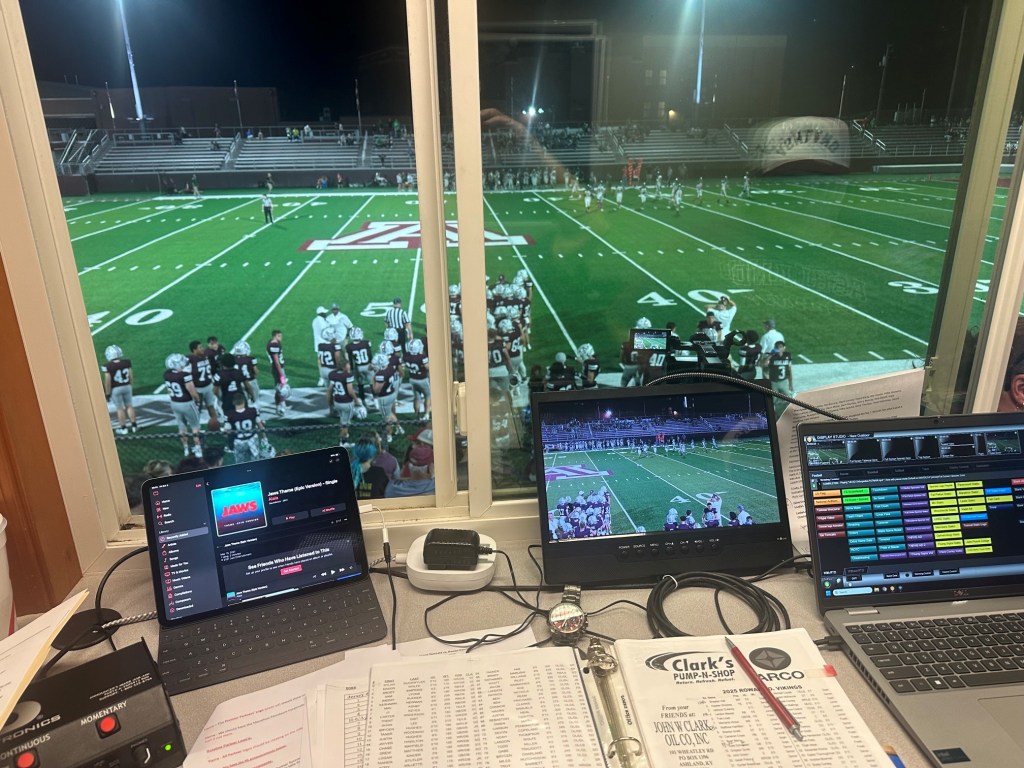
Tyler Rowland did such a superb job calling Ashland Tomcat sports on the radio late last fall and throughout the spring that Thursday’s announcement naming him the new “Voice of the Tomcats” came as no surprise.

Kindred Communications, which has carried Tomcat sports broadcasts for several years, announced in a press release that it would continue its partnership with Ashland athletics. Later in the release came the news that Rowland had been named the new “Voice of the Tomcats,” succeeding the late, great Dicky Martin.

From a news perspective, Kindred Communications may have buried the lead.

Rowland is a bona fide broadcasting talent on the rise. Last basketball season, he inherited one of the toughest assignments in the 16th Region when he stepped behind the microphone following the tragic passing of Martin, a broadcasting icon whose voice became synonymous with Ashland athletics.

Who could replace Dicky Martin? The truth is, nobody.

Tyler Rowland is now the “official” new Voice of the Ashland Tomcats.

But if there was one obvious choice, it was Rowland.

He brings the same meticulous preparation and genuine passion that made Martin respected throughout Kentucky. While no one could duplicate Martin’s unique style, Rowland has developed a voice and approach of his own that Tomcat fans quickly embraced.

When the opportunity came, Rowland didn’t just seize it—he sprinted with it.

A 2006 Ashland graduate, Rowland played football under Leon Hart. He considered Martin both a mentor and a friend. He credits Martin for teaching him the craft of broadcasting and eagerly absorbed every lesson.

Rowland began working alongside Martin in 2020, assisting with the radio broadcast of Ashland’s 35-14 victory over Elizabethtown in the Class 3A state championship game in Lexington.

“Dicky is a dear, treasured friend,” Rowland said. “Dicky guided me in so many ways and I think is right up there with Cawood Ledford and Marty Brennaman.”

Determined to sharpen his skills, Rowland sought broadcasting opportunities wherever he could find them, including calling football and basketball games for West Virginia State during the 2024-25 season. He’s also done summer league basketball games for the past few years, always looking to refine those God-given broadcasting skills.

His love for sports—and for the Tomcats—dates back to his elementary school days at Oakview. He recalls his sixth-grade year as a turning point when he played organized basketball for Steve Reliford.

“My passion for sports stems because of that year and how much I developed socially and what I learned from it,” he said. “Steve believed in me at a time I didn’t come close to believing in myself.”

Later, as a freshman, classmate Joe Smith encouraged him to try football.

“So I did,” he said. “Played for Leon Hart for his first three seasons and enjoyed that.”

As a sixth-grader, Rowland could never have imagined that one day he would occupy the play-by-play seat for Ashland Tomcat football and basketball. He probably didn’t even realize the Tomcats were on the radio.

Today, he has become the permanent voice of one of Kentucky’s proudest athletic traditions.

And the best part? He’s only going to get better.

Rowland is a consummate professional. Give him a listen. In an era when many Ashland games are available on television through My Town TV—a service many fans appreciate—it’s easy to overlook the experience of listening on the radio. But if you tune in, you’ll quickly discover that Rowland has a gift for painting vivid word pictures of the action, occasionally mixed with the kind of colorful editorial observations that made Dicky Martin so memorable.

As Ashland athletic director Jim Conway so accurately said in the release, “the future sounds great.”

Kindred’s announcement confirmed that Tomcat games will once again air on 97.9 FM this season. But the biggest news wasn’t the frequency.

It was that Tyler Rowland is now the permanent Voice of the Tomcats.

He wasn’t handed the job.

He earned it.