Tomcat great Gary Thomas will be remembered for his electrifying runs

Gary Thomas, who had one of the biggest runs in Ashland Tomcat football history in 1975 against Paducah Tilghman and gained more than 3,000 yards rushing in two memorable seasons, was one of the most best athletes in school history. He died on Sept. 29, 2023 at the age of 64.

Thomas’ 85-yard run against Paducah Tilghman in the Class AAAA State At-Large Championship game broke a 7-7 tie with less than four minutes to play led to a 13-7 victory. It was a third road playoff win for a team that was ranked No. 1 in the Class AAAA At-Large classification most of the season.

Paducah had bottled up Ashland’s vaunted running attack and had the Tomcats deep in their own territory when Thomas got loose. The JAWS defense, where Thomas was a hard-hitting cornerback, kept the game at 7 apiece in a defensive struggle. Thomas darted off-tackle, found a seam and followed some good downfield blocking to outrace Tilghman defenders to the end zone.

The Paducah crowd was stunned, and the small Tomcat faithful were cheering wildly with hundreds more listening intently on the radio broadcast in Ashland, hanging onto every word from Dick Martin Sr. and Pete Wonn. The Tomcats were the first high school team in state history to take an airplane flight to a game. The Tomcat Boosters raised enough money in three days to charter a flight across the state for the beloved team.

The 1975 JAWS team is one of the most memorable in Tomcat history and Thomas was a good reason why. He rushed for 1,754 yards and 20 touchdowns by using his quickness and speed and a tremendous offensive line to help deliver one of the best seasons in Ashland history. He was a second-team All-State running back.

JAWS defense dominated Class AAAA in 1975. Gary Thomas is between the J and A of JAWS. Thomas (25) is shown below leading blocking.

Ashland fell to Louisville St. Xavier 20-0 in the overall Class AAAA championship game played in Louisville. Thomas carried for 107 yards in the team’s only loss in a 14-1 season. He ran for more than 100 yards in 10 of 15 games, including a career-high 222 yards against Belfry in a 47-6 rout.

That was his junior year and he came back the next season and led Ashland to a 9-3 record and the Class AAAA State At-Large semifinals where a heartbreaking 14-13 loss to Tates Creek ended the season in Putnam Stadium. Thomas gained 1,393 yards with 16 touchdowns with six 100-yard rushing games. He was a first-team All-State defensive back as a senior.

Thomas put his stamp on a great career, finishing with 3,147 yards and 36 touchdowns. His career rushing record stood for more than 10 years.

Anyone who watched Thomas run with the football would not forget it. It was like watching a great artist paint a picture. He was quick, fast and powerful all at the same time. Just give him the football and watch him go. Coach Herb Conley did that a lot in 1975 and 1976 in his vaunted wishbone offense that took opponents apart, not knowing who to take away. There was no better option than Thomas, whose quickness and running IQ made him one of the state’s most dangerous weapons.

As good as Thomas was on defense, he was a hard-hitting player with natural instincts on defense and that’s what Eastern Kentucky University liked him most. He went to EKU on scholarship after his senior season.

Thomas was the father to some athletic sons in Marcus and Matt and a third son, Hayden, who came along later in life. Thomas coached in Ashland’s youth leagues for many years. He was a good man with a deep love of football who wanted to give back. He lived his life in the Ashland community.

Gary Thomas will be remembered as one of the greatest players on one of Ashland’s greatest teams in 1975 along with being one of the best players to wear maroon and white. And that touchdown run in Paducah will be regarded as one of the biggest in Tomcat history because of what was at stake.

Legend of Herb Conley on other side of Ohio River, too

Herb Conley’s legacy didn’t end with the coaching job he did in Ashland.

Twenty years after hanging up the whistle for the Tomcats after the 1976 season, not because he was tired of coaching but to make a career change to the administrative side of education for the betterment of his family, he took a job across the Ohio River.

Symmes Valley High School offered him a head coaching position and he jumped at it. His five seasons with the Vikings built a foundation and gave him that taste of coaching again that never really left him.

They remember Herb Conley, too, and they revere him like we do. His teams ran the wishbone – Conley’s favorite offense since he installed it in the last game of the 1970 season to stun Ironton and save his job. The Tomcats were among the finest in Kentucky, regardless of class, over the next six years. Nobody wanted any part of them. They were hard-nosed, like their coach. Catch a pass over the middle at your own expense.

Herb Conley, left, early in his career with the Ashland Tomcats. Assistant Bill Tom Ross is with him.

That same kind of toughness was part of that Symmes Valley foundation. Big hits were a calling card of Herb Conley teams. He wasn’t happy until somebody on the other team was looking out of the ear hole on their helmet.

Oh, Symmes Valley remembers him. They plan to recognize Herb on Friday and dedicate the refurbished “Victory Bell” in honor of the man who many say saved their football program. They are asking any of his players during his coaching tenure from 1996 to 2000 to stand with him as he is re-introduced to a thankful community.

He was more than the coach of the football team at Symmes Valley. Herb Conley saved the program from extinction. Coach Conley was their last gasp of hope. He went door-to-door through the community asking any freshmen through senior student to play football for him. Coach Conley had a way of convincing you.

“Our community realizes that he helped save our program but he did so much more,” said Adam Corn, the current school board chairman. “He created a different culture in our community that showed us how to take pride in our district.”

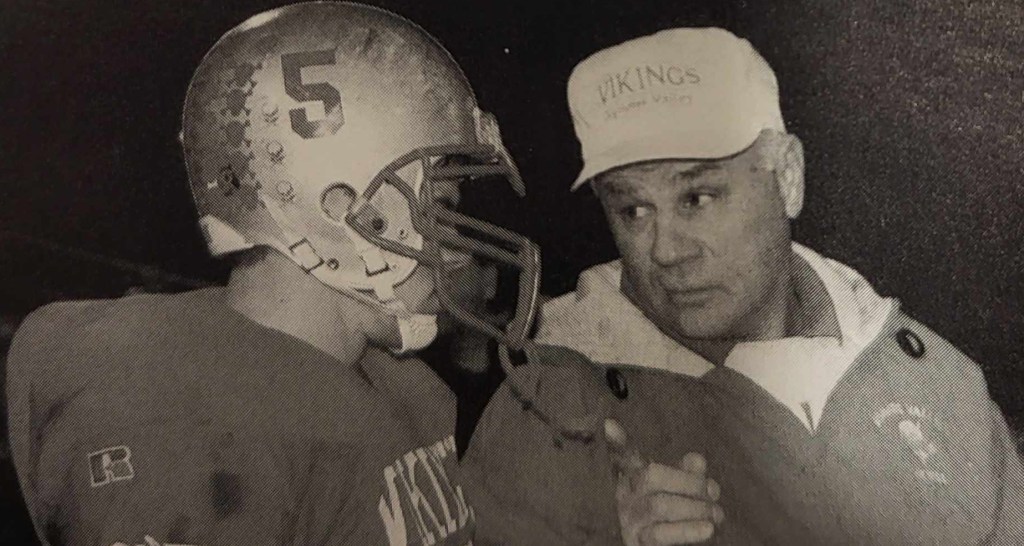
Coach Herb Conley giving some advice to a Symmes Valley player during his five years there.

It was also Coach Conley who found the bell in a storage room in the first place, said Corn, who suggested the school recognize Conley and name the bell in his honor. “When Coach Conley saw the bell, he had the idea to have an A-frame built to hold it and for the players to ring it after practices and games.”

Conley will then be given the honor of the inaugural ring, followed by current Symmes Valley players and coaches and former players.

Symmes Valley gave Conley a chance to coach one more time in Putnam Stadium although it wasn’t against the Tomcats. The Vikings played Fairview and won easily, allowing him to walk out of the stadium with another victory.

The itch to coach never left him and likely never will. Truth be told, he was born with it. The Tomcat community is proud to share Coach Conley with Symmes Valley for a night.

He’s a legend worth sharing.

CP-1 HOF alums among Morehead State players named to OVC 75th anniversary team

Two members of the CP-1 Baseball Hall of Fame were among 13 Morehead State University selections to the Ohio Valley Conference’s 75th anniversary.

Ashland natives Jody Hamilton and Drew Hall were selected and joined by two other northeastern Kentucky players in Lawrence County’s Jackson Feltner and Boyd County’s Lance Seasor.

Hamilton and Hall were members of the inaugural class of the CP-1 Baseball Hall of Fame in Ashland. The next class of the CP-1 Hall of Fame will be inducted Saturday at 1 p.m. in Central Park.

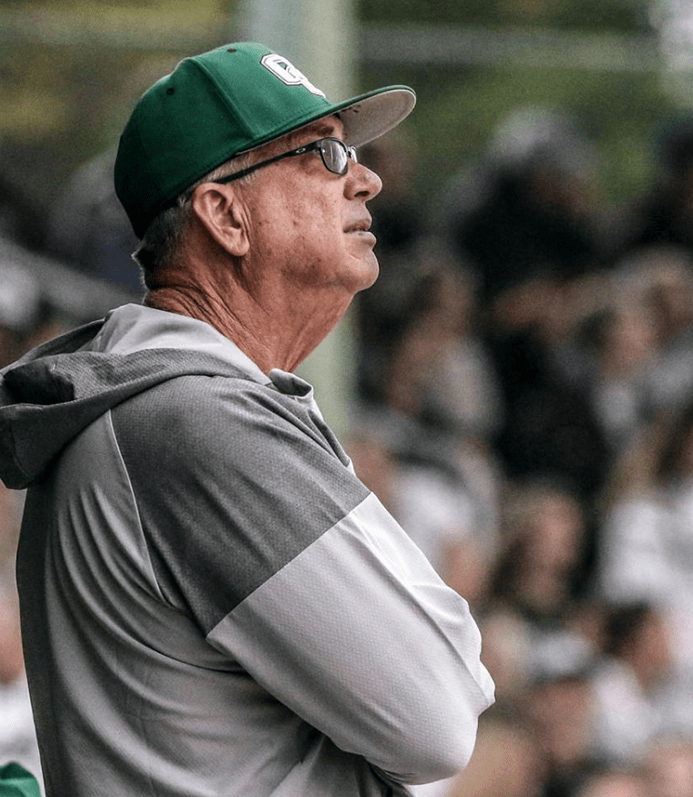
Hamilton was a slugging star for the Eagles from 1977-80, winning the OVC Triple Crown as a junior in 1979 when he blasted 19 home runs and was named OVC Player of the Year. He finished his career with 48 home runs. Hamilton went on to become one of Kentucky high school’s all-time great coaches with 986 victories and two state championships and is currently the head coach at Owensboro Catholic, where he will likely surpass 1,000 victories next season. He led Boyd County and West Jessamine to state crowns.

Hamilton also played one season of professional baseball for the Paintsville Yankees of the Appalachian League before deciding to begin a highly successful high school coaching career.

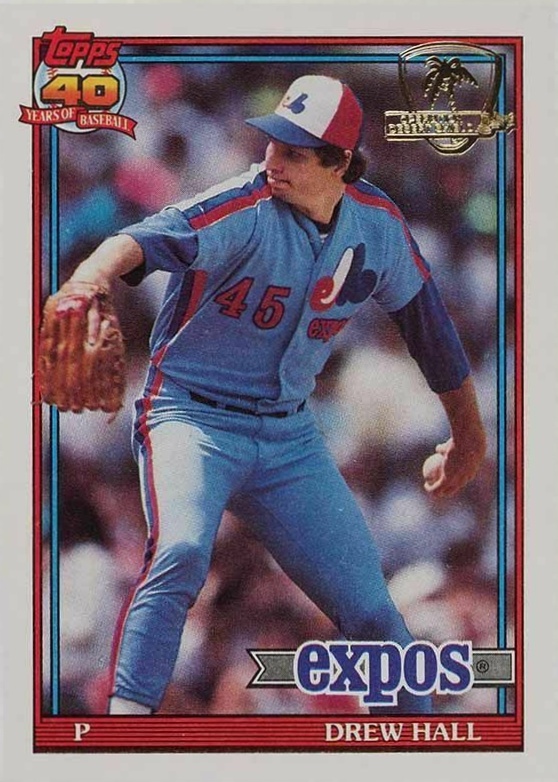
Hall, a fireballing left-hander from 1982-84, was a first-round draft choice of the Chicago Cubs. He played five seasons for three different teams (Cubs, Rangers and Expos) in the major leagues from 1986-90. He was a Sporting News All-American in 1984.

Jody Hamilton, left, and Drew Hall were named to the OVC 75th Anniversary Baseball Team.

Feltner played two seasons for the Eagles and was drafted this summer by the Arizona Diamondbacks. Seasor was a second baseman for the Eagles from 2002-2005.

The late Steve Hamilton was selected as both a player and coach on the anniversary team.

Morehead State’s 13 selections was the most of any 75th anniversary team for MSU and included two coaches – Steve Hamilton and John “Sonny” Allen. Other players honored were: Jim Brockman, Denny Doyle, Niko Hulsizer, Drew Lee, Reid Leonard, Connor Pauly, Brett Roberts and Chris Robinson.

The 2022-23 academic year marked the 75th anniversary of the Ohio Valley Conference, which began in 1948 and currently ranks as the eighth-oldest Division I Conference.
 
As part of the celebration of the storied accomplishments of the League, a committee working in conjunction with current and former schools, captured the “best-of-the-best” in each sport and celebrate the top athletes in league history with 75th Anniversary Teams across all OVC sports. A similar listing was compiled during the 40th and 50th anniversaries of the league.

Same place, new name: Clark’s Pump-N-Shop – Putnam Stadium unveiled Friday

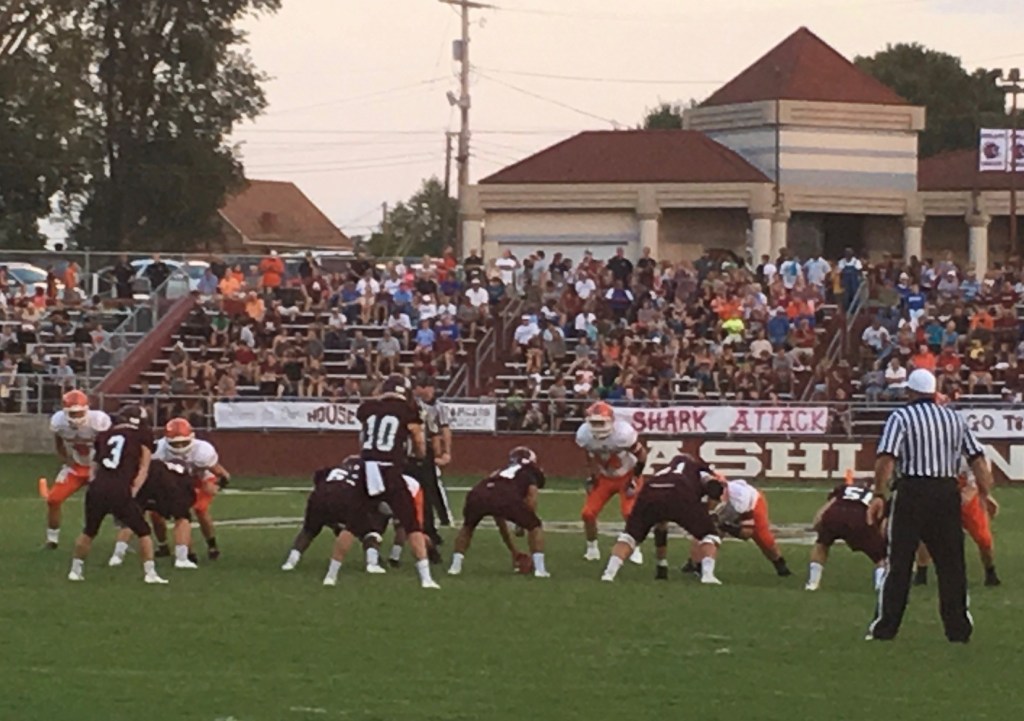
Ashland opens the 2023 high school football season Friday with a traditional matchup against Raceland in Clark’s Pump-N-Shop-Putnam Stadium.

The name on the outside is slightly different but the championship level expectations are the same.

So why the name change?

A 10-year agreement with Clark’s Pump-N-Shop will bring artificial turf to the stadium at the start of the 2024 season. Clark’s Pump-N-Shop’s donation to the Putnam Stadium Restoration Fund included naming rights for the 10-year period beginning Sept. 1, 2023, along with some other perks.

Fans will see “Clark’s Pump-N-Shop-Putnam Stadium” banners Friday in front of the stadium before more permanent markings go up in the weeks ahead at the two main gates, on the scoreboard and outside the stadium.

The artificial turf was part of the Putnam Stadium Restoration committee’s plan from the beginning. Early fundraising efforts and money from the school system allowed for the deconstruction of the original stadium. It was put back together with many of the original features and some new ones, including construction of a bigger press box and corner bleachers.

Through the efforts of Steve Conley and Joe McDavid mainly, the turf at Putnam Stadium has looked pristine. They carefully cut and manicure it throughout the summer months and few stadiums anywhere look better on opening night. Conley and McDavid do the job for the love of the Tomcats (nothing monetary) and they are not getting any younger. Lining the field is another obstacle before every game and that has been mostly done on a volunteer basis, too. It takes time, effort and expertise to do it right, and it is getting more difficult each year to get volunteers to help.

Artificial turf takes away most field maintenance and makes the stadium a multi-purpose facility. It took a huge corporate package to make it happen and Clark’s Pump-N-Shop, a strong local community partner in so many other ways, saw the need and agreed to the plan. The stadium committee has been fundraising for decades and proposed ideas for fans to be involved. But, truth be told, it simply wasn’t enough. Not even close.

So the committee had to look in a different direction for funding and began searching for corporate partners. They had to put together an attractive enough package to interest the Clarks to make a big investment.

Greg Jackson, the longtime committee chairman, worked with marketing guru Jim Host on putting together such a package. Host, an Ashland alum, has been instrumental in marketing deals of much bigger stature, including UK’s Kroger Field and the KFC Yum! Center in Louisville. While Putnam Stadium wasn’t anywhere in those neighborhoods, he agreed to do what he could to help the committee put together a competitive deal. His expertise was unbelievable. Any corporate package has perks and this one did too, including name rights, tickets, parking spaces and other branding.

The first game at the stadium – originally named Tomcat Stadium – took place late in the 1937 season so this year marks the 86th season overall. The stadium was later named Putnam Stadium in the early 1940s, mostly because of its proximity to Putnam Junior High School, then later became Verity Middle School when Coles Junior High and Putnam merged, and then changed again to Ashland Middle School in recent years. Change happens.

Even Ashland High School had a name change to Paul G. Blazer High School in 1963 when it moved to the sprawling campus site.

Clark’s Pump-N-Shop Putnam Stadium may not roll off the tongue just yet. That’s understandable. It takes time. And for some, it may always be “Putnam Stadium.” But next year when the turf goes down, the stadium will mostly be called spectacular.

Enjoy the game.