Some storytelling and thoughts from the mind of Mark Maynard.
Author: Mark Maynard
Managing editor of Kentucky Today, the digital newspaper of the Kentucky Baptist Convention, since July 2017. Worked 42 years for The Daily Independent in Ashland, Kentucky, the last 12 as managing editor and editor and the previous 30 in the sports department, including 17 years as sports editor. President of Amy For Africa, a faith-based Christian ministry serving Uganda. I'm a husband to Beth and father to Stephen and Sally, grandfather to Brooks and Addy.
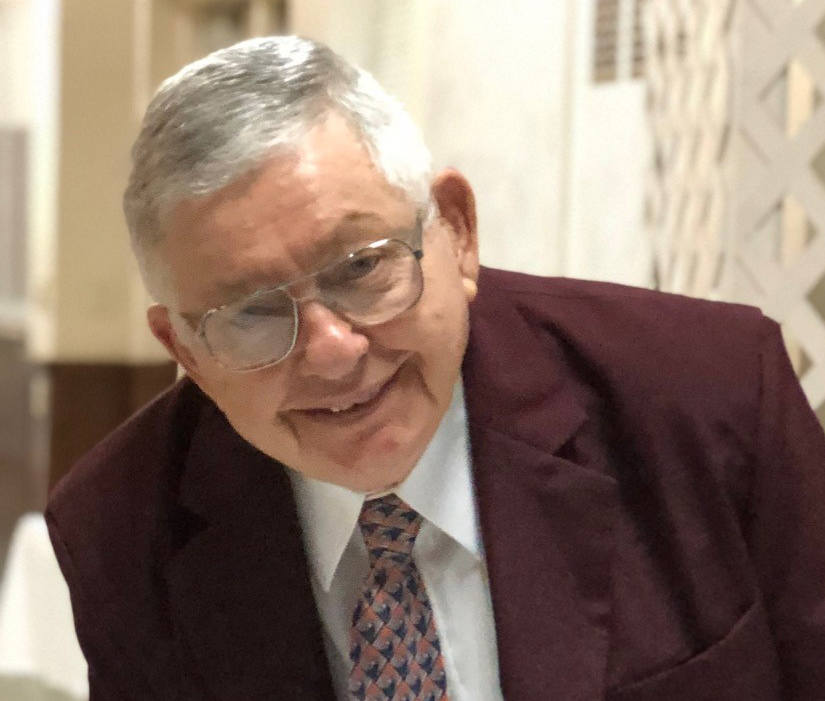
ASHLAND – The Ashland Elks will be bringing back Elks Sports Day this summer after a three-year hiatus with an honoree who has been part of the program since the beginning.
George Stout, who has been on the Sports Day committee for 44 years including 26 as the chairman, will be feted June 17 at the Ashland lodge.
Nobody has put more into the beloved Sports Day program than Stout, who has been an Elks member for 72 years.
“Once I got to reading his resume, I thought, ‘My goodness! How has he not already been honored?’ He’s done an awfully lot,” said Mike Powell, the chairman of Sports Day. “I think he’s the perfect honoree as we restart everything.”
Stout, 94, has led a remarkable life of serving and being involved in sports in a variety of ways. While he wasn’t an athlete – aside from throwing a wicked bowling ball – Stout has been involved with high school sports through doing basketball and football programs through the years. He also worked 50 years at the Ashland Daily Independent (he refuses to call it anything else).
His programs have included the Ashland Invitational Tournament, NEKC Conference Tournaments, Russell Invitational Tournaments, Boyd County Holiday Classic tournaments, Fairview football, the Elks Sports Day, Kentucky-Indiana All-Star Games and 16th Region basketball tournaments. He was also the game director for the Kentucky-Indiana All-Star Game from 1984-89 after serving on the Kentucky All-Star committee from 1979-1983.
He has been married to wife Jenny since 1960 and they have a daughter, Diane Anderson, two grandchildren and three great grandchildren.
As a nearly lifelong member of the Elks, Stout has been involved in the traditional Thanksgiving and Christmas dinners where he has delivered meals for decades.
Stout served as a trustee in the 1990s and was named Elk of the Year in 2011-2012. He was editor of the Elks bulletin in 1994-95. He is also a 73-year member of the Ashland Moose Lodge and a 53-year member of the American Legion Post 76. He served two years in the U.S. Army in 1950-51 and attended Ashland public schools. He currently serves as a board member of Sanitation District No. 2 of Boyd County.
Powell said the Elks wanted to restart the program after not having it since 2019 when Steve Towler was recognized. “I guess everybody was still coming out of COVID and they just didn’t feel like they could do it,” he said. “I’ve only been a member for about nine years but I’m glad to help them out with this if I can.”
George has asked me to speak for him at the banquet. It’s going to be a fun night.
Tickets will be on sale at the Elks Lodge, Sanitation District No. 2 and the Trophy House for $20. The reception starts at 6 p.m. and the event follows at 7 p.m.
ASHLAND, Ky. – A mesh of power hitters, clutch performers and legendary coaches make up the 2023 CP-1 Hall of Fame class. This summer’s ceremony will take place Aug. 26 at 1 p.m. at the big diamond in Central Park.
The 10 players inducted this summer will bring the total to 90 that have been included in the CP-1 Hall of Fame. Next year’s 10-member class will be the final one.
Two of this summer’s class will be honored posthumously – Rodney Clark and Richard “Dick” Smoot.
Clark is one of two Fairview High School graduates in the class, joining Rick Lambert.
Smoot is one of the three legendary coaches who will join the HOF. Marvin Childers, who coached in Ashland American Little League for multiple years and directed a state championship team in 1990, and Jeff Wilcox, who won nearly 500 games in a 21-year coaching career, including 17 with the Tomcats.
Lambert and Keith Withrow are inductees who played in the 1970s while 1980s stars selected were Kevin Neill, John Browning, Chris Tussey and Clark.
David “Smooth” Greene, who played outfield for Post 76 and Ashland in the 1990s, is one of two players who went on to play in college for Marshall. Lambert is the other.
2023 CP-1 HALL OF FAME CLASS
JOHN BROWNING, Starred for Ashland and Post 76 in the mid -1980s and was a consistent hitter who knew what to do on the bases. Versatile infielder who was comfortable as a shortstop, first baseman or wherever a coach wanted him. He also pitched as starter or reliever.
MARVIN CHILDERS, A legendary Little League coach for Ashland American who guided the All-Stars to a state championship in 1990. Childers way of teaching the game got the most out of his players with many of them members of the CP-1 Hall of Fame.
RODNEY CLARK, Power hitter and catcher at Fairview and third baseman for Post 76 who played with passion. Everything he hit had some sting on it and he was never afraid to get the uniform dirty if it meant stopping a ground ball.
DAVID “SMOOTH” GREENE, Played for a state champion Ashland American Little League All-Stars in 1986 and went on to star in the outfield at Ashland, Post 76 and Marshall. He was also an assistant coach for five years with the Tomcats.
RICK LAMBERT, Starred at Fairview as a pitcher and first baseman from late 1970s to mid-1980s. He was known for his sweeping power swing that sent balls sailing. He also played for Post 76 and Stan Musial League in Ashland and finished his career as cleanup hitter three years at Marshall in mid 1980s.
KEVIN NEILL, Memorable power-hitting third baseman and shortstop who excelled for Ashland High, Post 76 and in Stan Musial League in the early to mid-1980s. He was a clutch hitter who opponents feared when he came to bat and was a strong defensive player as well.
RICHARD “DICK” SMOOT, Coached in Ashland Babe Ruth for 27 years, developing many of the young players who went on to high school and college careers. He was also an outstanding player for the Tomcats in 1950 and earned a scholarship to Western Kentucky University.
CHRIS TUSSEY, Excelled at all levels of Ashland baseball through the 1970s and 80s with the Tomcats, Post 76, and Stan Musial before going on to play college baseball. An excellent catcher with a strong arm, he was a solid leader and could hit with power and average.
JEFF WILCOX, Outstanding infielder for Ashland where he was a contact hitter who found his way onto the bases in the 1970s. His biggest contribution was in coaching where he collected 479 victories in a 21-year career, including 17 as the Tomcat’ head coach.
KEITH WITHROW, A hard-nosed player who was an outstanding hitter at every level, from Little League through Stan Musial. He starred for the Tomcats and Post 76 in the late 1970 and early 1980ss. Clutch hitter with unusual power and played with desire to win. Also a hard-throwing pitcher.
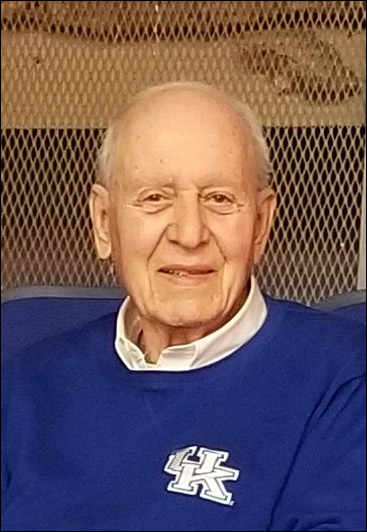
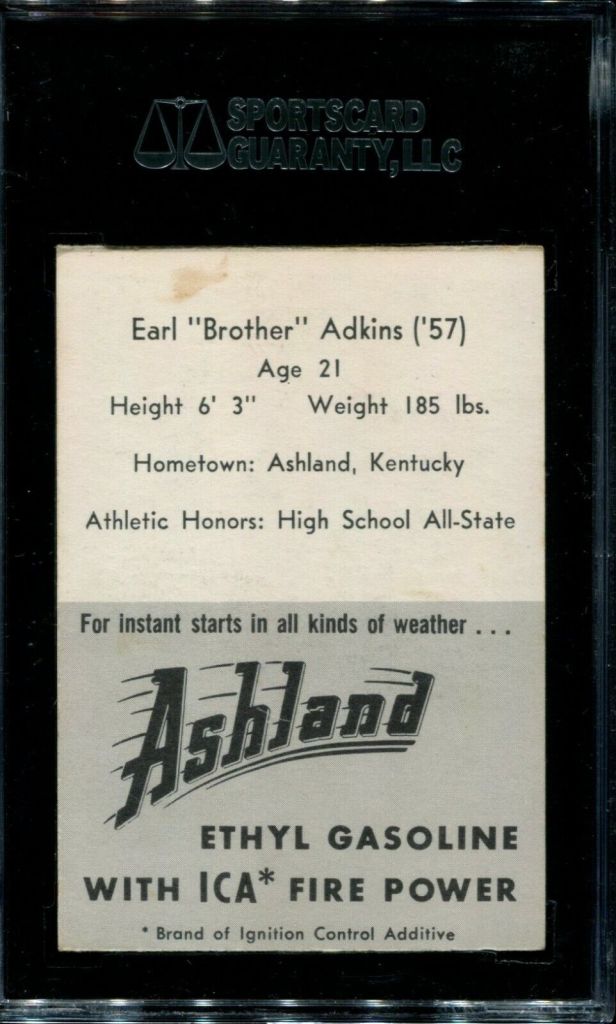
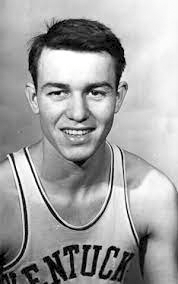
Earl “Brother” Adkins, one of only two players in Ashland Tomcat history to earn All-American basketball recognition, died Monday.
And basketball wasn’t his only sport. He also played football, where he was an All-State honorable mention running back, and he was elite in track. More than all that, he was an elite educator and a better person, a gentleman’s gentleman who stay connected to Ashland through regular conversations with high school teammates Jerry Henderson, Ralph Clere and Buffalo Hopkins.
Just how good of an athlete was the man everybody called “Brother?” Well, he was offered scholarships by both Adolph Rupp and Paul “Bear” Bryant. Need any more evidence?
He chose basketball because he loved the sport and he loved the Wildcats, listening to games when he was a boy and idolizing Ralph Beard. Wearing the blue-and-white was a lifelong dream come true although that dream was sometimes a source of great frustration, too.
Adkins’ career at Kentucky was star-crossed to say the least. Brother married his high school sweetheart, Beverly Newton, out of high school and that didn’t sit well with Rupp, who held it against him during his time with the Cats. Rupp assistant Harry Lancaster had told Adkins that he would be fine if he were to be married. But he was wrong. Rupp wanted his players to put basketball above everything else in their life at the time and Adkins couldn’t do it. Earl and Beverly lived on a married scholarship of $118 a month, which was supposed to take care of housing and food. Even in the mid-1950s, that was a stretch. He survived much of the time on one meal a day, he said in the Cats Pause interview.
“I couldn’t put basketball first,” he said in a 1986 interview in the Cats Pause. “And I understood how Coach Rupp felt about that. But I’d still do it in the same way. I could play college basketball and still be married.”
As a sophomore, the Cats were preparing to play Marquette in the NCAA tournament and Rupp told Brother he was going to start. But during the scrimmage he made two bad passes and Rupp yanked him out. Not only did he not start Adkins, he played only two minutes, shattering his confidence. He sat out the next season before returning for a redshirt junior season and senior season.
Eventually, though, Adkins was too good to not get in the game. He did become the first person off the bench for “The Fiddlin’ Five” and Rupp called him the best sixth man in the nation after the 1958 championship season. Adkins’ shooting touch from long range never left and he had some huge games coming off the bench including 26 points against Vanderbilt and had 14 points in the second half of a win over Georgia in Atlanta. He scored 199 points in three years on the UK varsity and averaged 5.3 points per game as a senior.
The 1958 NCAA tournament had only 24 teams and UK played twice at Memorial Coliseum and twice in the Final Four at Freedom Hall. Kentucky defeated Seattle-led Elgin Baylor, 84-72, in the championship.
Adkins’ path to UK was colored in Tomcat maroon-and-white, starring on a celebrated team of eventual Division I players in 1953 on one of arguably Ashland’s greatest teams. World famous marketing guru Jim Host was a manager on that team and still says they are the best Ashland ever produced – even better than the state champion 1961 Tomcats.
In 1953, Brother was selected as captain of the Courier Journal’s All-State Basketball team, voted All-American and given the title of Kentucky’s “Mr. Basketball.” Brother was MVP of the 1953 North-South All-Star Game and received the “Chuck Taylor” award as the top basketball player in the nation.
He credited much of his development to fiery Tomcat basketball coach George Conley, who drove his players in search of perfection. Bob Sang was one of his most mentioned mentors for Adkins in football.
But basketball was his game. He loved it, dreamed of playing for UK and one day making it to the NBA. He had a shooter’s eye with the patented two-handed set shot from his early days at Oakview Elementary and Putnam Junior High, to burning the nets at Ashland High School’s gymnasium on Lexington Avenue and the Ashland Armory where college basketball coaches from across the country got out their road maps to find this sharpshooter in Ashland, Kentucky.
His two-handed set shot swished through the nets on a regular basis as he averaged 20.9 points per game on the 1953 Tomcats that finished 28-4 and suffered a heartbreaking 46-44 loss to Paducah Tilghman in the opening round of the Sweet Sixteen. Ashland entered the tournament a clear favorite and ranked No. 1 in the state.
Adkins, who scored 1,386 points in his Tomcat career, was reminded at a reunion in the 1980s that he told a classmate before the season that he was going to be the No. 1 player in the nation and then he lived up to his own hype.
“Brother” Adkins joined Ashland greats on the Elks Wall of Fame in 1996 on Sports Day. He also is a member of the Kentucky High School Athletic Association Hall of Fame.
After graduating and earning his master’s at Western Kentucky University, Brother spent 34 years in Kentucky’s education system coaching basketball at South Hopkins (also named the Tomcats), Union County and Harrodsburg high schools, principal at Cairo and Morganfield elementary schools and retiring from the Union County Board of Education, where he served as assistant superintendent.
By the way, the only other Tomcat basketball player to earn All-American honors was Larry Conley, who led Ashland to the 1961 championship and the 1962 state runner-up trophies. Conley also went to UK and became part of the famed “Rupp’s Runts.”
If you’re looking for a Tomcat basketball Mt. Rushmore, Adkins and Conley would be a good place to start.
Ashland native Greg Gibson is closing the book on a 24-year Major League Baseball umpiring career with no regrets.
His career is stuffed full of highlights, including being on the umpire crew for the 2011 World Series, calling balls and strikes for Randy Johnson’s perfect game in 2004 and then on the bases when Clayton Kershaw fired a no-hitter 10 years later in 2014.
Those are big baseball moments for No. 53, who recently turned 54 years old. No other umpire has ever worn No. 53 except for Gibby, as they called him.
Gibson said he was thankful for everything baseball gave him but it was time to walk away from a job that has given him life experiences he could never had imagined. “If God called me home right now, I’ve done a lot of living,” he said.
His career included being part of 11 Division Series umpiring teams, five League Championship Series and even a Game 7 as part of the 2011 World Series that the St. Louis Cardinals won against the Texas Rangers and the 2008 All-Star Game.
Texas Rangers’ Adrian Beltre, center, watches his solo home run in front of Tampa Bay Rays catcher Kelly Shoppach and umpire Greg Gibson during the fourth inning of Game 4 of baseball’s American League division series, Tuesday Oct. 4, 2011, in St. Petersburg, Fla. (AP Photo/Mike Carlson)
He also had one that nobody could match: “I had home plate on Sunday night on ESPN and (Albert) Pujols pitched. He’s part of the 700 home run club and I worked the plate for Albert Pujols pitching.”
It was his Pujols’ one and only mound appearance in a Hall of Fame career.
Gibson was a highly respected umpire who is walking away on his own terms and at the right time. He’s looking forward to more family time with wife Michelle and his three sons: Kyle, Cameron and Carter. He will also spend more time with his dad and mom, Acy and Joyce Gibson,
“My family put up with me being gone,” he said. “Michelle practically raised the boys by herself.” She will be retiring from the Boyd County school system next year, he said.
Don’t expect Gibson to be sitting in a rocking chair and remembering the good ‘ol days. He will be more involved than ever with an insurance coming that has been soaring since it started in 2019. He loves the business and will be putting that same effort into it that made him one of MLB’s elite umpires over the past 24 years.
Gibson said he never wanted to stay too long in umpiring and “be that guy where players are rolling their eyes when they see you coming out. I’ve seen that happen (to other umpires). I was getting to the point where it wasn’t fun.”
Homeplate umpire Greg Gibson signals a home run for Tampa Bay Rays’ Matt Joyce after a review during the first inning of a baseball game against the Detroit Tigers in Detroit, Sunday, July 6, 2014. (AP Photo/Carlos Osorio)
“When I got into umpiring, it was my passion. I always said I wanted to leave when they still thought I was good. Not great, but good,” he said.
Gibson said he also didn’t want to be the veteran who stood in the way of a young umpire ready to make the move to MLB. “A young man on my crew, Nick Marley, came up from Triple-A. Hopefully they hire him in the offseason. I remember being that young guy. It’s my time to get out of the way. It was the right time.”
Umpiring has taken a physical toll as well. He’s had multiple concussions from foul tips smacking off his facemask and head. Gibson said he thought his career was in jeopardy when he had four concussions in 2009. Three of the head blows came within 12 days, he said.
He missed the 2020 season after suffering an offseason knee injury and has missed games this season with long-term COVID issues.
“It’s been a great run,” said Gibson, who started his professional umpiring career in the Appalachian League in 1991 when he was 22 years old. He broke into MLB in 1999 and his first game was Cleveland-St. Louis in 1997. “I’m not sure my feet touched the ground when I went out,” he said. It took two more years before he became fulltime in the major leagues, following a tradition in the Ashland area that included Charlie Reliford and Terry Craft. Sam Holbrook, who is from Morehead, is still an active umpire. Reliford works with MLB umpires and is considered one of the best rules experts in the game.
When Gibson became an MLB umpire, every team didn’t have its own television network and every game wasn’t televised. Baseball fans could only catch the Braves (WTBS) and Cubs (WGN) on a regular basis. The radio was the biggest means of communication.
But year by year, technology soared and now every team is televised every game and national networks put it under a bigger spotlight. That meant more attention – and pressure – on umpires to never miss a call. Their accuracy rate remains remarkable on balls and strikes and safe or out.
“I told Michelle my goal this year was to not become a meme,” he said. “Who would have ever thought that?”
The physical and mental fatigue of being a MLB umpire can take a toll, he said, which is another reason he’s glad to walk away from it even though he could have experienced it longer.
A man of faith, Gibson said he understands know how God was working about eight years ago preparing him for a career change.
“I was disappointed with some things that were happening with my (baseball) career. A few things happened that I didn’t understand and didn’t know why. I was mad. But God was opening up a door for me with insurance. I am so thankful. Even when I was mad, I didn’t even realize it until 2021. God was preparing me then for now. It’s what makes me more happy than anything. I’d rather be in God’s will than work four or five World Series. At the end of the day, God only gives you one shot. If you’re going to say Jesus take the wheel, mean it.”
Gibson said he has worked with a lot of umpires who have passed away. “They don’t teach a man how to retire,” he said.
Even though he’s been on the field for some of baseball’s biggest moments, the most memorable moments were when he looked up in the stands and saw family – his mom and dad, his wife and sons. “That’s what was always the most important moment,” he said.
He called behind the plate on Mother’s Day in Cincinnati this season and before the game had his family on the field with him for some photographs. Gibson, who hadn’t contemplated retirement, said he didn’t know why but something told him to do it.
“For whatever reason, I got them all downstairs and went out on the field and take a ton of pictures,” he said. “Now I know why.”




 MARK MY WORDS 2