Tomcats can find motivation, lessons for success in their past

This is an anniversary season for Ashland Tomcat football.

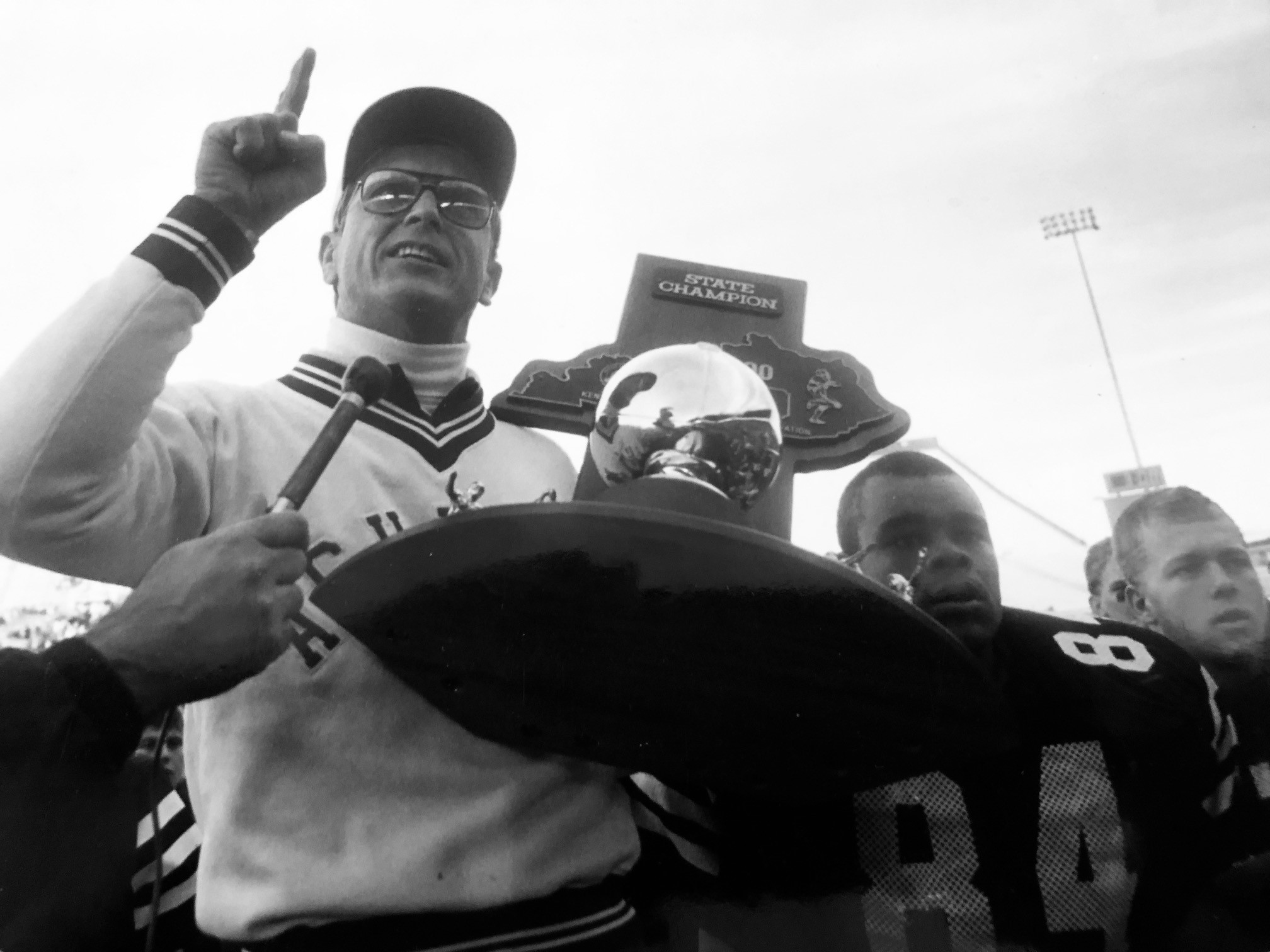
Thirty years ago, a team directed by coach Vic March steamrolled through opponent after opponent en route to a 14-1 record and the Class AAA state championship.

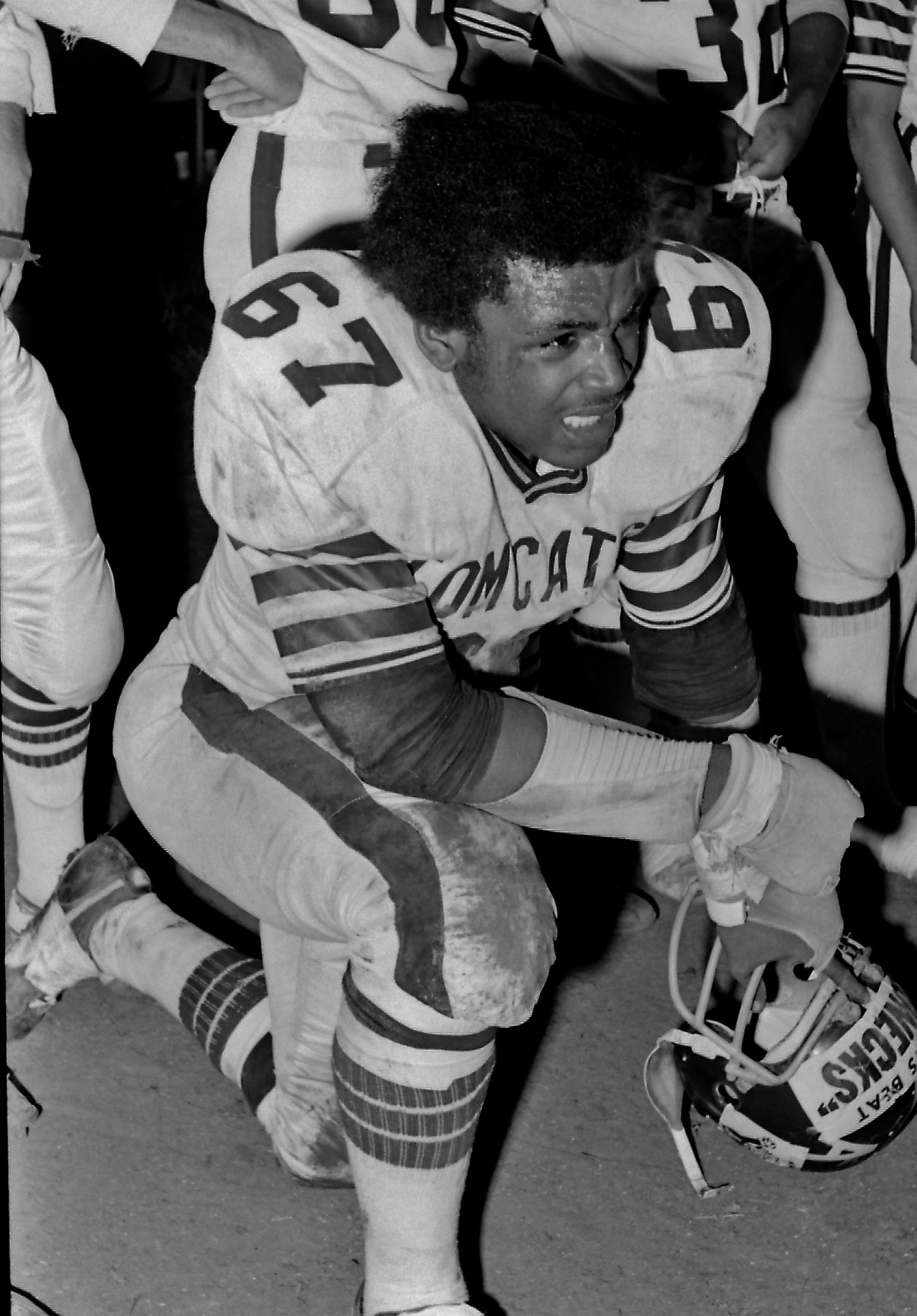
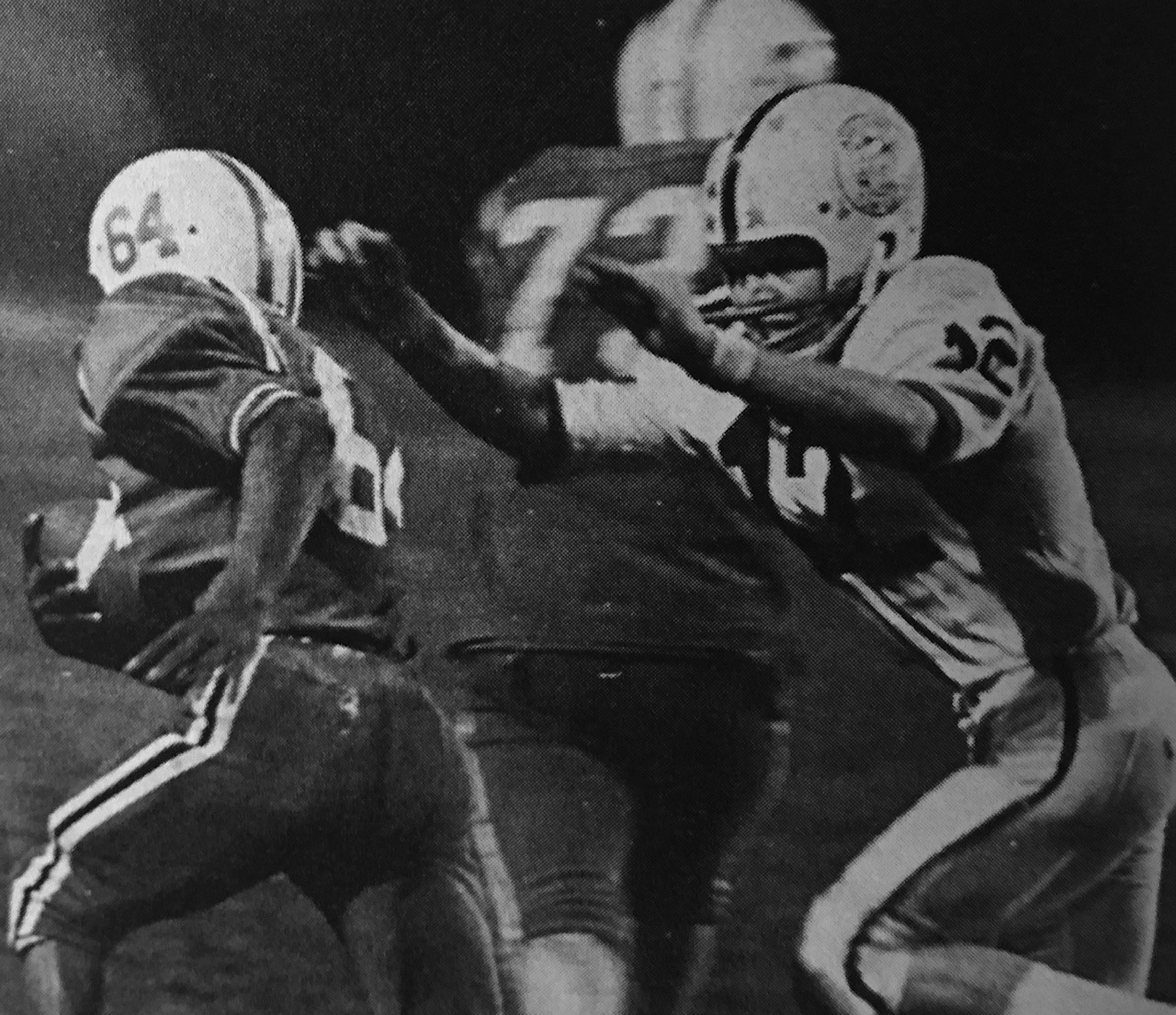
Forty-five years ago, a team with the nickname “JAWS” terrorized football fields throughout the state en route to the Class AAAA State At-Large championship.

Five years ago, Ashland’s 2015 football team was given the privilege of a step back into the time capsule when about a dozen members of the JAWS team and Coach Herb Conley paid a visit to the locker room before the Tomcats took the field to play George Washington.

Coach Herb Conley addresses Ashland’s 2015 football team before a game against George Washington. His words ring true today as the Tomcats prepare to take on Belfry in the 2020 state semifinals in Putnam Stadium.

West Point grads Greg Jackson and Chuck Anderson spoke first to the Tomcat players who were dressed and ready for action. They talked about commitment and unselfishness and how they’d practically give their left arm for another chance to play in Putnam Stadium.

Anderson, who served 32 years in the military and rose to the rank of general, commanded attention quickly when he immediately told them to “Put your eyes on me.”

Nobody was looking down, shuffling feet or doing anything but listening to “The General” offer advice and make wishes of his own. “What I wouldn’t give for one more game …”

Jackson told them that three running backs were there — Gary Thomas, Jeff Slone and himself — and how their favorite part of the game was blocking for each other. It didn’t matter who got the yards as long as the job got done, he said. It was the lesson on unselfishness.

Jackson’s short speech was good, showing the kind of discipline that has served him well on the football field and throughout life to a management position at Marathon.

Lessons were learned in football and applied in life.

But when it came Coach Conley’s turn to address the team it was clearly a throwback to 1975 when the fiery coach took this JAWS team to the top of high school football in Kentucky. Those Tomcats took on the attitude and character of their coach and these Tomcats could take a lesson from their playbook.

You can ask anyone who heard him: Coach Conley still has that competitive fire burning in his belly, he has the mannerism that motivators possess and that desire to bring out the best in people with a single sentence or look.

The roomful of Tomcats didn’t take their eyes off him — they wouldn’t dare — as his speech grew louder and louder and louder. When Coach Conley talks, he does it with his eyes too and when the eyes began to squint and the wrinkle came out above the bridge of his nose, I knew this giant of coaching was back in form. It may have been 39 years ago — his last year of coaching at Ashland was 1976 — since Conley addressed a group of Tomcats before a game.

It was surreal watching this man who is so admired and idolized by his former players deliver a message to this young Tomcat team. He is old enough to be a grandfather to most of them but what was coming from inside of him was pure blood-and-guts coach. I wish every team in the area had the opportunity to hear him.

His JAWS players were standing behind him and sweat was starting to bead up on their own now (mostly) bald heads. They’d gotten all lathered up before by similar messages from Coach Conley before football games and you could almost see the fire building inside them with every word he spoke.

“I was ready to go out and run sprints,” Jackson said.

“He had me ready to play,” said Terry Bell, the best defensive player in Kentucky in 1975.

The last thing he told them: “I believe in you.”

With that, the team stood up in unison, clapping and yelling as the JAWS Tomcats exited the locker room with their coach.

I hope it’s a moment they remember and treasure and don’t take for granted. Ashland’s version of Knute Rockne was in the house one more time.

Maybe the 2020 Tomcats can learn a lesson from this as well as they prepare to make history Friday night against Belfry.

Tomcats only semifinal loss came in epic 1988 performance

Ashland has a record of success when making it to the final four of the Kentucky high school football playoffs.

In state semifinal games, the Tomcats are 4-1 overall and 3-1 in Putnam Stadium since the playoffs were introduced by the Kentucky High School Athletic Association in 1959.

That one loss back in 1988 remains one of the greatest ever played in 83-year-old Putnam Stadium. Covington Catholic came to Ashland with a No. 1 ranking and 12-1 record. They left – make that escaped – with a 6-0 overtime victory and a healthy respect for Tomcat football.

Putnam Stadium was the site for four of Ashland’s five previous semifinal appearances.

Covington Catholic was a prohibitive 17-point favorite, a northern Kentucky powerhouse that came in with a slick passing attack that devoured opponents. Nobody gave the Tomcats much of a chance.

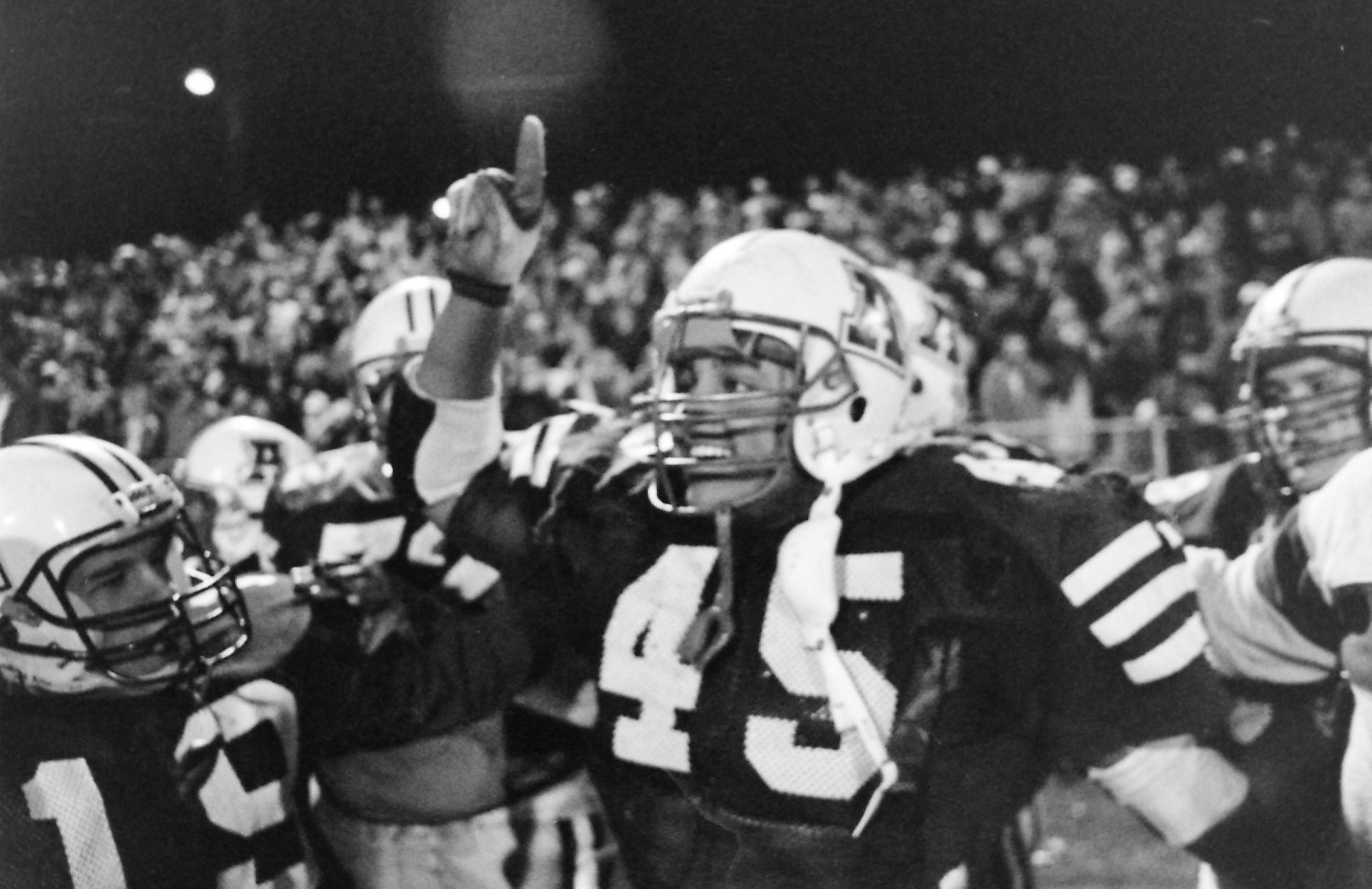
What happened on that cold November Friday night in 1988 was, well, chilling, the stuff of goosebumps and legends. The Tomcats battled the Colonels to a scoreless tie in regulation before dropping the tear-your-heart-out loss in overtime. While a haunting defeat for the 1988 Tomcats of coach Vic Marsh, it’s one of the classics of Putnam Stadium. It remains one the fans still talk about today.

Those Tomcats didn’t listen to the pre-game lunch-counter talk. These Tomcats may want to stay off social media this week.

The game with Covington Catholic in ’88 was supposed to be a mismatch. The Colonels were high-powered with quarterback Paul Hladon expected to make it look easy for the defending state champions.

If Ashland had any chance, it would be because of a battering-ram offense that had carried the Tomcats most of the season. It included running back Mike Johnson, who that season would become Ashland’s all-time leading rusher.

But on this night, it was a defense designed by assistant coaches Don McReynolds, Steve Salyers and David Arthur that befuddled the Colonels. It was a mix of zone looks and was predicated on a fierce pass rush. And it worked. An uncomfortable Hladon completed only 4 of 22 passes for 28 yards. It wasn’t all Hladon’s fault. Some of his throws were rushed but his receivers also dropped many passes after some jarring hits from Ashland’s secondary, namely Jason Hall and David Hicks, who had two interceptions and made an early statement with a thunderous hit on a receiver who dared to come over the middle on the first play.

By the end of the game, the receivers were hearing the footsteps of Hall and Hicks when a football was thrown their way.

Marsh’s coaching trademark was preparation, and it was the most prepared Tomcat team that I can ever remember. They were ready and they were motivated to win, not just play a good game against a team that frankly had superior talent. That kind of mental preparation was the only way the Tomcats were going to compete with Covington Catholic. They weren’t the more talented team, so they had to be the more physical team. Friday’s game with Belfry with be another test of toughness for these Tomcats.

Mark Maynard


Marsh’s coaching trademark was preparation, and it was the most prepared Tomcat team that I can ever remember. They were ready and they were motivated to win, not just play a good game against a team that frankly had superior talent.

That kind of mental preparation was the only way the Tomcats were going to compete with Covington Catholic. They weren’t the more talented team, so they had to be the more physical team. Friday’s game with Belfry with be another test of toughness for these Tomcats.

Hladon left the game knowing the Colonels were fortunate to go home with a victory. “I’ll tell you, Ashland Paul Blazer deserved to win,” he said.

The game may be the most exciting scoreless football ever played in Putnam Stadium.

Zeroes dominated the scoreboard but on the field there were blocked punts, blocked field goal tries, a touchdown called back by penalty, long runs, big losses, passes dropped, passes intercepted, fumbles, a goal-line stand, critical penalties, great decisions, bad decisions and gutsy decisions.

The only score came on Dan Ruh’s 10-yard run on a draw play in overtime.

Ashland had taken possession first in overtime and got to the four on two runs by Mike Johnson before Hicks, the quarterback, was dropped for a two-yard loss. That left it up to Charlie Johnson’s foot and Roger Werner blocked the sophomore’s 22-yard field goal try.

When Covington Catholic took possession for its overtime opportunity, Charlie Johnson chased Hladon back to the 23 and looked to have him corralled for a sack when the quarterback flung a pass out of bounds in the vicinity of a receiver.

On the next play, Ruh went up the middle, did some stutter steps to avoid the first wave of tacklers, cut left and went into the end zone.

Ruh, excited with the win, spiked the ball. The officials threw a flag, but unless it was going to be marked off on the kickoff of the state title game, it was meaningless.

Ashland’s players stood frozen on the field and it wasn’t because of the November chill. Their emotions were chilled. This roller-coaster ride of a game was over.

Ashland had its chances to win the game in regulation with only seconds remaining. Stopped at the Covington Catholic 12 with only nine seconds to play, the Tomcats called a timeout. Johnson tried a 27-yard field goal that was slightly wide left, but an illegal procedure penalty gave the Tomcats a five-yard setback but another try for the win, much to the protest of the Colonels’ sidelines. Again though, Johnson’s kick, this time from 34 yards out, was wide left and regulation ended 0-0.

Covington Catholic had a chance in the fourth quarter, but a goal-line stand by the Tomcats kept the shutout. The Colonels had a first-and-goal from the 3-yard line. The first two plays were one-yard gains and then fullback Chris Penn was stopped twice for no gain. Ashland’s fans in the end zone went wild. Everybody who was at this game was into the game. For the Tomcat fans who had invested so deeply, that’s what made losing so much tougher.

But the 1988 state semifinal game, even though a loss, will be forever remembered by those same fans.

Covington Catholic went on to repeat as state champions, defeating Paducah Tilghman 30-24 in overtime.

Two years later, the sophomores on this Ashland team, including Charlie Johnson, would win a 19-14 semifinal game with Bell County in Putnam Stadium on the way to the 1990 state championship.

Ask them today and they’ll proudly tell you about both games, each considered an epic in Ashland’s proud history.

Tomcats’ football in final four for sixth time

ASHLAND, Ky. – Welcome back to the Kentucky high school football final four, Ashland Tomcats, it’s been a while.

Ashland locked down its sixth trip to the state semifinals since the Kentucky High School Athletic Association instituted the playoff format in 1959 with a 42-0 victory over Fleming County in Putnam Stadium on Friday night.

The 2020 season joins 1990, 1988, 1975, 1972 and 1967 in the rare final four club.

It gets much tougher from here.

Defending Class 3A champion Belfry is next on the docket and Putnam Stadium will be the site for this showdown Friday night. Both the Tomcats’ final four runs that ended in state titles included wins over Belfry, including a 42-0 decision over the Pirates in the 1967 semifinals at Putnam Stadium. Here’s another good omen: Ashland’s path in 2020 could resemble 1967 with a win over Belfry in the semifinals and potential matchup with undefeated Elizabethtown in the championship game.

Al Vipperman, the coach of Belfry in 1967, said those oversized Tomcats were “a bunch of brutes” and they dominated the Pirates with 560 yards of offense. The following week Ashland spoiled E-Town’s undefeated season with a 19-14 victory at the old Fairgrounds in Louisville. It was the first state championship in the playoff era for Ashland.

The Tomcats returned to the final four in 1972 and defeated Bryan Station 21-6 in Putnam Stadium as Steve Layman ran for 103 yards and two touchdowns in a hard-hitting game that left both teams battered and bruised. Ashland carried some of the injuries into the championship game and Tates Creek won 16-7 in the last game ever played at UK’s Stoll Field. It was also one of the coldest games anybody could ever remember.

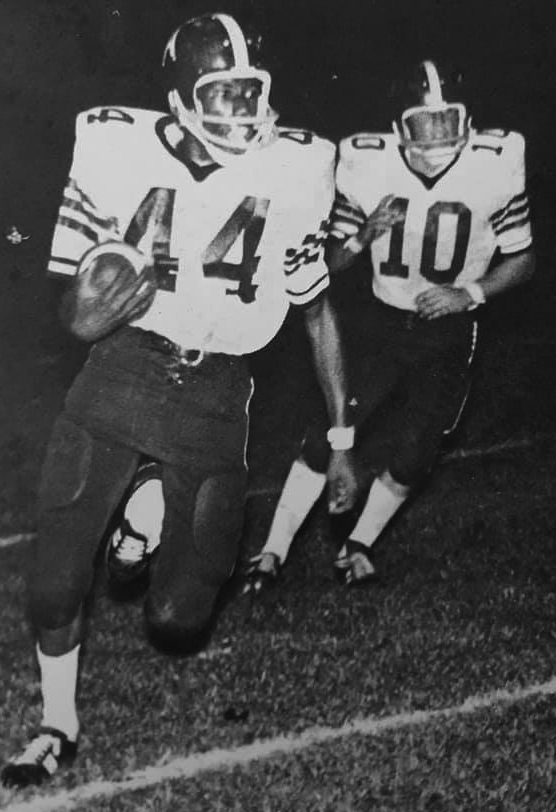
Ashland’s 1975 JAWS team had an historic semifinal game. The Tomcats became the first team in Kentucky to board an airplane and fly to an in-state venue for a game. The Tomcats flew a chartered flight to Paducah and defeated Paducah Tilghman 13-7 when Gary Thomas broke loose on an 85-yard touchdown run late in the game to erase a 7-6 deficit.

That year, the Tomcats were playing in Class AAAA – then the largest class in the state – and this game was called the State At-Large Championship. Back then, the state decided a champion and Jefferson County had its own tournament to decide a champion. Those winners met in a sort of Kentucky high school Super Bowl game.

St. Xavier, dressed in green and gold with 99 players on the roster, looked very much like the Green Bay Packers. St. Xavier survived an early blow when the Tomcats took the opening kickoff and marched inside the 5-yard line before missing a field goal. It was only 6-0 at the half before St. X pulled away for a 20-0 victory to hand the JAWS team their only defeat after 14 consecutive victories.

It would be 13 more years before Ashland made it back to the semifinals in 1988. That game resulted in one of the most heartbreaking losses in Tomcat history, a 6-0 overtime decision against heavily favored Covington Catholic in Putnam Stadium. The Colonels went on to win the Class AAA title that season, making it an even harder-to-swallow defeat.

Two years later, Ashland made another trip to the final four and the championship game. That would be the 1990 Tomcats, who defeated Bell County 19-14 in a memorable semifinal showdown that saw a big stop on a fourth-and-one late in the game lock down the win. That game materialized after Ashland defeated Belfry 35-20 on the road in the second round of the playoffs.

The Tomcats’ win over Bell County turned out to be the toughest of them all. Ashland ran over Lincoln County 35-13 in the championship game the next week in Louisville as Chris Hutt raced for 175 yards and three touchdowns and Charlie Johnson 126 yards and two TDs.

And until Friday night, that’s been it.

Ashland is 9-0 heading into the semifinals in this COVID-marred season where several games were cancelled. The last unbeaten Tomcat team was 1958 (10-0-1) and the last unbeaten and untied team was 1942 (10-0).

History awaits the Tomcats next week.

Wilson Barrow, superb Ashland athlete from 1960s, dies

ASHLAND, Ky. – One of Ashland’s greatest athletes from the early 1960s has died.

Wilson Barrow, a hard-throwing pitcher and sharpshooting basketball player who bridged Booker T. Washington and Ashland High School, died at his home Thursday.

Barrow played basketball for BTW prior to the black school closing after 1961. He made the 1962 Ashland Tomcat varsity basketball team as a sophomore, which was rare in those days, and had several big games. The first black player in school history played half a season before being dismissed for unsatisfactory grades.

He played in Ashland’s inaugural Little League season in 1955 and could make the mitt pop with the best of them. As he grew older, Barrow’s fastball was compared to how left-handed fireballers Bill Lynch and Don Gullett threw later in the decade.

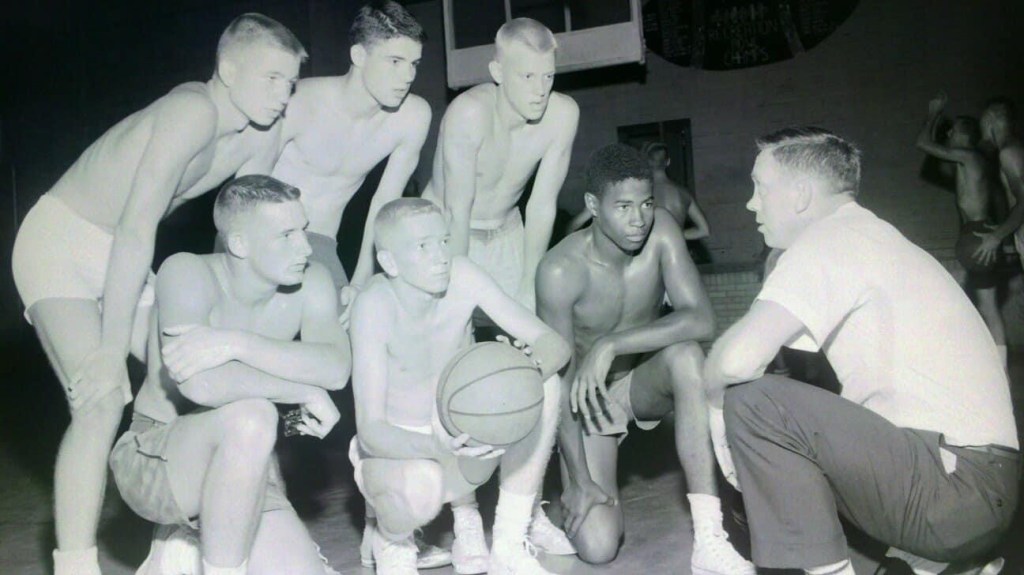
Tomcat coach Bob Wright speaks to players in practice before the 1961-62 season. Front row: Bob Yancey, Larry Conley and Wilson Barrow. Back row: David Turpin, Ken Johnson and Rick Pope.

Most believed Barrow, who also played American Legion baseball in Ashland, had a fastball that could have taken him into pro baseball. But it never happened. He made a home in Ashland where he worked and raised a family.

Barrow, who was also an outstanding hitter, was part of a 10-man class that was to be inducted into the Ashland CP-1 Baseball Hall of Fame last summer but the event was postponed until August 2021 because of COVID-19. The ceremony will include a posthumous honor for Barrow who will be included with his class on the plaque behind the press box in Central Park.

“I’m glad I got to talk to him and congratulate him on the CP-1 Hall of Fame,” said Tobey Tolbert, a 2019 inductee into the Ashland HOF. “He was equally good in baseball and basketball. He could step across halfcourt and make it. He’d have torn up the 3-point line.”

Tolbert posted Barrow’s death on Facebook and several commented on his passing, speaking kindly of him and speaking of his athletic prowess.

Barrow was described as “always upbeat and happy” while working for Ashland Oil, said David Cox in a Facebook post. “Love to sit behind the backstop and watch him pitch. Played a little basketball with him too. He could really move well, especially for a big man. Probably the best athlete I’ve seen here in Ashland.”

Brothers Bill and Bob Lynch, who were instrumental in guiding the Ashland Tomcats to three consecutive state high school baseball championships in the 1960s, remember watching Barrow on the mound. They said it was an ear-opening experience to hear the mitt pop when he was warming up.

“I don’t remember him on the mound as much as I remember him throwing on the sidelines,” Bob Lynch said. “John Oliverio, who was the Pittsburgh (Pirates) scout, had him throwing and encouraged him to go to the tryout camps. Wilson looked like a great athlete.”

Bill Lynch said, “He was the kind of player that you stopped what you were doing to go watch him. Wilson had perfect technique in all the sports. It was natural. No one taught him how to do it.”

Barrow played for BTW from 1959 to 1961 before the school closed for good in 1962 when he was a sophomore. The Tomcats were coming off a state championship season in 1961 under coach Bob Wright. Barrow made the 61-62 team that included All-Stater Larry Conley, who had led the Tomcats to the state title as a junior. Barrow averaged 9.8 points per game in 14 games, but poor grades forced him to quit the team in January, Tolbert said.

He scored 28 against Olive Hill and had 23 against Dixie Heights in the championship game of the Ashland Invitational Tournament. He also scored 19 against Newport. The Tomcats finished 32-6 and lost in the state championship game to St. Xavier, 62-58.

When he was at Booker T. Washington, Barrow played as a seventh-, eighth- and ninth-grader. His freshman season he averaged 18.7 points per game and made the all-district and all-Eastern Kentucky Conference tournament teams. He scored a high of 34 against Carter City and had 27-point games against Greenup and Blaine.

“When we played at Booker T. or in the park, everybody wanted to be on Wilson’s team,” Tolbert said.