Tomcat tradition on full display with Larry Conley

Jason Mays, the new Ashland Tomcat basketball coach, is smart enough to understand the role that tradition plays in the community and the program itself.

It was with that in mind that he set up a celebration night with perhaps the greatest Tomcat of them all.

Larry Conley, who was part of the memorable ’61 Tomcats that won a state championship and then practically willed the ’62 Tomcats back to the championship game, was back in front of today’s players Thursday night in an event that Mays hopes can stir the echoes.

Do they remember Larry Conley? Probably not, but their parents and grandparents – not to mention countless other fans who were among more than 100 in attendance – sure did.

For those who don’t remember him as a player surely remembered him as a college basketball television analyst that had an illustrious 42-year broadcasting career. He estimated covering 1,800 basketball games and 600 baseball games and most of those involved SEC teams.

Conley is 73 and still has that slender body that made him a basketball dynamo. The ’61 Tomcats are still remembered as one of Kentucky’s greatest state champions by those who have seen many of them, including former Herald-Leader columnist Billy Reed and former Herald-Leader sportswriter Mike Fields.

You can learn more about that team in my book called “Teamwork” (shameless promotion).

Conley talked about being a gym rat from an early age since his father, George, was the fiery coach of the Tomcats from 1949-54, guiding some of Ashland’s greatest teams and players, including the 1953 team that was ranked No. 1 but upset in the state tournament’s opening round.

Jim Host, a manager on that team, is still convinced the ’53 team was the best of all time. But those in ’61 beg to differ and they have the big trophy as proof that the 36-1 Tomcats team holds that distinction.

Nevertheless, that’s an argument for another day. Both are part of a Tomcat tradition that has few equals.

Conley said he learned his first lesson of discipline during a practice session when as a little tyke he picked up a basketball and began dribbling it when his father was addressing the team. Bad idea, he quickly learned, when his father turned to find out who was interrupting him.

“I learned that day to be quiet whenever the coach is talking,” he said.

Conley was cordial and affable, encouraging the young players to respect what their teammates could do, improve their weakness and take care of business in the classroom. It was great advice.

He also showed reverence for his coaches and none anymore than the late Bob Wright, his coach with the Tomcats who molded these talented players into a team for the ages. Conley talked about the amazing Harold Sargent, who could do anything with a basketball, and how this team was built to win. The top seven players all received Division I scholarships. Six of the seven are still living. Bob Hilton passed away many years ago.

Conley, of course, played for Adolph Rupp but he said that Rupp never saw him until he signed him to play for the Wildcats. Recruitment was different in those days, he said. “If you were a good player in Kentucky it was a given that you were going to Kentucky,” he said.

Wright kept the players letters from colleges until after the season and Conley said he gave him four boxes of letters when his senior season ended.

Conley said he did make a visit to Duke, drawing a groan from the crowd.

He remembered a time when Rupp came up to him and asked a question. “Conley, who is the better coach, me or your high school coach?” Conley said while imitating Rupp’s high-pitched voice. While Conley answered “correctly,” he said it was the “hesitation that got me in trouble.”

“Conley, you son of a gun, you’ve got a lot to learn,” he said was Rupp’s reply, Conley said, mimicking his southern drawl.

He also talked about his broadcasting career and some of the most memorable games, including the 1992 battle between Arkansas and Kentucky in the SEC Tournament. He said Rick Pitino was one of the two or three best coaches he was ever around, that he actually liked Bruce Pearl (more groans) and disliked Dale Brown. He said he eventually got to appreciate Nolan Richardson because of how hard the Razorbacks played for him.

It was a good night with one of the Tomcats finest ambassadors and best-ever players who told the team and audience that he’d try to make it back to watch them play in the Ashland Invitational Tournament.

Kudos to Coach Mays for putting tradition on display by reaching out to Conley for the event. Part of his job, as I’m sure he sees it, is to restore some of that tradition. The Tomcats are currently in the longest stretch between 16th Region championships. They last raised a banner in 2002.


CP-1 HOF ceremony: Emotion, never-before-told stories and (amazingly) no rain

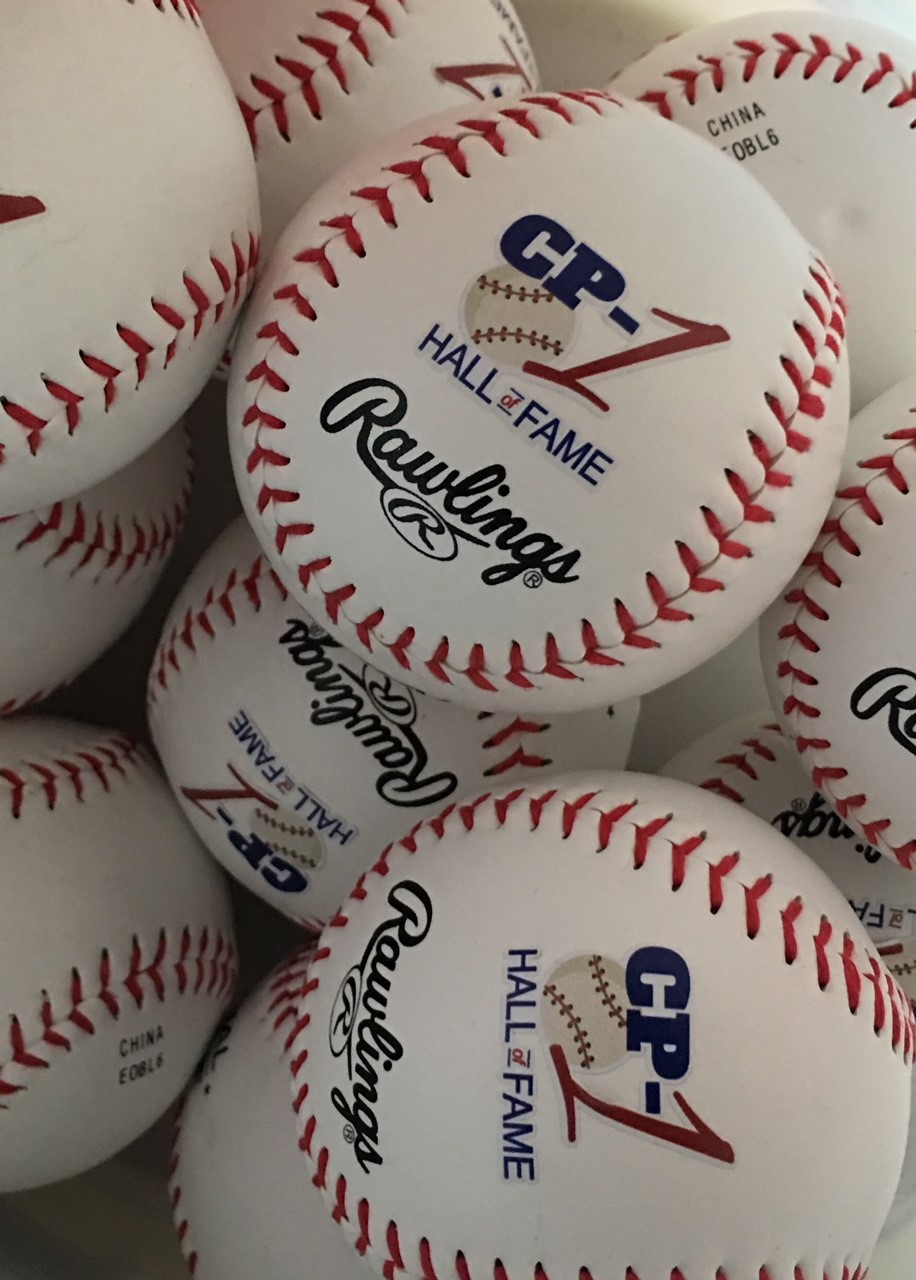
ASHLAND, Ky. – The fourth annual Ashland Baseball CP-1 Hall of Fame ceremony had a little bit of everything.

-Emotional speeches. Several inductees had to collect themselves while offering up heartfelt speeches that included their parents, family and teammates.

-Untold stories. David Patton, a 1950s era Tomcat, brought out the entire arsenal of never-before-heard stories about his playing days. What a treat!

-Divine intervention. There’s no other explanation as to why it did not rain. The forecast kept getting worse day by day and on Friday was calling for a 90 percent chance of thunderstorms – and we made the call to have the ceremony in the park anyway Saturday morning.

Guess what? It didn’t rain.

It all added up to what will be remembered for a long time for the 14 inductees and their families.

It was also one of the bigger crowds in the history of the CP-1 Hall of Fame with 80 to 100 in attendance. Some laughed, some cried, and everybody enjoyed.

The common denominators were a love for Central Park and thank you wishes to deceased parents, to siblings, to teammates and to organizers.

Larry Stevens, a hard-throwing pitcher during the early days of the Tomcat Dynasty Era in the 1960s, came in a wheelchair because he is suffering from a disease that has also taken away his ability to communicate.

Yet Stevens broke off the line of the day when in his broken sentences was able to clearly get out: “I got a hit off Bill.”

That was in reference to good friend Bill Lynch, the flame-throwing lefthander who was in the inaugural CP-1 Hall of Fame class.

The crowd roared with laughter from Stevens’ short sentence to his friend. His wife later took over the rest of the speaking.

From stars in the 1950s to the 1970s, the crowd listened intently for two hours as one by one the inductees shared a bit of their stories. Nobody was too long and nobody was too short and everybody who came walked away feeling a little better about either living in Ashland or having the joy to play in Central Park.

Greg Swift, Don Allen and co-coaches Rick Reeves and Frank Wagner represented the 1970s. Reeves said it would be much better if Wagner, who died a dozen years ago, could have stood there with him.

Ernie Daniels not only shared his baseball life but also his faith in a heartfelt speech. He played from 1961 to 1963 for the Tomcats and shared a story how he won the American Legion Chuck Dickison Award as a 16-year-old shortstop.

He said he was waiting for the Dickison ceremony, not knowing who was going to win, and he saw his mother and father get out of a car. Daniels choked up a little before continuing, saying he still didn’t know he was going to be the award winner and then his name was announced.

Six members of the Tomcat Dynasty Era between 1965-69 also were inducted: John Sieweke, David Staten, Stevens, Mike Tackett, Fred Leibee and Don Lentz.

Three players from the 1950s, Patton, H.F. Dixon and Larry Castle rounded out with speeches that came from deep inside.

Inductees came out of state from Florida, Alabama, Georgia, Texas and from Lexington and Lawrenburg in state.

They came to be inducted but were reminded they left their heart in Central Park.


Radjunas makes one more handoff for Tomcats

John Radjunas with the game ball from the 1967 state championship game.

ASHLAND, Ky. – For the last 51 years, John Radjunas has had the game ball from Ashland’s 1967 state championship victory tucked away at his home.

Radjunas, who was a senior quarterback, was handed the football by one of the game’s officials as he was running off the field following Ashland’s 19-14 triumph over Elizabethtown.

The official figured it would be something Ashland would want in its trophy case, Radjunas said.

Fifty-one years later, the ball has found its way there after Radjunas presented it to Tomcat athletic director Mark Swift who made a spot for the encased football beside the ’67 championship trophy in the two-year-old wall display.

Principal Jamie Campbell, football coach Tony Love and cheerleading coach Cathy Goble were also at the impromptu ceremony.

Radjunas had no intention of keeping it when it was handed to him but the game ball – and even the Tomcats’ state championship victory – took a backseat to circumstances of these damp and dreary day.

Ashland’s victory at the Fairgrounds in Louisville will be forever linked with the tragic death of Joe Franklin, who was killed that morning in an automobile accident. He was traveling to a basketball scrimmage with four others that morning when he crashed on U.S. 60 just past Morehead. The passengers in the accident survived.

The players didn’t learn about what happened until after the game when coach Jake Hallum told them. Cheers turned to tears as they mourned the death of the popular Franklin, an All-American boy who played football as a sophomore but chose to concentrate on his best sport, basketball, as a junior.

It was no time to show off the game ball, Radjunas reasoned, so he tucked it into his bag and mostly forgot about it. The next day the Tomcats bused home and he went into the locker room and saw the football in the bag but decided, well, he would just keep it.

After all, Radjunas and everybody else associated with the Tomcat team and fans, were numb over the horrendous news. The championship even had a hollow ring to it.

He took care of the football over the years, even painting STATE CHAMPS 1967 ASHLAND 19, ETOWN 14 on it. Radjunas also purchased a nice case for it.

But after learning that Ashland had rebuilt its trophy case in the lobby of James A. Anderson Gymnasium, he knew that’s where it needed to be for all Tomcat fans to see.

So he made connections with Cathy Goble, his classmate, and she contacted Swift to put it all in motion. Then, on Thursday morning, the ‘ol quarterback made one more handoff for the Tomcats.


Tomcats to honor CP-1 HOF class at halftime of football opener

ASHLAND, Ky. – Inductees for the fourth annual Ashland Baseball CP-1 Hall of Fame are in for an extra treat.

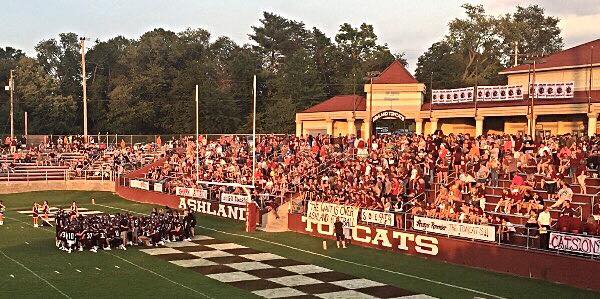
The Ashland Tomcats are inviting the 2018 class to be their guests when the Tomcats open the high school football season against Harlan County on Saturday night in Putnam Stadium.

The 2018 CP-1 HOF class will be introduced to the crowd at halftime of the game, according to Ashland Athletic Director Mark Swift.

The CP-1 Hall of Fame ceremony takes place at 1 p.m. in Central Park and the Ashland-Harlan County game kicks off at 7:30.

All 14 of the inductees either played baseball for the Tomcats or attended school there.

Six members of the class were part of Ashland’s three-peat state championship baseball reign from 1966 to 1968.

The 14-member class includes:

David Patton, Larry Castle and H.F. Dixon from the 1950s era.

Ernie Daniels, Don Lentz, David Staten, Fred Leibee, Mike Tackett, Larry Stevens and John Sieweke from the 1960s era.

Greg Swift, Donnie Allen, Rick Reeves and the late Frank Wagner from the 1970s era.

This year’s class brings the total inducted to 50 with 50 more still to be selected in the next five years.