RIP Grady Walter, a winner in life and in football

Grady Walter’s name isn’t listed on a wall or in the record books for coaching victories at Russell High School. But you can rest assured, he won games. Lots of them.

He wrote the book on how to be a successful assistant coach – and a best friend – during a long and successful tenure with the Red Devils. Grady was the first assistant coach that Ivan McGlone hired when he took over in 1976 and he stuck with him for decades until retiring in 2003 after 33 years in the Russell school system.

Grady Walter was a friend to anybody who came in his path, the kind of person who would go out of his way to help you. He was a devoted husband, father and grandfather. And he was a competitor of the fiercest kind who loved to win and know how to do it, both on the field and in life.

I loved talking to Grady about football, or life, or anything. He was sometimes blunt, almost matter-of-fact, but in a kind way. Players loved and respected him and played hard for him. The Red Devil football family couldn’t have had two better men leading that program for all those years than Ivan and Grady. I don’t think of one without the other.

Grady died on Friday after a long illness at the age of 75. Ivan, his coaching buddy who was more like a brother, died last year. That’s a lot to take. When I was cutting my sportswriting teeth, those guys were coming onto the scene at Russell. Much of my early assignments was covering Russell football and I sure learned a lot from these two men. How good a coach was Grady Walter? He was inducted into the Russell Hall of Fame in 2010. How many assistant coaches are recognized like that?

Ivan McGlone and Grady Walter were inseparable friends and a great coaching duo at Russell High School for 29 years.

They loved to win but they loved family more. Much more. Their wives were the queens and were treated that way.

“He interviewed me for the job and I was in limbo,” Grady told me in an interview in April 2010. “Sue (his wife) had some surgical problems over the summer and I told him I had to take care of her first.”

Turned out, Sue did fine, so Grady accepted the position. The two became fast friends, as did their families. It was as if they each had two families.

McGlone went on to become a coaching icon in northeastern Kentucky, winning state championships in 1978 and 2005 and finishing as a runner-up in 2006. Grady was with him for 29 seasons. It was like having two head coaches on the sidelines.

Grady, whose first job was with the FBI, could have been a head coach at any school in northeastern Kentucky. That’s how much he knew the game. But that wasn’t what he wanted to do. Ivan and Grady were inseparable, the epitome of teamwork in the coaching ranks. Every assistant coach should aspire to be like Grady Walter, who was not only loyal but never afraid to tell Ivan if something needed changing. He was a sounding board for him and whatever method those two devised, it sure did work for a lot of wins.

Ivan and Grady were there for each other’s triumphs and tragedies, in football and life. They laughed together and they cried together. Now we’re all crying because they’re gone.

When Grady was coaching, he lived in Ashland so his boys attended school in Ashland. Dwight, his youngest son, was a member of the Tomcats’ 1990 state championship football team.

The friendly family feud was nothing new for Grady, who was one of four siblings who went to Catlettsburg while three others went to Ashland schools. Two of his brothers, Dick and Jack, actually played against each other. Grady was fast friends with the late Bill Tom Ross in high school. Both went on to become outstanding coaches.

Grady Walter told me his experience with Dwight was a good one.

“We always had Thursday night meal together,” he said. “Sue wanted us home. His senior year, when they were playing Greenup County, I remember him saying to me ‘We’ll beat them 40 points.’ I told him you better watch saying things like that.’’

It turned out the Musketeers stunned the Tomcats in Putnam Stadium, handing the ‘90 team their only loss that season.

But overall, it was a season to remember for the Tomcats and Dwight Walter was going to be part of it.

Ivan “fired” Grady as the coach on Fridays that season, telling him “to scout Ashland.” He didn’t want his friend to miss his son’s senior season.

“He told me to coach through the week and scout Ashland on Friday nights,” Grady said.

But a tragic accident took the life of Russell assistant Jim Tardy in September that year that sent the Red Devil family reeling and Grady returned to the sideline for the rest of the season. Tardy was like a son to McGlone and close to everybody on the staff. It was a difficult time.

“The three of us hit it off real good,” Grady said. “Tardy coached the guards and centers, I coached the backs and Ivan walked around.”

Grady chuckled at himself. “Don’t tell him I said that.”

In the last game of the regular season, Ashland and Russell played on Senior Night in Putnam Stadium. Grady, decked out in Russell coaching attire, went over to be with his son and wife prior to pregame ceremonies for the seniors.

“Somebody from the stands yelled ‘Who’s that SOB in the Russell jacket?’ I was so mad, I couldn’t hardly see straight,” he said.

Ashland won easily, with Dwight snagging an interception on a play near the sideline on a play that was called by his father. It brought an end to a difficult season for the Red Devils, one of the few those coaching giants ever experienced.

However, Grady was able to watch his son’s senior year of playoff games that eventually resulted in a state championship. Bittersweet would be how he would best describe 1990.

“Ivan supported Dwight and Sue and Gloria (Ivan’s wife) are great friends,” Grady said at the time. “Our families are real close. We’re real close.”

You get close from coaching together for 27 years. You’re often in the same foxhole, riding the same buses, dealing with the same player or parent issues.

Most relationships, coaching or otherwise, don’t last nearly that long.

It would be a fitting gesture for football coaches in northeastern Kentucky to name a Grady Walter Award for the area’s top assistant coach. Anybody who received it would surely be honored to be put in the same category as maybe the best assistant coach this area has ever witnessed.

Kendall Bocard, QB of ’58 Tomcats and member of UK’s ‘Thin Thirty,’ dies at 79

Kendall Bocard, the quarterback on Ashland’s undefeated 1958 football team and a member of the University of Kentucky’s “Thin Thirty” team, died Wednesday in Lexington. He was 79.

Bocard was known for his toughness with the Tomcats and Wildcats, where he played two seasons at UK for Charlie Bradshaw, who drove away more than 50 players with brutal practices in his first season after replacing Blanton Collier as head coach in 1962.

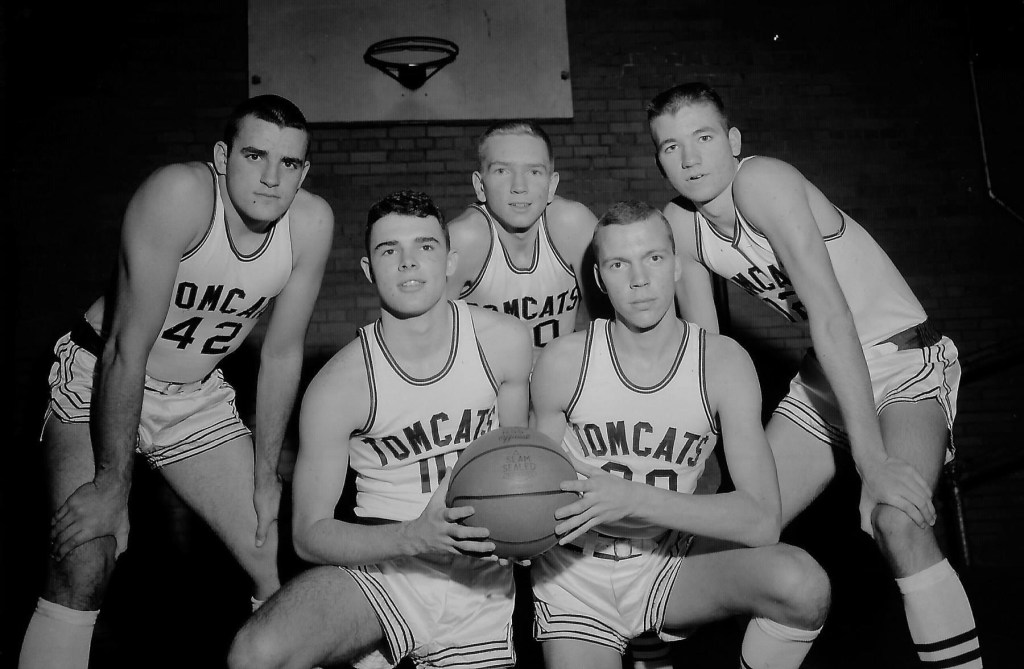
As a Tomcat, Bocard played quarterback and inside linebacker alongside Herb Conley on the last undefeated Ashland team until last season’s state championship run.

In 1958, Ashland went 10-0-1 with only a 18-18 tie against Huntington East the lone blemish. The Tomcats finished the season ranked No. 1 in the state coaches poll while St. Xavier was No. 1 in the Courier Journal poll. There were no state playoffs yet.

KENDALL BOCARD was the quarterback for Ashland’s undefeated 1958 team and was a member of UK’s “Thin Thirty” in 1962.

Bocard mostly handed off and blocked for running backs Conley, Dick Fillmore and Joey Layman.

“We were a helluva good football team,” Bocard said in a 2008 interview. “We were not finesse. We ran the belly series. I’d put the ball in Herbie’s belly and we’d sometimes run 10 yards before I’d pull it out. It was a good, physical football team. Kind of like that 1961 (Tomcat) basketball team.”

Fillmore’s shifty running accounted for 1,223 yards and 20 touchdowns, averaging 11.4 per carry. Conley was the inside power and ran for 906 yards and 16 touchdowns with 7.2 per carry.

Bocard (491 yards rushing) and Layman (459) also did their share of running. Layman scored on runs of 50, 18 ad 17 against Model during a 34-13 victory in the season-ending Recreation Bowl.

As for passing, well, it just wasn’t that kind of team. Bocard completed only 14 passes all season — nine of them going for touchdowns. Monte Campbell had 13 catches for 373 yards and eight TDs.

“We didn’t have to throw,” Bocard said. “We had a very good offensive line and with Herbie, Dick and Joey, why pass?”

Bocard was a hard-nosed runner himself and teamed with Conley as inside linebackers in a wide-tackle six scheme. They were both punishing tacklers on a physical Tomcat defense.

Ashland rushed for 3,691 yards and outscored opponents 424-97.

John Radjunas, who would become the quarterback of Ashland’s 1967 championship team, said Bocard, Conley and Fillmore were his first “Tomcat heroes.” Radjunas said he wore No. 12 “because Bocard and Joe Namath did.”

Bocard came back the following year and helped Ashland to an 8-2 season before heading to Kentucky on scholarship.

Bradshaw had played for Bryant at Kentucky and was a Bryant assistant at Alabama when he was hired to replace Collier in 1962. After the kind and gentlemanly ways of Collier, UK fans hoped Bradshaw would bring a tougher approach and his first team was know as the “Thin Thirty” after the brutal practices caused a mass exodus of players to either quit or transfer.

Bocard stuck it out and was a fullback and linebacker for the Wildcats, rushing for 160 yards and catching 10 passes for 127 yards in the 1962 season with the depleted roster. Kentucky finished 3-5-2 but stunned Tennessee 12-10 in Knoxville on a late field goal to become immortalized with fans. Collier had tied and lost to the Volunteers in his last two seasons.

Bocard rushed for 219 yards on 60 carries in the 1963 season. He came back as a graduate student and became one of UK’s first male cheerleaders.

A Life Celebration service will be Wednesday at 3 p.m. at Clark Legacy Center, Brannon Crossing in Nicholasville. Family and friends will meet from 3:30 to 5:30 p.m.

CP-1 Hall of Fame ceremony set for Aug. 21

ASHLAND, Ky. – It has been a long wait for the Ashland baseball CP-1 Hall of Fame class of 2020.

Last year’s ceremony was postponed because of COVID-19, but it’s back on for Aug. 21 beside the big diamond at Central Park.

For those wanting to make a weekend of it, the Ashland Tomcats open defense of their 2020 state football championship on Aug. 20 against Raceland.

On Saturday, Aug. 21, the inductees will have the stage in a ceremony that begins at 1 p.m. The class has memorable players and incredible coaches who have given so much to Ashland baseball.

It promises to be an emotional ceremony for the inductees and their families. Sadly, one of the inductees, Wilson Barrow, passed away last fall. He was considered one of the best athletes to ever play on the park field. His family will represent him.

The historic marker at Central Park. A CP-1 Hall of Fame ceremony will take place Aug. 21 at 1 p.m. with a 10-member class inducted..

Here is a closer look at the inductees:

-Wilson Barrow, who played in Ashland’s inaugural Little League season in 1955, could make the mitt pop like few others who ever played in the park. Barrow’s fastball was compared to how Bill Lynch and Don Gullett threw later in the decade.

-Scott Crank was one of Ashland’s best three-sport athletes. He starred in football (quarterback), basketball (point guard) and baseball (shortstop) for the Tomcats in the late 1970s and early 1980s. He was a clutch hitter and slick-fielding shortstop for the Tomcats and Post 76.

-Mike Delaney is going in for his longtime coaching role with Post 76, basically keeping the program alive, but he was an outstanding player in his own rights as a middle infielder in the mid-1970s for the Ashland Tomcats and Post 76.

-Bryan Finkbone was the consummate leadoff hitter and the sparkplug for the Tomcats in the mid-1970s. His speed made him a pest for opposing pitchers who had a hard time keeping him off the bases. His all-out style made him a favorite with teammates.

-Bill Hammond has coached at CP-1 for many summers and continues as a co-coach with Delaney for Post 76. He was also a standout pitcher for the Tomcats and Post 76 in the mid-1970s and became an outstanding teacher of the pitching craft.

-French Harmon was a solid contributor as a player for the Tomcats in the late 1970s, but it was his coaching skills that make him a CP-1 Hall of Famer. He led a Connie Mack League resurgence in the late 1980s and early 1990s and taught baseball and life lessons to his players.

-Jon Hart’s smooth swing made him a feared hitter for the Tomcats, Post 76, Stan Musial and Marshall University. If he didn’t beat you with his bat, he’d do it with the glove. Hart was one of the top all-around players wherever he played in his career.

-Cabot Keesey spanned the late 1970s and early 1980s and was a pure hitter who swung the bat as well as anyone along with being a strong defensive player who played nearly everywhere durin g his playing career with the Tomcats, Post 76 and Stan Musial.

-Mark Moore played for the Tomcats and Post 76 and then another 10 years on the Stan Musial level, making him one of the all-time veterans of the park. He hit for power and played flawlessly at shortstop, making every team he played for better.

-Mike Tussey, who coached youth league baseball for 22 years and won a state championship in 1988 with the Stan Musial adult league where he won more than 200 games in 10 seasons, was also a cable television broadcaster who was in the booth for countless high school and American Legion games in the 1970s and 1980s.

Former Tomcat Paul Reliford remembered as outstanding educator, coach

The Ashland Tomcat football family has lost another star player from the 1950s era.

Paul Reliford, the father of Fairview High School football and a top-notch educator who served 35 years as superintendent and teacher in the Westwood school, died Saturday. He was 84.

The Eagles started playing football in 1970 when then Fairview Superintendent Denver Ball talked Paul Reliford into being his coach.

Reliford had played football for Ball as an Ashland Tomcat. He was an outstanding receiver, catching passes from Herb Thompson and “Buffalo” Bill Hopkins with regularity. He hauled in 30 passes for 629 yards and six touchdowns during a 4-5-1 season in 1954.

His best game came in the season opener when he had 138 yards receiving in a 14-6 win over Catlettsburg in Putnam Stadium.

Reliford, who was a truant officer in the Raceland-Worthington school system when Ball approached him, wasn’t sure what he was getting into by starting a new program at Fairview, but his high school coach meant so much to him he was willing to give it a try.

Reliford even turned down a more lucrative full-time job from the railroad that would have paid him “twice the salary.”

Tomcats players celebrate during a 1954 victory over Catlettsburg in the season opener. Paul Reliford was key player on that team.

He and his wife, Germaine, were bringing up two boys, Chris and Glenn, and the extra money would have helped, Reliford said in a 2012 interview.

He said it was tough early on to make ends meet. They used newspapers for drapes, he said.

“I loved Mr. Ball and I knew I’d be happy (coaching),” Reliford said. “I was also married with two kids so I knew it’d be a challenge.”

Deward Davis had already started the football rolling with the Westwood Boys Club league and Scott Davidson was an outstanding assistant coach. So the pieces for success were in place.

It turned out quite well for Fairview and Reliford, who went on to become the school superintendent after a successful stint as football coach. Both of his sons also played for the Eagles.

Paul Reliford was a former Sports Day honoree and an outstanding football player at Ashland High School.

“This community has been good to me,” said Reliford, who lost his wife in 2012. “This community has always supported the school and supported me. I’ll always be an Ashland guy though.”

Reliford is a former Elks Sports Day honoree.

One of his best friends for a lifetime was George Stout, the longtime chairman of Sports Day and a supporter of all Fairview sports.

He also made a lifelong friend in Rex Cooksey, his next-door neighbor and a former Eagle player for him. “Rex is not only a good friend, but he was a good football coach,” Reliford said in 2012. The two coached together for several seasons.

“Paul was my teacher, coach and mentor but most of all my best friend,” Cooksey said. “I owe him everything because he believed in me and made a 22-year-old kid head football coach in 1978. We had a lot of great memories together.”

Fairview went 5-3 in its first season in 1970.