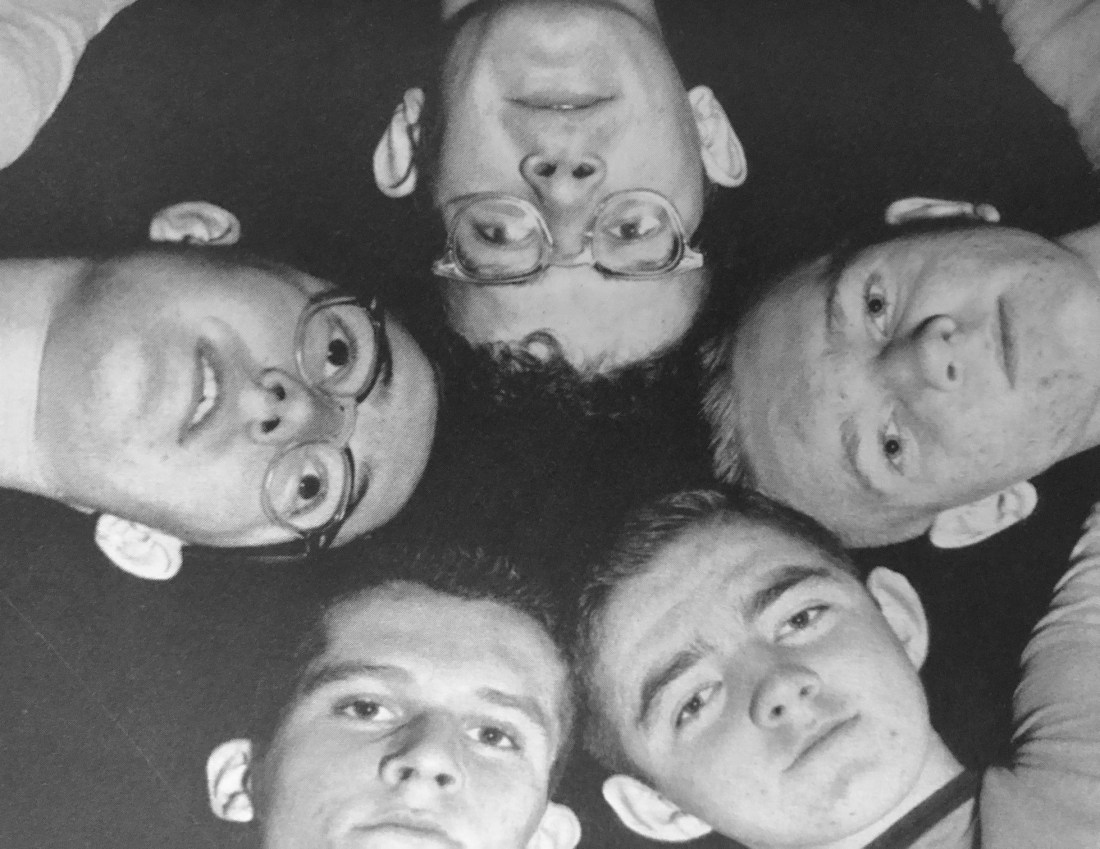
’61 Tomcats missed perfection but not greatness

Ashland was one game from a perfect season in 1961.

Those Tomcats, still considered one of the greatest teams in Sweet 16 history, will celebrate a 60th anniversary next March.

It was an amazing team with future college stars all around, including Rupp’s Runt Larry Conley, who was a junior on that Tomcat team who helped take them back to the state finals in 1962. He was a stud, an all-around player with a high basketball IQ and a determination to win that inside him like fire. He could be summed up in one word: winner.

But he wasn’t alone. It was a team of stars: Harold Sergent (Morehead), Gene Smith (Cincinnati), Bob Hilton (West Point) and Steve Cram (LSU). Dale Sexton, Larry Fairchild and Jerry Daniel completed the top eight.
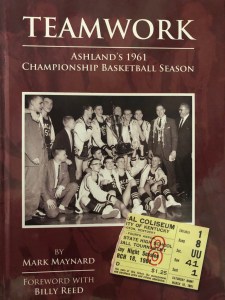
Email mainrod@windstream.net to order a copy of Teamwork.

Taskmaster coach Bob Wright was the architect of an Ashland team that finished 36-1 with that one blemish. They were so close to perfection.

Just how dominant? Only one of the 36 victories was less than double figures – 63-59 over Maysville in a January home game – and 20 of the wins came with margins of 20 or more.

By contract, so far the 30-0 Tomcats of 2019-2020 had eight games of less than 10-point margin and six of those by less than five, including 66-65 over Mason County and 57-54 over West Carter on a 60-foot bomb at the buzzer. Forty percent (12) of their wins have come by 20 or more.

The 1961 Tomcats rattled off 21 victories to begin the season including clobbering favored and top-ranked Louisville Seneca 79-50 in the championship game of the Ashland Invitational Tournament. A crowd of 1,561 watched the game that was played in what is now Alumni Gym on Lexington Avenue.

Can you even imagine? The gymnasium seated only 800 so that announced total seems a little inflated. But from what those who say they saw the game reflect, there was hardly room to breathe. Bill Lynch said he and his brother, Bobby, went to the AIT with his father who found a seat. They were relegated to the top of the bleachers, leaning against those red-hot radiated heaters.

With everybody stuffed inside, they would open the large windows in the top of the gym and let cool winter air flow down. It had to be a sight to behold!

Seneca was ranked No. 1 in the UPI (United Press International) and the Tomcats were ranked No. 2. It was supposed to be a battle to the end but turned into a runaway.

Conley scored 28, a season-high for him, but more importantly fouled out George Unseld and others by using a shot fake that Dean Church, a former Tomcat before him, had taught him. It was an up-and-under move after the shot fake and Unseld bit on it every time.

Seneca was stunned and mad. They would get another crack at the Tomcats in the Sweet 16.

The AIT also included Wheelwright, the eventual 15th Region champions, and Ashland hammered them in the semifinals 79-62 as Sergent scored 28 this time around.

Wheelwright, like Seneca, would get a rematch with the Tomcats in the state tournament.

Ashland basketball was the talk of town (sound familiar?) and rolling along with a 21-0 record. They looked unbeatable and were maybe feeling a little too good about themselves.

On a cold February night in Morehead, the Tomcats felt the sting of defeat. Lexington Lafayette won 59-58. It was shocking to watch the Lafayette fans storm the floor like they’d won the state championship. The perfect season was over.

Coach Wright, some say, allowed the Tomcats to lose. He didn’t substitute much and even left Sexton, who was sulking before the game, out of the game completely. Sexton had decided he’d go to the end of the bench before the game and when Wright needed him, he could just come and get him. But he never did. Sexton said he learned his lesson, too, and never sat at the end of the bench again.

Conley fouled out and then Smith, which is when momentum shifted. Ashland was leading 52-47 at the time. The Tomcats scored only once in five possessions over the last 2½ minutes, a one-hander by Cram with 1:25 remaining that put them ahead 58-57. Lafayette scored with under a minute to play for a 59-58 lead and Ashland missed a hurried jumper at the end. Jerry Daniel rebounded the miss and laid it back in but it was clearly after the buzzer. The unthinkable had happened.

The Generals won because they were able to handle Ashland’s devastating zone trap and because the Tomcats were uncharacteristically off their game.

Wright told me during an interview for the book Teamwork, “We just didn’t play. Seventeen-year-olds get overconfident. Sometimes, as a coach, you let things happen because you have to learn instead of me telling them. What they learned was much better than me telling them.”

Ashland was shocked by the defeat and many of them cried all the way home from Morehead. But the Tomcats also circled the wagons and said it would never happen again.

Wright said the loss was good for the team, that “we might have lost a game that really meant something” down the road. “In all probability, that would have happened. I don’t know if I allowed (the loss) or not.”

Ashland poured it on in the next four games prior to the postseason winning by margins of 33, 13, 40 and 18.

The 64th District was much the same with wins of 34, 38 and 37. Then they scored 95, 97 and 90 in the three regional tournament victories. In the semifinals against Grayson they outrebounded the Yellowjackets by an astounding 87-21 during a 97-49 victory. Ashland defeated Clark County 90-73 in the championship as Conley collected 27 points and 23 rebounds in a remarkable performance.

It was more double-figure wins in the Sweet 16 with margins of 17 (Covington Grant), 26 (rematch with Seneca), 11 (rematch with Wheelwright) and then 69-50 over Lexington Dunbar in the championship game.

The stomped on the gas pedal after the loss to Lafayette, leaving every opponent in their wake, wiping away the bitter taste of defeat by bringing home the state championship trophy in one of the most dominating performances in Sweet 16 history.
‘Mad Dog’ would have been so proud of his grandson

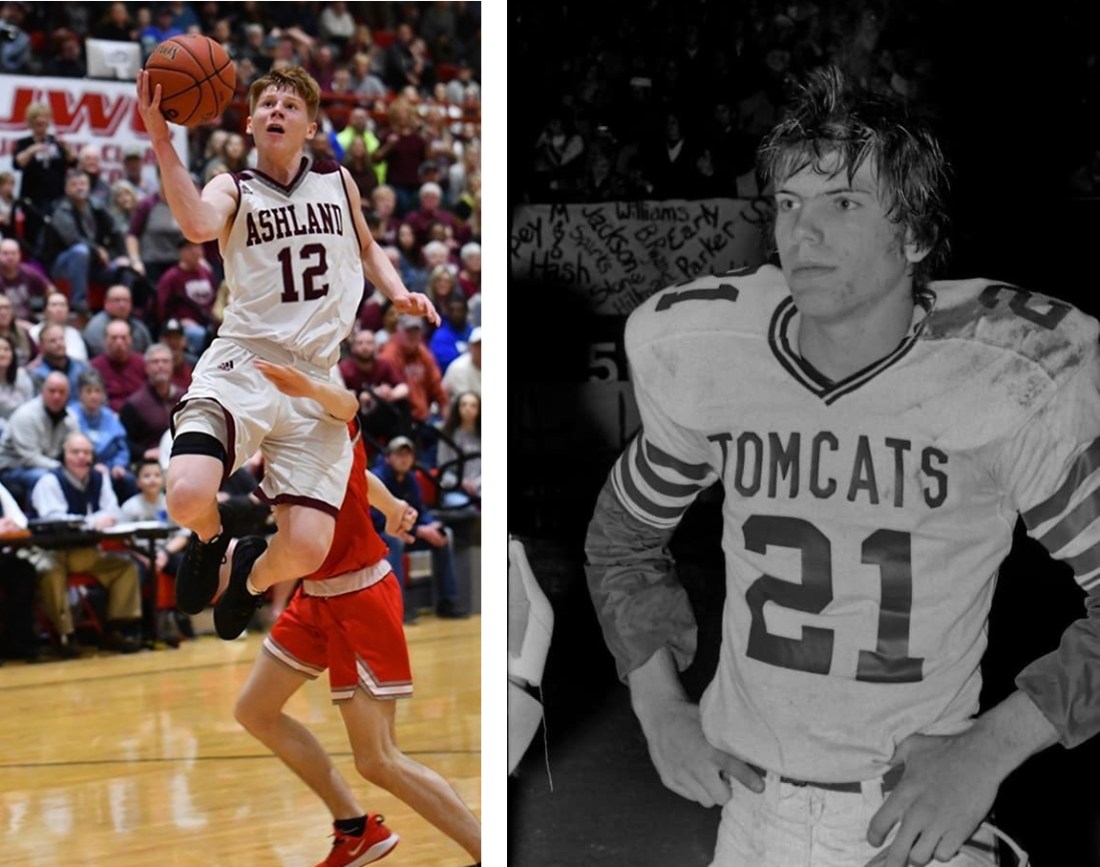
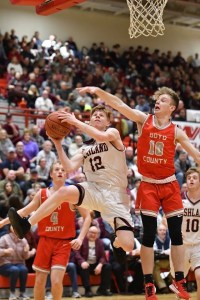
It was no surprise that Ethan Sellars ignited Ashland’s 62-55 victory over Boyd County on Thursday night in the 64th District boys’ basketball tournament.

I’ve seen that fire before, many times, and not just in Sellars. That burning desire to win comes naturally for the Tomcats’ sophomore. So does his no fear attitude and ability to make teammates better whether it’s taking the big shots like he did against Boyd County or diving on the floor for a loose ball. He is Greg Estep’s grandson and you can tell. I’m not sure if he leads the team in floor burns, but it has to be close. Not of these Tomcats seem to shy away from the dirty work on the basketball floor.

Ethan is special and his grandfather knew it was coming.

Ethan Sellars scored 10 of his 18 points in the fourth quarter of Ashland’s win over Boyd County. (Kimberbly Phillips photo)

Greg left this earth in 2014 after a fight with cancer. He gave it all he had, which was typical of him. His 10-year-old grandson Ethan was the apple of his eye. He saw something inside of him even back then. Looks like he was right. Maybe the Good Lord gave him a glimpse of his future.

I grew up next door to Greg and saw those attributes whether we were playing Wiffle ball in his side yard, driveway basketball or Strat-O-Matic baseball. Greg wanted to win, always. He was never afraid of making the big play, like he did as a senior quarterback when directing a late-game 14-13 road victory over Ironton by connecting with Rick Sang for a touchdown and then repeating it on the two-point conversion. It seemed to be a springboard for what was to come the following fall with a team nicknamed JAWS. Maybe that team should have been Baby Shark.

He was a instrumental player in 1975 when the Tomcats were 16th Region basketball favorites before being stunned by Greenup County and Steve Skaggs in the opening round. They hadn’t lost to a region opponent all season. But that’s how it goes sometimes but it was a loss that ate at him (and others) a long time. Of course, a board game loss would eat at Greg, too. We called him “Mad Dog,” and with good reason.

Later in life, as a Junior Football League coach, all his teams did was win. No surprise to any of us.

That same fire-in-the-belly attitude was passed down to his children, Chris and Heather. They both played with their hearts on their sleeves. I know how proud he was watching them compete at high levels in an Ashland jersey and can’t imagine the joy that watching Ethan play on this team would have brought to him.

It would have come with some critique, that is if he could wipe the proud off his face (which he probably couldn’t). He would love the way this team plays so well together. Greg was always a proponent of teamwork whether it was 2-on-2 Wiffle ball,1-on-1 driveway basketball or a high school or JFL championship.

During a Putnam-Coles basketball game in the winter of our freshmen year, he was hustling hard down the floor to knock away a pass, which he did. His momentum carried him out the first set of doors and then the second set into a winter evening. He came back in the other side in full sprint with the crowd roaring. I’ll never forget that.

Greg averaged only 4.3 points per game as a senior, yet everybody remembers him for being a key contributor, which he was.

Eventual champion Fairview was supposed to be Ashland’s main block to the championship and the teams met only once in the regular season. Guess who stepped up? Estep scored a season-high 13 and the Tomcats subdued the Eagles, 77-60. Everybody expected a rematch in the regional tournament, but Greenup County spoiled the party for the Tomcats. We’d already made our state tournament reservations.

Ethan Sellars made his late grandfather proud with stellar performance for the Tomcats. (Kimberly Phillips photo)

I’m not sure anybody would have enjoyed Ethan’s performance in the fourth quarter of the district final more than Greg. Sellars put the team on his back, scoring 10 of his 18 points when it was needed the most. The unbeaten streak would have ended without him. The next game, it might be somebody else. That’s what has made these Tomcats so good. Not only do they have five players capable of leading them, but none of them seem to care who gets the job done.

This time it was Sellars, next week it could well be somebody else.

Ethan’s grandfather would be smiling either way.

To read a column that was written about Ethan back in 2014 click HERE.


Finding focus in smorgasbord of sports memorabilia

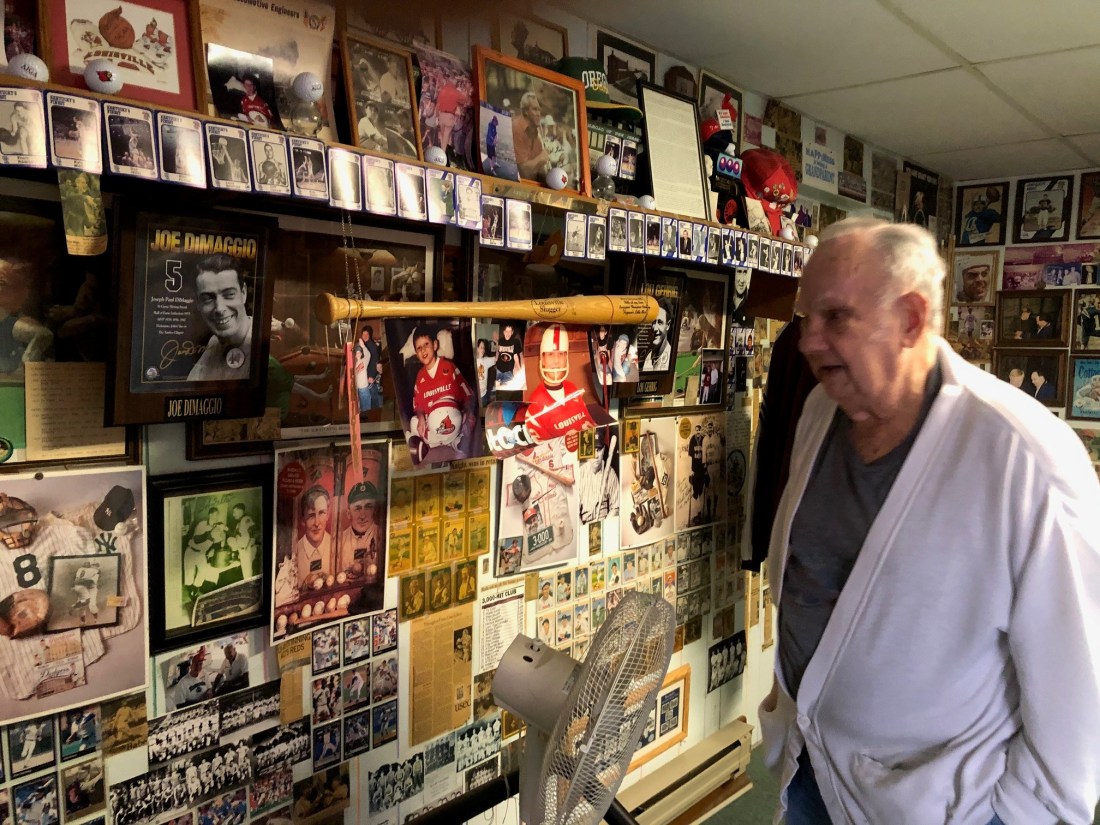
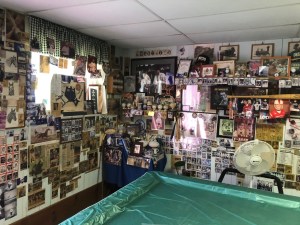
Walk down the narrow stairway to Eldon Thompson’s basement and your eyes almost can’t focus because of what they’re seeing, which is a little bit of everything, a sports smorgasbord sea of memorabilia.

A hodgepodge of sports photographs, posters and newspaper clippings are hanging on every inch of every wall in the room that has a pool table smack dab in the middle of it. Shelves and tables have neatly placed memorabilia, including some 1920s and 1930s Ashland Tomcat football and basketball team photos, autographed baseballs and other sports trinkets.

The 88-year-old Thompson has made the basement haven a hobby since 1999 and some of the clippings are as old as him. Like the front page of the Lexington Leader the day after the Tomcats and Kittens captured the 1928 state basketball championships.

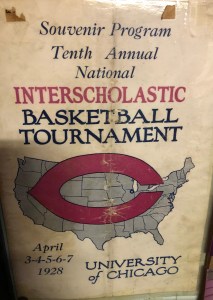
He has a program from the national tournament in Chicago where the Tomcats won it all in 1928 and a bracket from the national tournament that same year. He has a tattered photo that shows an old Tomcat logo with the scores of the five games from the 1928 national tournament, a rare piece of Ashland sports memorabilia.

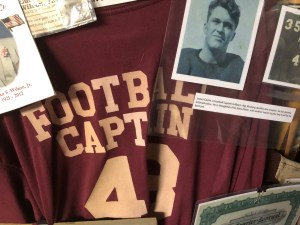
Longtime friends, including the late Bun Wilson, entrusted him with much of the Tomcat memorabilia, which he said he might loan out but would never sell. He has a game jersey that was worn by James Castle, a Tomcat football team captain in 1939 who was a sophomore when the original Putnam Stadium opened in 1937.

Thompson was a fan of the Brooklyn Dodgers and especially Gil Hodges and Duke Snider. He penned a letter of the day that he went to Crosley Field in Cincinnati in 1952 and timidly went up to Hodges for an autograph because he was his favorite player. Hodges not only signed his program, but he passed it around so everybody else in the Dodger dugout at the time could put a signature on it. Unfortunately, he says, that program may have been accidentally thrown away by his mother. It may be the only thing not on his wall.

The letter he wrote of that day in Cincinnati is well written and typed in all caps. It’s framed on a shelf, angled perfectly on a small bookcase, with several other framed photos beside it.

Three baseball cards of Hodges are on a wall, too, and somewhere, he said, are ticket stubs from a Super Bowl that he once attended. “I think the Vikings were one of the teams in it,” he said. There’s also a photo of him in the Winner’s Circle at Keeneland after a friend invited him to come down following a big victory.

He has a lot of UK and Louisville photos and posters and Styrofoam footballs with scores of Kentucky football wins etched on them. There are hats, golf balls with Louisville logos, photos of Babe Ruth and Mickey Mantle, Johnny Unitas and a framed photo of the cover from the 1952 Cotton Bowl when Kentucky stunned Oklahoma.

He has a Tomcat warmup jacket that has a message on the sleeve from Larry Conley. Thompson, who was an Air Force veteran, was an American Legion baseball coach when Ashland’s “Larry Legend” played in the early 1960s. The inscription reads: “To Eldon, One of the great baseball coaches in Ashland. Larry Conley.”

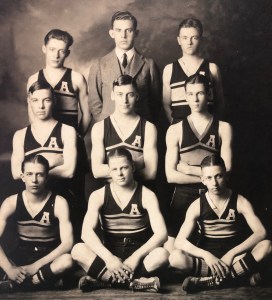
Ashland’s 1922 basketball team.

In another corner on a table sits a framed photo of the 1922 Ashland Tomcat basketball team. Beside that are several football team photos from the 1930 era in Ashland. He has schedule cards, programs and other Tomcat memorabilia in the room.

Mixed among it all are photographs of his grandchildren and great-grandchildren and their involvement in sports because family makes his world go around.

There’s no rhyme or reason as to how everything is pinned, taped or glued to the walls but nearly every available space is taken. While the collection wouldn’t bring a king’s ransom, they mean the world to him. Much of them are personally signed to him and all of them have a story behind them.

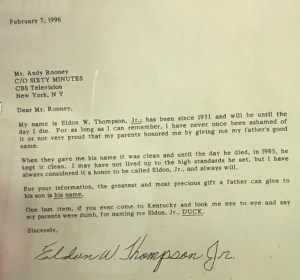
Another item hanging in the room is a framed letter to Andy Rooney of “60 Minutes” that he wrote in 1996. It seems Mr. Rooney suggested parents should never name their children after them and that it was, in fact, dumb to do so. Thompson took exception to that statement and he wrote a letter letting Rooney know about it because he was proud to carry his father’s name. Here’s how he closed that letter.

“One last item, if you ever come to Kentucky and look me eye to eye and say my parents were dumb for naming me Eldon, Jr., DUCK.” And he signed it: Sincerely, Eldon W. Thompson Jr.


With or without interview, Fred Leibee’s place in Tomcat history secure

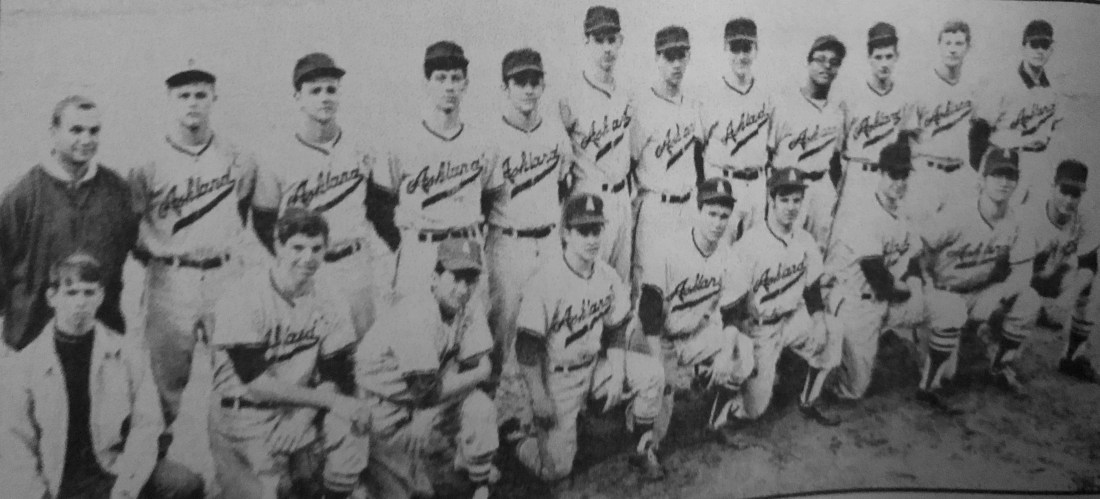
When I was writing Tomcat Dynasty, the book about Ashland’s unmatched baseball run from 1965 to 1969, interviews with players who could tell me the rest of the story was imperative to making it a great book.

Most were more than willing, even thrilled, to be interviewed about some of the greatest times of their lives. Bill and Bob Lynch were my top contacts and they helped me track down many others. Some were still in Ashland, including Fred Leibee.

I’d known Fred for years and knew how good of an athlete he was for the Tomcats in basketball and baseball since he played when I started paying attention to sports. I was 11 years old in the spring of 1969 when Ashland’s basketball team went to the Sweet Sixteen in Freedom Hall. I knew the players – Ray Kleykamp, Roger Baldridge, John Mullins, Jerry Owens, Dave Staten and Fred Leibee.

Like the rest of Ashland, it was a tough going through that 82-80 loss in the semifinals to Ohio County that was a heartbreaking defeat, even though Louisville Central, one of the greatest teams in Sweet Sixteen history, would have been waiting in the finals. Still, it was a hard loss, with Ohio County rallying from 15 points behind and then Kleykamp missing a jumper at the buzzer that could have tied the game.

Ashland never makes it to the semifinals without Leibee, who scored 19 against Harlan and 20 against Shelby County to help get them to Ohio County and the final four. It would be Ashland’s best showing since 1962.

Then there was the 1969 baseball season and Ashland had won three state championships in a row. They defeated Don Gullett in the regional semifinals in Morehead  during that ’69 season in one of the greatest victories in Ashland history with Tim Huff outdueling the future Cincinnati Red in a 1-0 thriller.

Fred Leibee was in the middle of all that. I asked Fred multiple times to talk with me about the good ‘ol days but he was never interested. “Ah, Mark, that’s ancient history,” he told me more than once. He didn’t want to replay or live in the past. That part of his life was over and he’d put it behind him. I remember trying one last time to convince him and both Bill and Bob Lynch asked him about it too. “Nah, guys, that’s ancient history.”

It was a history that he helped write for the Tomcats.

Many people may live too much in the past and often they live in a past that frankly wasn’t all that great except in their minds. That wasn’t so for Fred Leibee. He was great.

I wrote the book without him quoted but not without him in it. He was too integral a part of that 1968 championship season and the 1969 runner-up team to be left out.

Leibee was such a tremendous baseball player both as a fielder, hard-throwing pitcher and clutch hitter. He made some fabulous plays at third base in the ’69 tournament and was named to the All-State tournament team.

During the regular season he was part of a doubleheader sweep of Lexington Catholic where 27 players went down swinging against the Tomcats’ Huff (12) and Leibee (15). The headline in the next day’s newspaper read: “Uncle Huff, Nephew Leibee Hurl AHS to Twin Bill Sweep.”

Leibee was overpowering with the 15 strikeouts and no walks in a 7-2 win. Huff got more offensive help in a 12-1 rout. Lexington Catholic went home not seeing much of what either of these guys threw at them. That’s 27 strikeouts out of 42 outs. Uncle Tim was the brother of Leibee’s mother and they were friends for life.

They also got in plenty of trouble, including in that ’69 season when coach Shorty Blanton suspended them after smelling alcohol when they showed up for a game. They had taken advantage of Senior Skip Day and went to the strip mines where they “had a little too much to drink,” confessed Huff in an interview with me. He wasn’t so much confessing as laughing. “Shorty kind of smelled it on us. He suspended us. Everybody pretty well knew.”

Another big victory for Leibee was a 2-1 decision against Holy Family and Dave Brislin in a pitcher’s duel. There were a lot of other big moments, too. It was a team that led the state in having fun but they were serious between the lines. Only a 1-0 loss to Owensboro kept them from a fourth consecutive state championship.

A few years ago we did convince Fred to accept an invitation to be in the CP-1 Hall of Fame, even though he had to give a speech. In typical fashion, his “speech” lasted about 15 seconds. Another record for Fred: shortest induction speech ever.

Fred Leibee is gone now. He died on Monday at the age of 68. His legacy as one of Ashland’s greatest athletes during the golden era of Tomcat sports in the 1960s remains forever, with or without interviews.