9 significant home openers in Tomcat football history

Ashland sure didn’t schedule a cupcake for the christening of the new and improved Clark’s Pump-N-Shop Putnam Stadium on Friday.

Harvest Prep, a Division V powerhouse from Canal Winchester, Ohio, may be one of the toughest home openers in Ashland history. The Warriors are 2-0 this season, dispatching Division I Pickerington Central 24-21 and routing Purcell Marion, 46-8, last week.

The Warriors play for keeps and reside in the same division as our across-the-river neighbors Ironton and Wheelersburg, of whom they have a bit of history.

Harvest Prep fell to Perry 22-8 in the 2023 Ohio Division V championship game and the road to get there included wins over Ironton 20-14 in the quarterfinals and Wheelersburg 22-0 in the semifinals. It was the second win over Wheelersburg, having defeated them 32-16 in the regular season.

Clark’s Pump-N-Shop Putnam Stadium will unveil its exciting new look and other features on Friday, Sept. 6, against Harvest Prep.

Like the Tomcats, Harvest Prep is a program dripping with tradition. The Warriors are 101-23 over the past 10 seasons, including records of 10-3, 13-1 and 12-2 respectively in the past three seasons.

Milan Smith was the head coach in nine of those 10 seasons, David Howes went 13-1 in 2022 with Ironton providing the only loss, 34-0 in the semifinals.

This will be the “third chapter” of Putnam Stadium – the first coming in 1937 with the first game, then the reconstructed stadium in 2014 and now this season with new artificial turf, a Jumbotron scoreboard, new lighting, sound system and more bells and whistles than a one-man band could have in his wildest of dreams.

Here’s a look at nine home openers of significant seasons in Tomcat history. We can add No. 10 on Friday night:

Sept. 18, 1937

The first game in the history of Tomcat Stadium – later to be renamed Putnam Stadium – was a 22-0 shutout win over Ceredo-Kenova, W.Va. Vincent “Moose” Zachem had the first touchdown in stadium history.

The ‘37 Tomcats finished with an unusual 3-3-3 record with all three losses and two ties coming at home. All-State tackle Ralph Felty was a star. Jack Ball ran for 69 yards and Charle “Doc” Stanley gained 36.

The last three members of the 1937 team: Bun Wilson, Charles “Doc” Stanley and Ralph Felty. All three men have since passed.

The stadium was built with Works Progress Administration (WPA) funds because they were taking much of the land at Armco to prepare for possible war. Ashland asked for some help and WPA poured the concrete creating the seating, locker rooms under the stadium and the Ashland labor did the rest including the ticket office and wooden bleachers. The cost  for the stadium was $6,000.

Ernie Chattin was the head coach for the Tomcats. He said during a 1987 interview that there was only a small crowd for the afternoon opener. The stadium did not have lights until 1944.

Sept. 19, 1942

The season started with a bang in what turned out to be an undefeated 10-0 season as the Tomcats drubbed Coal Grove 64-0 with Jim Stith and Paul DeHart scoring two touchdowns apiece.

Ashland defeated Manual on the Louisville powerhouse’s field in mid-November 7-6 to lay claim to the mythical state championship. The Tomcats made sure they stayed undefeated the following week by walloping Russell 70-0.

J.C. Kennard, Rupert “Doc” Rice and Spencer Heaton were among the stars for coach Charles Ramey.

Sept. 6, 1958

Ashland, with the likes of Herb Conley and Dickie Fillmore, smothered Catlettsburg 51-6. Conley rushed for 151 yards and Fillmore gained 104. It would be like that all season for Mr. Inside and Mr. Outside.

The Tomcats finished 10-0-1 with the tie coming against Huntington East in the fourth game of the season. Ashland defeated Richmond Model 34-13 in the Recreation Bowl to close the season.

Herb Conley busts through the line for a big gain during the 1958 season.

Rex Miller was the head coach and Kendall Bocard, Joey Layman and Monte Campbell were other star players.

The high school playoffs started the following year.

Aug. 25, 1967

Ashland was big, strong and ready. Defense dominated Evarts in a 19-0 victory to open the season. Tony Mulvaney gained 89 yards rushing and Steve Scott gained 78.

Mike Johnson makes a play on defense for the 1967 Tomcats.

The Tomcats were a punishing team, finishing 13-1 with the only loss coming to West Virginia power Stonewall Jackson, 13-3, in Putnam Stadium.

Ashland defeated Elizabethtown 19-14 in the Class AA championship game at the Fairgrounds in Louisville on Nov. 24. Paul Hill, Bill Culbertson and Les Lyons were first-team All-State players.

The title was the first official state football championship in school history. Jake Hallum was the head coach.

Aug. 25, 1972

Pierre Harshaw shows his speed on the outside.

Knox Central was no match for Ashland in the season opener as Steve Layman rushed for 122 yards and Jerry Kirk threw for 93 yards.

Defense was the calling card though with only four teams scoring more than one touchdown against the Tomcats, who made it to the state championship before falling to Tates Creek 16-7 in the last game ever played at Stoll Field in Lexington.

Layman, Steve Johnson, David Johnson, Pierre Harshaw, Randy Rice, Kirk, Randy Elkins, Jerry Bentley, Mike Wheeler, Roger Webb and Mike Kimbrell were some of the stars.

Ashland finished 11-2 and earned its way to the championship with a physical 21-6 win over Bryan Station in Putnam Stadium. Herb Conley was the head coach.

Aug. 22, 1975

Just when you thought it was safe to go to Putnam Stadium, here comes JAWS.

Ashland’s dominating defensive team crushed Johnson Central 47-14 – the first of 14 consecutive victories – as Gary Thomas rushed for 182 yards and three touchdowns and Jeff Slone 108 yards and a TD.

The Tomcats were 7-0 at Putnam Stadium, including a 14-0 victory over Kenny Fritz-led Ironton.

Ashland was the Class AAAA State At-Large champions with a 13-7 win on the road at Paducah Tilghman. The Tomcats became the first team to fly to a game in state history.

Gary Thomas (25) and Jay Shippey (30) lead the way for Jeff Slone in 1975.

St. Xavier blanked Ashland 20-0 the following week for the Class AAAA overall championship.

Thomas and Slone were 1,000-yard rushers and Terry Bell, Rick Sang and Thomas were first-team All-State selections. Bell was the state’s Lineman of the Year and Herb Conley the state’s Coach of the Year. The team included Chuck Anderson, Casey Jones, Yancey Ramey and Greg Jackson.

Aug. 17, 1990

Ashland sent an early message that this team was going to be special, smashing Raceland 41-8 behind Juan Thomas, who ran for 103 yards and two touchdowns, and punishing fullback Charlie Johnson who had 84 yards rushing.

Raceland coach Bill Tom Ross predicted greatness for the Tomcats, who finished 14-1 and overwhelmed Lincoln County 35-13 for the Class AAA championship for coach Vic Marsh.

Charlie Johnson provided power in the backfield for the 1990 Tomcats.

Ross said tackling Johnson was “like trying to tackle a rolling manhole cover” as he powered over would-be tacklers all night.

Running backs Thomas, Johnson, Chris Hutt and quarterback David Brown made for a dominating wishbone offense that rushed for more than 5,000 yards. The only blemish was an 18-15 loss to Greenup County in the third game at home.

Aug. 29, 2014

This was the first game of the “new” Putnam Stadium. The old stadium was razed and then it was rebuilt in the same style. The opener was supposed to be the previous Friday but a driving rainstorm flooded the field, postponing it a week.

Ashland outlasted Raceland 41-35 as Quinton Baker rushed for 188 yards and four touchdowns and Jake Long had a 64-yard touchdown run.

The Tomcats finished only 6-5 but did advance to the second round of the playoffs.

Baker rushed for 1,719 yards and 20 touchdowns and was first-team All-State.

Oct. 9, 2020

Keontae Pittman ran for 253 yards and three TDs in his last game as a Tomcat. (Don McReynolds photo)

It was the third game of the season – during COVID – before Ashland played a home game against East Carter. The season didn’t start until the last Friday of September.

The Tomcats crushed the Raiders 54-7 as Brett Mullins threw for 140 yards and two touchdowns with J.T. Garrett hauling in 129 yards and both TDs receiving.

Ashland ran the table, going 11-0 and winning the state championship with a 35-14 victory over Elizabethtown as Keontae Pittman ran for 253 yards and three touchdowns and Hunter Gillum 115 yards and two touchdowns.

Tony Love was the head coach of one of the top defensive teams in Tomcat history.

Greg Jackson’s Tomcat Vision: Seeing is believing

Greg Jackson looked around Clark’s Pump-N-Shop Putnam Stadium on Friday morning like a proud father.

Seventeen years of labor pains will do that.

Jackson’s vision to make Putnam Stadium the grandest of them all even, when everyone else was telling him that it will never happen, is happening.

Let us count the ways:

Greg Jackson stands with the Clark’s Pump-N-Shop Putnam Stadium behind him. He has watched his 17-year vision come to life.

–A stadium rebuilt with the same look and feel of the original stadium.

–Bucket seat for the new seating.

–A donor corner with a statue of Coach Herb Conley.

–Artificial turf (A big hurdle crossed only with corporate help from Clark’s Pump-N-Shop).

So, shouldn’t that have been enough? Well, no. The VISION was bigger. Read on:

–A banked end zone in the open end of the field with ASHLAND centered in the middle.

–Mesh maroon screens to cover the already weathered concrete along the bottom of the bleachers.

–A granite four-foot Tomcat statue at the top of the stairs on the closed end if the stadium that became another tradition as players touch it before heading onto the fields on Friday nights.

–New lights to replace the aging 30-year-old poles that were showing their age.

–Three new flagpoles to replace the rusted ones and new USA flags, Commonwealth flags and Tomcat flag to hang from them.

And the last piece of this enormous vision? A monster scoreboard with a Jumbotron inside of it and a state-of-the-art sound system that will send Chuck Rist’s voice out for miles and miles.

The new turf at Clark’s Pump-N-Shop Putnam Stadium is eye-popping.

Jackson went to work on that one in May and in only 10 days had secured six anchor advertising sponsors to pay for it. And not only did he have enough for Putnam Stadium but also will be hanging one in Anderson gymnasium. How did he do it all? With determination and relentlessness and a can-do spirit like I have never seen.

If you are looking for a Most Valuable Player for this project, it is obvious who gets all the votes.

Full disclosure: I’ve known Greg a long time and consider him a close friend. What stands out to me is this man’s integrity. He’s a man of his word, a West Point graduate and “Beat Navy” are his two favorite words put together. He is a longtime trusted friend of the community and loves being part of the Tomcat family.

The overwhelming amount of work he has put in on this project says a lot about the man who would not consider anything but the vision that he began putting together 17 years ago and it is about to come to fruition next Friday.

The obstacles and detractors he faced would have scared away a lesser man. He never blinked. As he kept dreaming of more for the stadium, I learned they weren’t dreams in his mind. It was all part of the vision, a vision that he was going to finish.

Superman has X-ray vision. Jackson has Tomcat Vision.

And when you come to Clark’s Pump-N-Shop Putnam Stadium this season, seeing will be believing.

Unsung heroes: Putnam Stadium caretakers have been remarkable

ASHLAND, Ky. – Steve Conley and Joe McDavid hate the spotlight as much as they love Clark’s Pump-N-Shop Putnam Stadium. And that’s saying something.

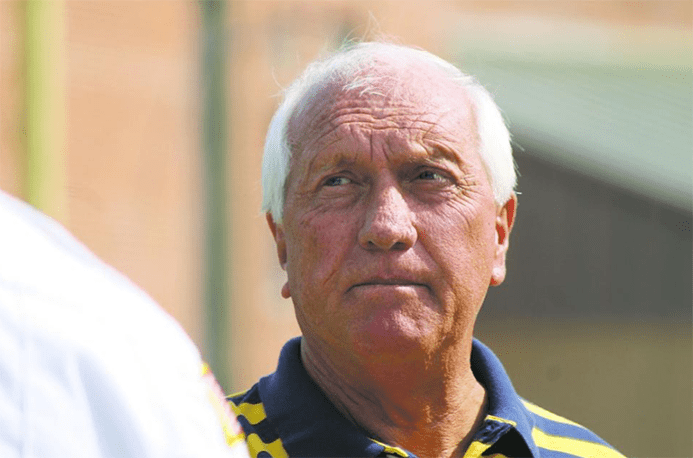
They do their jobs with excellence but in such obscurity the only photo available of Conley was from 10 years ago. I was able to muster only a mug shot of McDavid.

Conley and McDavid, like the late Doug Childers before them, have treated the natural surface at the stadium like their own front yards, manicuring every blade of grass it seemed. Those three men have been the unofficial (and unpaid) groundskeepers and caretakers at the home of the Tomcats for more than five decades combined.

Conley has worked at it for more than 20 years and McDavid more than 11 years. Childers did it for 30 years before they came on the scene – enough so that they renamed the surface Doug Childers Field. He was a fine man who cared a great deal for the stadium.

Doug’s sister, Donna Childers Suttle, was a huge fundraiser for the stadium restoration project and served on the committee for several years. She always said that Doug “treated it like it was his own front yard.”

The same could be said for Conley and McDavid who in the spring and summer mowed the grass three times a week. It was a way they could give back to the football program and Tomcat Nation in general. McDavid’s sons, Drew and Daniel, were outstanding Tomcat football players so his attachment came quite naturally.

Steve Conley has been the groundskeeper at Putnam Stadium for the past 21 years. He is shown in this photo from 2014.

Conley’s son played basketball but his personal satisfaction came from trying to make it the best stadium in the area. It wasn’t just mowing the grass either. He did the watering, trimmed bushes and was the eyes and ears for Ashland athletic directors Mark Swift and Jim Conway, making sure they knew if there was anything that needed to be fixed, repaired or painted. It is hard telling how many man hours he put in on the stadium.

And still does. Conley can usually be spotted with Greg Jackson, the tireless chairman of the restoration committee that is about to realize the end of a 17-year vision. Conley has been a crucial member of the committee for Jackson, who had to sometimes feel like he was on a deserted island through the long process. But he always had a confidant in Conley.

Joe McDavid

Conley has always cared for the stadium and was instrumental in getting the restoration project under way. In 2007, he was working at the Catlettsburg Refinery under supervisor P.J. Stringer, who was also the chairman of the Ashland school board. He showed Stringer the places where the stadium’s structure looked like it was showing its age. Concrete was being chipped away and the underbelly of the stadium was cracking.

It was eye-opening for Stringer, who immediately met with then superintendent Phil Eason and formed a stadium restoration committee.

“We needed to repair Putnam Stadium,” Conley said. “That was our goal when we started. It was never to replace Putnam Stadium.”

However, after hiring some engineers to inspect the stadium, they learned the news was much worse. “They came back and said, ‘You can’t repair this, it has to be replaced.’ That was in the spring or summer of 2008. It was unrepairable,” Conley said in a 2014 story in The Independent.

The committee then started on the long fundraising journey that has seen many ups and downs, including a recession that rocked the economy.

Conley said in that story in 2014 that he would do the groundskeeping “for as long as he was able.” He was 62 years old. Ten years later, and the job was getting too big for the two volunteers who deserve so much credit for how Putnam Stadium has looked every season.

Conley and McDavid took pride in how the stadium looked as fans came through the gates, especially for that first game of the season when you couldn’t tell if it was natural grass or artificial surface, it was so perfect. They went to great lengths, putting in a lot of hours throughout the weeks, to get it in Game Day shape throughout the remainder of the season.

“The commitment level they’ve had has been remarkable, unbelievable to be honest,” Conway said. “They don’t ask for anything and say, ‘Don’t say anything about us. We want to be in the back and do our thing. Thank you for allowing us to be a part.’ You don’t run into people like that.”

Volunteers, which included parents of players from each particular season, put down the paint for the field on Thursday nights. Sometimes there was a lot of help and other times not so much. Each year there was a new group and a new learning curve.

“That has been the monster.” Conway said. “Back in the day, a lot of people were willing to commit time and do those things. The number of people willing to do that is very minimal at best. It’s like always having the same folks working the concession stand. It’s always the same ones, they’re going to do it regardless. But you can’t expect the same folks to be doing it all the time. They’re getting older, they’ve got other things going on in their life with their families.”

With the artificial turf, which was made possible through a sizeable donation from Rick and Brent Clark of Clark’s Pump-N-Shop, Conley and McDavid can sit back and smell the roses. There will also be no more paint parties on Thursday night.

“I know the older generations are upset because the grass surface is going away but people don’t understand how this is going to affect everything,” Conway said. “We will never have to cancel JFL (games) again and we’re not going to have a muddy, sloppy game in November when the stakes are high. It has been needed for quite some time. We finally got there.”

The new Clark’s Pump-N-Shop Putnam Stadium will have its reveal on Sept. 6 when the Tomcats play their first home game of the season against Harvest Prep out of the Columbus area. There have been plenty of spectacular additions, including a giant Jumbotron inside the new scoreboard and a sound system that would make the Rolling Stones blush.

But, if possible, could I suggest one more thing?  

How about a couple of rocking chairs in prime locations on the field for two of the unsung rock stars of the past 20 years of Tomcat football?

Bittersweet ending for CP-1 Hall of Fame during these changing times

ASHLAND, Ky. – It was a bittersweet scene Saturday afternoon as the curtain fell on the last CP-1 Hall of Fame induction ceremony.

There were a lot of handshakes, hugs and photographs on the field. And nobody wanted to leave.

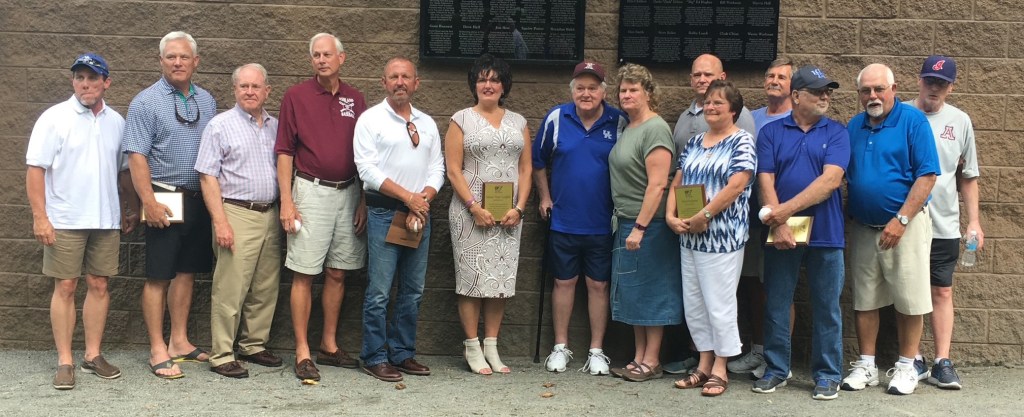
One of the last photographs taken was a group shot of former CP-1 Hall of Fame members in attendance. We instructed those who came to step out onto the field one more time for the photograph. Looking around at this group of 37 men of various ages mingling on the big diamond for maybe one last time kind of got to me.

The photograph was taken, and the ceremony was over, but everybody stuck around for as long as they could. Most of them knew they would likely never be back on this field that had meant so much to them. I witnessed a few of them jogging (limping?) across home plate one more time – and not nearly as fast as I remembered them.

Chris Queen during his induction into the CP-1 Hall of Fame on Saturday, Aug. 24 in Ashland.

Others were swapping stories and selfies, laughing and remembering what it was like to play on CP-1. Even though it looked nothing like it did when they played here – the place got a major facelift from Gary Wright’s generous donation in 2008 – it was still the same to them.

As inductee Tim Holbrook said, he wore steel cleats for the first time on that field and remembered it sure was a long way from home plate to first base. Steve Smith, a catcher and 2024 inductee, said you had to catch a shuttle to track down a wild pitch it was so far from home plate to the backstop.

We lined up everybody and Sasha Bush of the Ashland Beacon climbed up a three-step ladder and took the photograph. It was a keeper. Three rows of baseball heroes. The CP-1 Hall has 100 inductees – make that 101 after a late surprise when they inducted yours truly at the close of Saturday’s ceremony –  and I wish more could have made it. Some of them are no longer with us and some are, well, older.

Five in the CP-1 HOF made it to the major leagues – the late Don Gullett, Brandon Webb, Drew Hall and umpires Charlie Reliford and Greg Gibson. What an accomplishment! Many others who played on CP-1 did so during their youth league years, then high school and American Legion and some in the adult league. Most of them remember the Fourth of July Post 76 American Legion tournament in the park where talent from around the country assembled in Ashland for four days of incredible baseball. It drew enormous crowds.

Donnie Payne during his induction into the CP-1 Hall of Fame on Saturday.

Ashland’s only high school state championship baseball teams called CP-1 its home field, too. That happened from1966-68 and has not come close to happening since. Graduating to the big diamond (nobody called it CP-1 but the newspaper, when it listed schedules for the week) was a big deal coming from the two Little League fields in Ashland that were five blocks apart – the American League on 22nd Street and the National League on 17th Street. It was a fierce rivalry that made everybody better.

Bob Lynch gives a hug to Susie Carter during the CP-1 Hall of Fame ceremonies on Saturday, Aug. 24, 2024.

The park was full of life, full of baseball, from daylight to dark. Coaches would come home from midnight shirts and put their equipment bag on the mound at 7 in the morning. That meant they had the field first for practice the next day.

Baseball has changed a lot in Ashland since the days when playing on the big diamond was special. High school teams have their own fields and youth baseball leagues are nonexistent in Ashland, save for a handful of Little League teams who now have only one league instead of two. There are no Babe Ruth Leagues, Junior Leagues or Senior Leagues. Only one school in the area uses the field regularly now.

For better or worse (and I know which way I lean), travel baseball has become the summer norm. All-star type teams are put together and play in tournaments all over the place during the summer. It must be a slice out of the family budget to spend multiple weekends in hotels and eat out every day.

It was much different than spending the day at the park playing baseball from daylight to dark – some of it organized and some of it sandlot.

I’m sure today’s young players are learning the game through the travel ball experience. They get a lot of swings against different competition. I understand things change and this isn’t the only area that does the travel ball. We also have travel soccer and AAU basketball that has competed for athletes with baseball.

Kids don’t have much time to be kids these days. They probably don’t have much time for backyard Wiffleball either – and that’s a real shame.

The big diamond seems to be fading away, missing the dirt flying and the sounds and sights that come with the game. They were alive again on Saturday with some sweet memories that cannot be taken away.

Unfortunately, CP-1 is more of a shrine to yesterday’s greats than a baseball field where young boys became men before our very eyes.

I wonder how long it might be before the walls come down to make space for something else.

Thirty-seven of the 101 members of the CP-1 Hall of Fame in Ashland after induction ceremonies on Aug. 24, 2024.