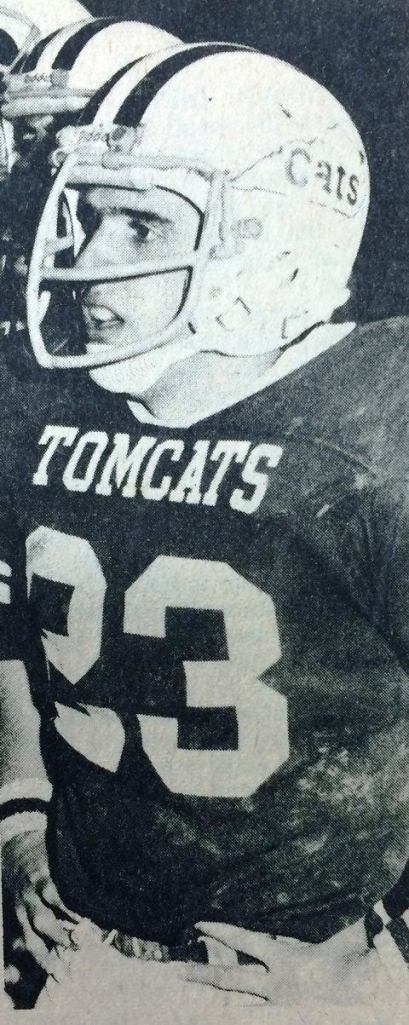
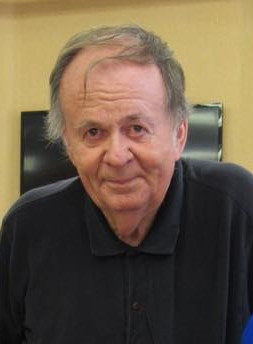
Steve Dodd, NAIA Hall of Fame coach and former Tomcat standout, left big impact

Steve Dodd, a former Ashland Tomcat basketball standout and a respected high school and college coach, passed away Monday from injuries sustained in an automobile accident last month. He was 70.

Dodd starred for the Tomcats from 1971–73, serving as a key reserve on the 1972 team that was ranked No. 1 in the state but was upset by Russell, 80–75, in the 16th Region championship. Fittingly, 34 years later in 2006, Dodd guided Russell to its first regional title since that very season.

During his six years as the Red Devils’ head coach from 2002–08, Dodd compiled a 98–84 record and reached at least the 16th Region semifinals in five of those seasons before resigning.
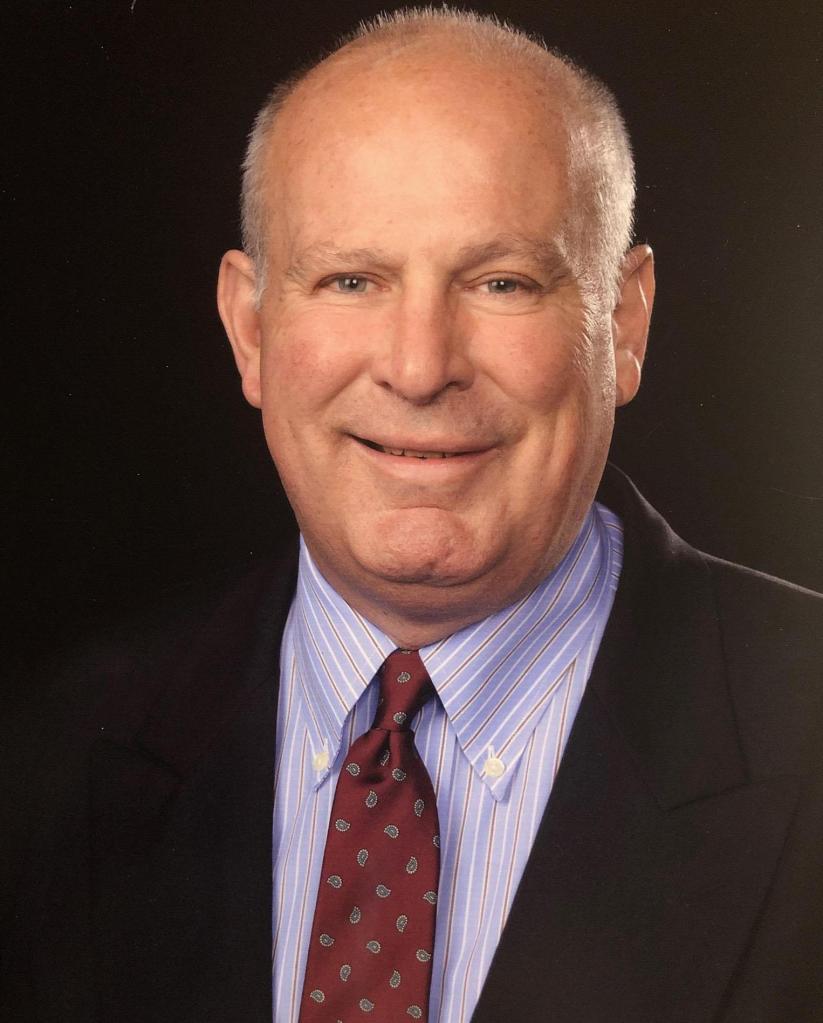
Steve Dodd was a former Ashland Tomcat basketball standout and Hall of Fame NAIA coach.

A 1973 Ashland graduate, Dodd went on to earn a bachelor’s degree in English from Lipscomb University, where he was also a standout player. It’s also where he met Kay, his wife of 48 years. They had a son and daughter.

Soon after graduating, he began his coaching journey as an assistant at Battleground Academy in Franklin, Tenn.—the start of a nearly 50-year coaching career. Dodd’s coaching stops included Alderson Broaddus University, Oklahoma Christian University, Bethel College, and Lindsey Wilson College, where he led the program from 1998–2002 and enjoyed great success. His contributions to the sport earned him induction into the NAIA Hall of Fame.

After his time at Russell, Dodd took over at Hillwood High School in Nashville, leading the Hilltoppers from 2008–19, and most recently coached at Dickson County High School in Dickson, Tenn.

Dodd’s passion for the game went far beyond wins and losses. He was known for shaping young men both on and off the court—a fact reflected in the many heartfelt tributes shared by former players and colleagues Tuesday.

Todd Parsley, who served as Dodd’s assistant coach at Russell, told sportswriter William Adams of the Ashland Daily Independent that coaching alongside him was a privilege.

“I don’t think people knew how much he cared about his players,” Parsley said. “He had kids that would run through walls for him because I just saw the personal side of coach. When kids were having trouble with their home life, he was there helping them. He was far greater than just wins and losses.”

Dodd’s brother, Gary, said coaching was Steve’s lifelong calling.
“He had 11 fractured ribs, four fractured vertebrae, and a bad concussion, but when he heard that, it was like, ‘I can pursue this, I can do that,’” Gary said. “He wanted to get back out there at age 70 and have another shot at trying to do that, even for the interim.”

As a player, Dodd was known for his toughness and scoring ability, averaging 15.8 points per game as a senior. That year, Ashland fell to Boyd County twice—first in the 64th District finals, 77–73, and again in the regional championship, 73–64, despite Dodd’s 21- and 22-point efforts. It was the first time Boyd County had beaten Ashland in basketball.

Dodd finished his Tomcat career with 669 points, including a career-high 27 against Fairview.

From his days wearing Ashland’s maroon and white to his decades molding athletes across the country, Steve Dodd left a lasting mark on basketball—and on everyone he coached.

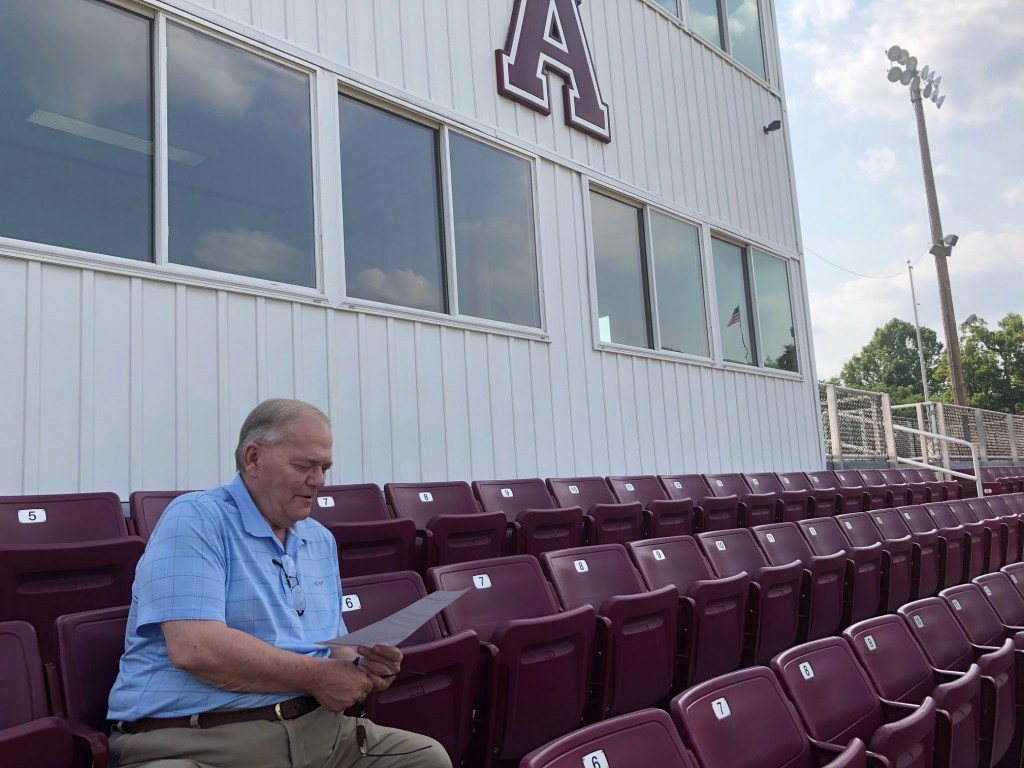
Dicky Martin’s passing leaves an irreplaceable void in Tomcat sports

The sound coming from the radio was more static than voice — unrecognizable, unfamiliar. It wasn’t what it should have been.

Driving home to northern Kentucky after watching the first quarter of Ashland’s game with Rowan County two weeks ago — on the night the famous JAWS team was being honored — I searched the dial for the Tomcats’ broadcast and finally landed on it.

Or did I?

The announcers were doing a fine job, especially considering Ashland was up 48-0 by halftime. But it wasn’t the same. Because it wasn’t Dicky Martin — the unmistakable voice of the Tomcats — calling the game from the Putnam Stadium press box that bears his and his father’s name.

Dicky Martin provided Ashland with 50 years of radio broadcasting. He passed away Oct. 15.

Dicky wasn’t there because he was in the hospital, locked in the fight of his life — a fight he sadly lost to cancer Wednesday night. Even knowing he wouldn’t be on the air, instinctively turning the dial to find him felt like something that should still work. For half a century, it always had. Entering his 50th season as Ashland’s play-by-play man, he had missed only two games.

I tried to listen. My mind wouldn’t let me. I turned it off.

Ashland is a place steeped in tradition, and Dicky Martin was part of that tradition’s fabric. The Martin family — Dicky and his father, Dick — gave Ashland 73 years of Tomcat broadcasts between them. People like to say no one is irreplaceable. But when it comes to Ashland Tomcat sports, Dicky Martin proved that saying wrong.


Born with a silver microphone

Some people are born with a silver spoon. Dicky was born with a silver microphone.

His father, Dick Martin, moved the family from Huntington to Ashland in 1952 and started broadcasting Tomcat games on WCMI the next year. He was a sharp businessman who understood that community radio needed sports — and that Ashland needed its voice.

Both Martins had a similar style: blunt, passionate, fiercely loyal. They never hesitated to call out poor play or questionable officiating — all through maroon-tinted glasses. Dicky often said, “There’s an on-and-off switch on your radio if you don’t like what you hear.”

He could be hard on the Tomcats, but no one else better be. Criticize his team, and you were taking on family.

Dick Martin became as much an icon as his son would later be. He even served as Ashland’s mayor, but it was his radio work — and his love for the Tomcats — that defined him.

Dicky once laughed recalling a moment from his childhood when his dad waved a handkerchief at a referee. “The ref came over and said, ‘You got something to say?’ Dad said, ‘Here, talk right into the microphone.’”

The referee rolled his eyes and went back to the game. Soon enough, the calls evened out.

That was Dick Martin — unfiltered, bold, and impossible to ignore.


Learning the craft

Dicky learned early that preparation mattered. His parents made him listen to recordings of his voice and work on his diction. “I had that Ashland twang,” he told me once. “They made me pronounce and enunciate until I got it right.”

Few were ever more prepared behind a mic than Dicky Martin. He could deliver a sharp one-liner at just the right moment — often unrehearsed, sometimes regretted, but always memorable.

“It’s humbling,” he said, “that people bring radios to the games just to listen.”

In his early days, his passion sometimes got him in trouble. He was banned once from the Boyd County Middle School gym. Some Tomcat fans didn’t always agree with his takes, but they still listened — often through headsets in the stands, wanting his voice to accompany what they were seeing.

His first broadcast came in 1973 when his father pretended to lose his voice and handed the mic to Dicky during a Raceland–Holy Family game. Dicky had just graduated from Ashland the year before. By 1975, he was the full-time voice of the Tomcats.

The rest, as they say, was history.


A voice shaped by legends

Dicky Martin became emotional when he learned the press box would carry the name of his father and him.

Dicky often said he learned from three of the best: his father, UK legend Cawood Ledford, and Hall of Fame broadcaster Marty Brennaman. “My dad was the best,” he said. “I learned from him, from Cawood, and I love to listen to Marty. He’s the best one living.”

Patterned after greats, yes — but Dicky was one of a kind.

“I’ve mellowed a lot,” he told me a few years ago. “I’m kind of like a fan in a way. When a guy misses a call, the fans go, ‘Oooooooh!’ I just get to do it over the air.”


The “Three D’s” and lasting friendships

This story isn’t complete without mentioning his longtime sidekick, David “Dirk” Payne, who passed away a few years ago. Dicky loved him deeply. “There aren’t many men I love more than him,” he said. “When my dad died, Dirk thought it was me. He had a stroke that day. One day I lost my father and damn near lost Dirk, too.”

Dirk and Dicky on the air were Ashland’s equivalent to Marty and Joe with the Reds. You never wanted to miss a second.

Dicky Martin with some friends from left: Mark Maynard, Greg Jackson, Dicky, Donna Suttle and Steve Conley.

Longtime fan Donna Suttle was another dear friend. She called them the “Three D’s” — Dicky, Dirk and Donna. Her heart is broken now that trio is down to one.

He had many more friends in Ashland. Everybody knew of Dicky Martin and his love for the Tomcats.


Beyond the Tomcats

Dicky’s voice wasn’t confined to Ashland. His career took him to Soldier Field, the Gator Bowl, Ohio State’s “Shoe,” and RFK Stadium while calling games for the semipro West Virginia Rockets. He worked Morehead State basketball games during Wayne Martin’s coaching era, which took him to Madison Square Garden and two NCAA tournaments.

But his heart was always at home.

“My two favorite places are Putnam Stadium and Anderson Gym,” he said. “I love those places.”

He had been to every state basketball tournament since 1976 — and his father took him to his first in 1961, when Ashland won it all. He was just seven years old then, but he never forgot.

Football was his true passion. “I never dreamed I’d be doing this as long as I have,” he said. “But I loved every second of it.”

So did we, Dicky.

So did we.

Dicky Martin often said his favorite place to be was Putnam Stadium where he broadcasted Ashland Tomcat football for 50 years.

JAWS was born in Ashland’s win over top-ranked Defenders in second week of 1975 season

Ashland learned a lot about itself – and how a JAWS nickname might just stick – in the second week of the 1975 season.

Of all the regular-season games that season, none carried more weight than a battle with Bryan Station in Putnam Stadium. It was the season opener for the Defenders, who boasted of having more pure speed than any team in Kentucky and the writers and broadcasters who voted in the Associated Press poll agreed they were the team to beat. Bryan Station was ranked No. 1 in Class AAAA, the largest classification and the same one where Ashland was placed.

Ashland had a game against under its belt against Johnson Central, a 47-14 victory when they rushed for 523 yards rushing on 39 attempts – an astounding 13.4 per carry average. The Tomcats scored the first four times they touched the ball and had the town buzzing about the potential. The defense surrendered 3-8 yards rushing, although substitutes played much of the second half.

Players nor coaches were publicly talking about the JAWS name for the defense. Not yet anyway. The players knew it was being considered, and liked the idea, but coach Herb Conley wasn’t sure it was a great idea given how nicknames can backfire. But after the showing against Bryan Station, even had admitted it had some merit.

These weren’t Baby Sharks. They were man-eaters.

The Defenders had 15 players who ran the 40 in 4.8 or less – an enormous number of skilled running backs and receivers. Conley said the reports he had on them was they had “speed to burn” and that there are three good teams in Lexington and they are all in Bryan Station – the first, second and third teams. That may have been some “coach-speak” but it was clear this team was born to run.

Ashland’s team speed was good but it wasn’t in that neighborhood.

But Putnam Stadium became a shark tank for the Defenders, who lost three fumbles and was tackled in its own backfield for minus yardage 16 times. Bryan Station rushed for only 103 yards in 41 attempts and was held to a scant five yards in the first quarter. They passed for 114 yards but it wasn’t enough in what turned out to be a 22-12 defeat.

Rick Sang with Ashland coach Herb Conley, left, and assistant Bill Tom Ross.

Ashland’s offense was good enough and the defense provided some points, too, getting a safety in the first quarter when Gary Thomas made a tackle in the end zone. The first fumble recovery set up the first Tomcat touchdown and an 8-0 lead that stood up as the halftime score. Jeff Slone took it in from four yards out, running behind a hole opened up by Terry Bell and Casey Jones on Ashland’s big offensive line.

But the play that was the backbreaker for the Defenders came early in the third quarter.

Thomas gathered in a punt at the Ashland 43, headed left and slipped a handoff to Rick Sang who, after some shifty moves to shake a couple of tacklers, scooted 57 yards for a touchdown. A bone-chilling block from Chuck Anderson in front of the Ashland sideline was what many remember. Bryan Station’s Eddie Coles was moving in on Sang at midfield but when he reached the Ashland 43, Anderson clocked him, sending his helmet flying in the air and leaving him motionless. Coles never saw Anderson coming. Video shows Anderson was a noseguard, wrestled with the Defenders center, and then he sprinted downfield to see if he could make a block, and boy did he ever. It also left Sang all alone at that end of the field. Kevin Ward’s extra point made it 15-0 with 10:16 to play in the third quarter.

Conley said at the time he thought Anderson had literally knocked his head off. “I thought he had killed him,” he said. “I mean it, I thought that was his head (and not his helmet).”

At the time, Ashland referred to hard tackles or blocks as “Bad Cat,” an award that went to the player making the big hit. Conley said of the block, “If I’ve ever seen a Bad Cat at Putnam Stadium, that was it. He nailed that man.”

It was a stunning play and further fueled the idea that this JAWS nickname was going to stick around.

Jeff Slone was a 1,000-yard rusher for the Tomcats.

The Tomcats’ last touchdown came near the end of the third quarter with Thomas zipping 27 yards behind a huge hole on the left side. Ward’s kick made it 22-0. That touchdown was set up on a 5-yard run from Jeff Slone on fourth-and-three at the Defenders 32. Slone, behind a thunderous block from Bell, found a hole and got the first down to the 27. Thomas took it from there.

After the game, Defenders coach Terry Clark told Conley that Bell “was definitely All-State” after he dominated line play in the game. Anderson’s play at linebacker and Sang’s overall play were also lauded by Conley.

Ashland, which played only 16 players, began to tire in the fourth quarter and Bryan Station took advantage, scoring a pair of touchdowns to set the final margin.

The victory propelled the Tomcats to 2-0 and they moved to No. 1 in the Class AAAA poll the next week and that’s where they remained throughout the regular season where they finished 11-0 on the way to the 14-1 season.

While Ashland’s 43-0 victory over Boyd County in the last game of the regular season clinched the district championship and was more important than the Bryan Station victory in a lot of ways, still ranks behind the win in Week 2. That was the night the Defenders came to town and found out the JAWS defense was no joke. It sent a message statewide, too, that Ashland was for real and could challenge for the Class AAAA crown.

Mason Branham: The Everywhere Man who will be missed by everybody

Mason Branham was the constant in the landscape of Greenup County sports.  He was the Everywhere Man, showing up seemingly at several places at the same time with camera and notepad in hand and a pen or pencil behind the ear.

Yet he was also unassuming, wishing to remain far from the spotlight and he blended in like the orange in Raceland uniforms. He reserved the spotlight for Greenup County’s young athletes, the one man they could all rally around and appreciate. It mattered not who won or lost, if you were boy or girl, if your team was good or bad. Mason was there, snapping photos, taking notes, making memories.

Anybody who ever played anything in Greenup County knew Mason, the Everywhere Man. There may have been a game-winning touchdown in Raceland and a game-saving tackle in Russell at the same time yet, somehow, someway, Mason had a photograph of both plays. He was uncanny that way.

Mason Branham, a longtime weekly newspaperman in Greenup County, died last week at 76.

It was with much sadness that I read of his recent passing. It closed another chapter on weekly newspapers. If there was ever a Hall of Fame devoted to weekly newspapermen, Mason would have surely been a charter member. I’m not sure how many years he crafted his trade while working first in Carter County and much of his career in Greenup County at weekly newspapers, but he was around when I started at The Daily Independent and when I left the ADI in 2018 and the area in 2022, doing his thing better than anybody ever did. He is irreplaceable.

We had a great relationship, with a lot in common. Both of us loved what we did (and I still do). But I’m not sure anybody anywhere loved what he did more than Mason Branham. It was never for personal praise though. He did not put bylines on his stories or credit lines on his photographs. He was just there. Reporting at meetings, keeping statistics at games and providing thousands upon thousands of photographs of those events over the years.

Mason marched to his own drumbeat, that’s for sure, but he had a love for Greenup County like few others and the schools in that area should put him in their hall of fames posthumously. He deserves that much.

I had many conversations with Mason and he was always enlightening and extremely smart. I did not realize until reading his obituary that he was the valedictorian at Olive Hill High School in 1966 and knew so much history about Carter County and Greenup County. Mason could have done a lot of things in life but he chose journalism, or maybe it chose him. Either way, it was a love affair for a lifetime.

He did not get rich or famous working for weekly newspapers but that was never a goal for him. Mason was there for the pure joy of it, for the chase of getting that key photograph or for writing about that game-winning play. He was a welcome sight at any gymnasium, football field, baseball field, soccer pitch, Little League game or anything else when he arrived with camera, notepad and a pen behind his ear.

Mason was also a man of strong faith and he regularly delivered meals for Greenup County Meals on Wheels. He did that job without fanfare too because he was not doing it for recognition but to be a servant. His life was full of servant-like activities. Members of Beech Street Christian Church are serving as pallbearers. That says a lot about the man as well.

Mason will be laid to rest this week but his kindness and good deeds throughout an illustrious career will not be forgotten by the lives he touched from behind the lens. Whether it was the photographs from the County Fair or the countless Little League games, or the meals that he carried to households of senior citizens, Mason was there.

He was the Everywhere Man if there ever was one.