Grace Runner Amy Compston shines in Air Force Marathon

DAYTON, Ohio — Running has always been part of Amy Compston’s life.

For the past several years, however, the miles have taken her in a different direction.

An iliotibial band injury eight years ago curtailed her competitive running about the same time her Amy For Africa ministry began growing rapidly. Between serving, traveling, fundraising and praying over a ministry reaching children and families in Uganda, running races had to wait.

Until Saturday.

By the grace of God, Compston was a marathon runner again.
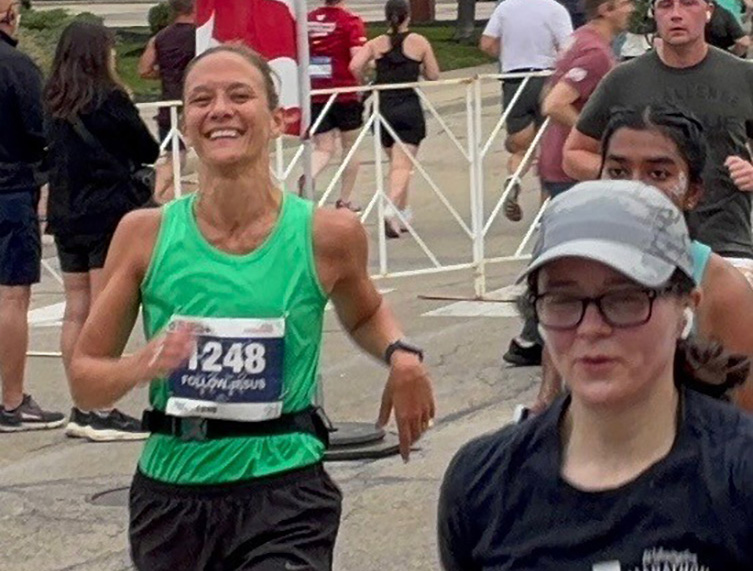
Amy Compston competed in the Air Force Marathon in Dayton on Saturday, reaching her goal of finishing in under four hours.

Compston, 42, competed in the Air Force Marathon in Dayton with her husband, Chris, serving in the familiar role of her biggest supporter. She had spent months preparing for the 26.2-mile race, including logging training miles in the heat of Uganda while serving with Amy For Africa.

Her goal was to finish in less than four hours.

She did it — with room to spare.

Compston crossed the finish line in 3 hours, 55 minutes and 17 seconds, averaging 8:59 per mile. She finished ninth among 64 runners in the women’s 40-44 age group, 53rd among 544 female runners and 295th among 1,777 overall competitors.

It was an impressive return to marathon competition for someone whose running journey has been intertwined with her faith for more than a decade.

Thirteen years ago, Compston ran the Boston Marathon in about 3½ hours. Her finishing time, however, wasn’t what she remembered most about that day.

Compston crossed the finish line about 30 minutes before two bombs exploded nearby in the 2013 Boston Marathon terrorist attack. Twenty-two family members who were there to celebrate with her at the finish line, left only minutes before the bombs exploded. They were safe while walking down an alley but clearly heard the explosions.

The experience became another defining moment in her life.

Compston believed God had already spared her from a life involving drugs and alcohol and from a serious automobile accident. Now she had been just minutes removed from the site of a terrorist attack.
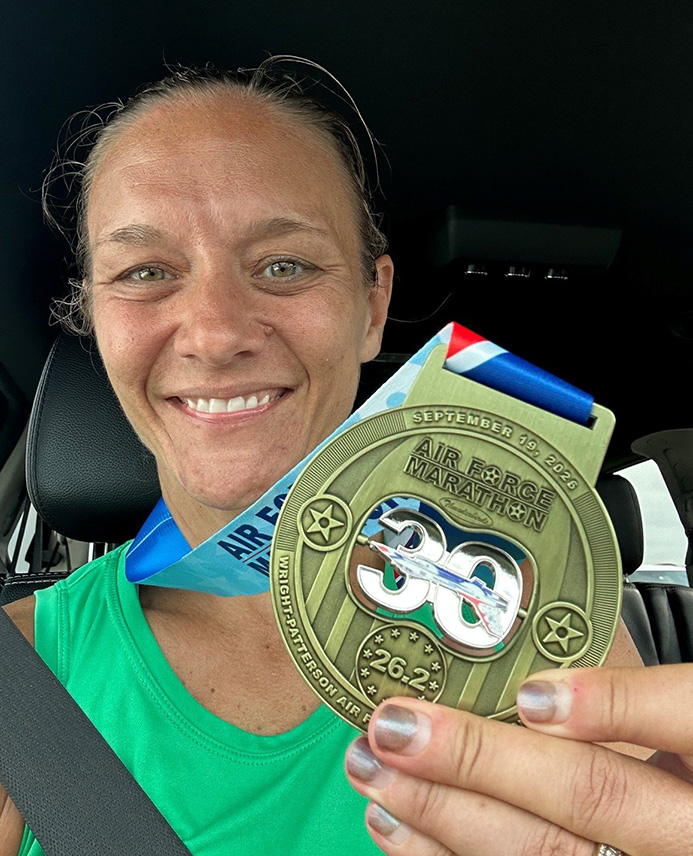
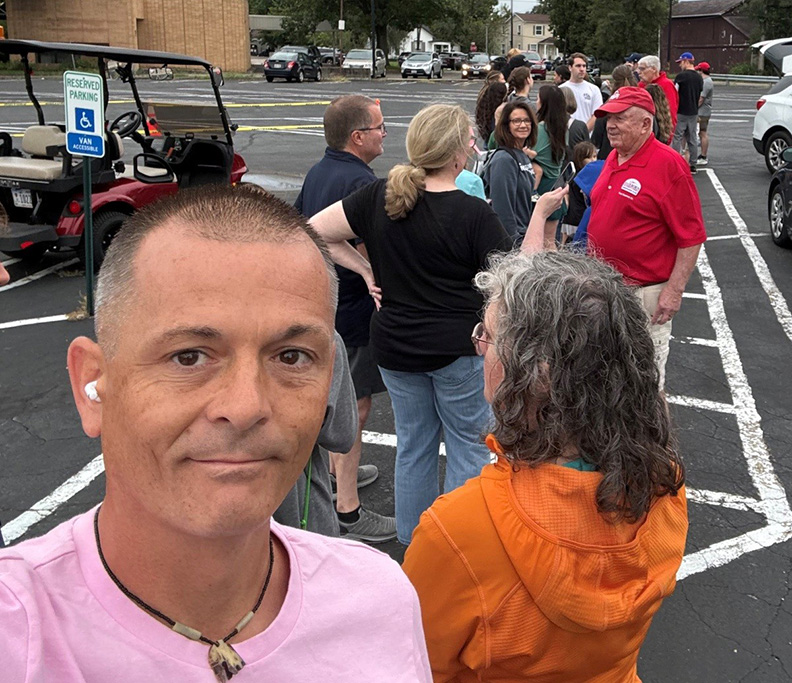
Amy with her Air Force Marathon medal and Chris, her biggest supporter with her in Dayton.

She had already given her life to Christ, but Boston deepened her conviction to surrender everything to Him. That commitment eventually became the foundation for Amy For Africa.

Running continued to be part of her life.

Compston completed a 50-mile ultramarathon in November 2013 and ran seven marathons with Chris alongside her in 2014. She returned to the Boston Marathon two more times and competed in the New York City and Chicago marathons, along with numerous other races.

Eventually, injury slowed her competitive running.

But it never extinguished the desire.

The Air Force Marathon gave Compston something to chase again.

She trained with the determination that had characterized her earlier running career, preparing physically, mentally and spiritually for another 26.2-mile test.

Saturday, the work paid off.

Mile 24 was particularly difficult. But Compston knew if she could maintain a 10-minute-per-mile pace over the closing miles, she would break the four-hour barrier.
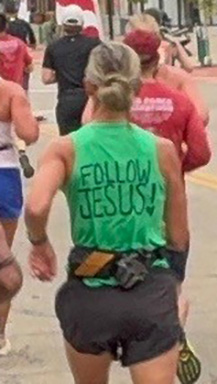
Amy Compston promoting her life calling to others.

She leaned on something even more familiar than running.

Prayer.

“I prayed the whole way,” she said. “At least 98 percent.”

Prayer has long been central to Compston’s life and ministry. Her competitive drive isn’t far behind, and she sees a connection between the two.

“It’s GOD’s grace,” she said. “HE knew I would need the relentless drive to do HIS will. I praise HIM for it.”

That drive has been evident in the work Amy and Chris have done through Amy For Africa.

The couple has devoted much of their lives to serving in Uganda, where the ministry operates Christian schools and works with children and families. Through years of construction projects, fundraising challenges and ministry opportunities, the Compstons have watched Amy For Africa grow far beyond what they once imagined.

They credit God for providing the resources and opportunities that have allowed the ministry to reach hundreds of people with the gospel.

Even Compston’s marathon training sometimes provided moments that made her wonder about God’s provision.

About a month before Saturday’s race, she set out on her longest training run — 14 miles through Uganda.

As she left the gated area where she was staying, Compston noticed a dog she had never seen before. When she started running, the dog followed.

And kept following.

For all 14 miles.

Running alone as a woman in Uganda can carry risks, but the dog remained alongside Compston throughout the run. Afterward, neither Amy nor Chris saw the dog again.

Maybe it was simply a dog that wanted to run.

Or maybe, Compston wondered, it was protection at just the right time.

Saturday in Dayton, there was no mysterious running companion beside her for 26.2 miles.

But Compston didn’t believe she was running alone.

From the opening mile through the difficult 24th and finally across the finish line in under four hours, the runner who has built her life around faith, prayer and perseverance believed God was with her every step of the way.
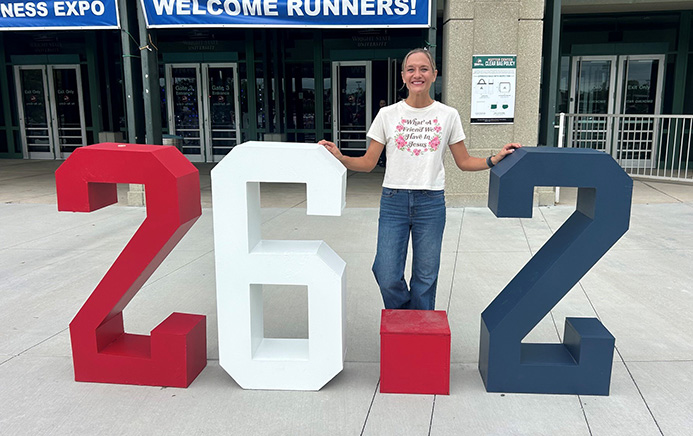
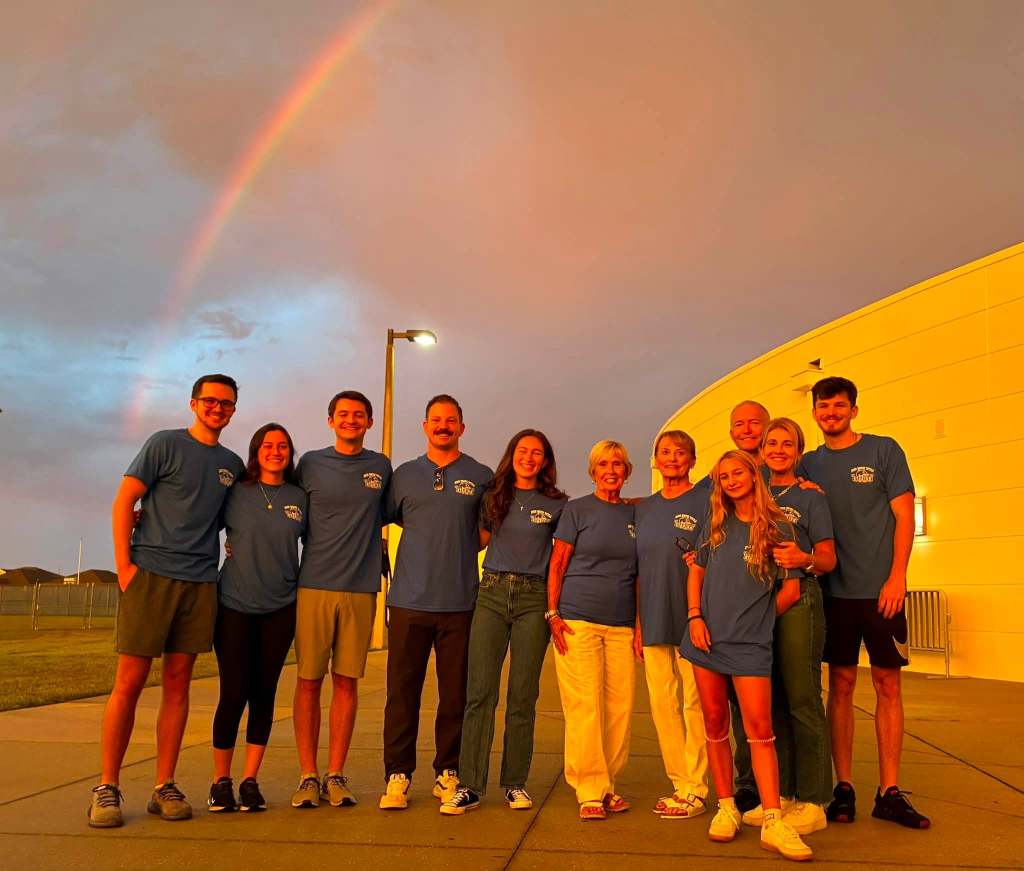
Amy Compston, who has run in three Boston Marathons included the 2013 race with the terrorist attack, was running again Sept. 19 in Dayton.

Former JAWS assistant coach John Tuttle has stadium in Florida named in his memory

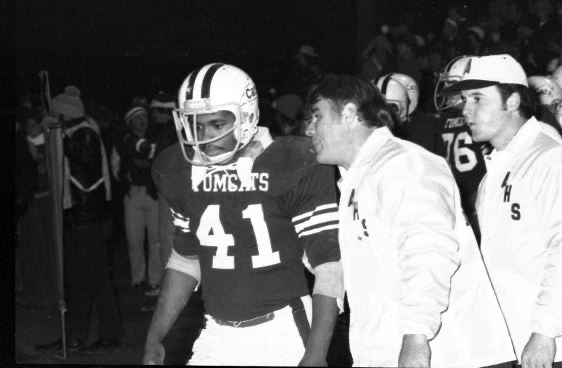
INDIATLANTIC, Fla. – John Tuttle, who started a 40-year career in education in Ashland schools and was an assistant football coach for the Tomcats from 1975 to 1979, had a stadium in Florida named in his memory earlier this month.

Tuttle, who died at the age of 76 in July, had the Heritage High School football stadium renamed Tuttle Stadium at a ceremony earlier this month. His education career spanned more than four decades in Kentucky and Florida.

As a young man in his early 20s, Tuttle’s 40-year education journey started in the Ashland Independent School System. He coached football for seven years in the Ashland system, starting at Putnam Jr. High and advancing to the high school level in 1975 when the Tomcats beloved JAWS team went 14-1. He also was on the staff in 1976 during a 9-3 season and stayed on when Mike Holtzapfel took over the head coaching reins at Ashland from 1977-79.

He was also a highly respected high school basketball referee in Kentucky, many times partnering with Bill Burch.

John Tuttle is behind Coach Herb Conley who is giving the play to fullback Jim Johnson in 1975.

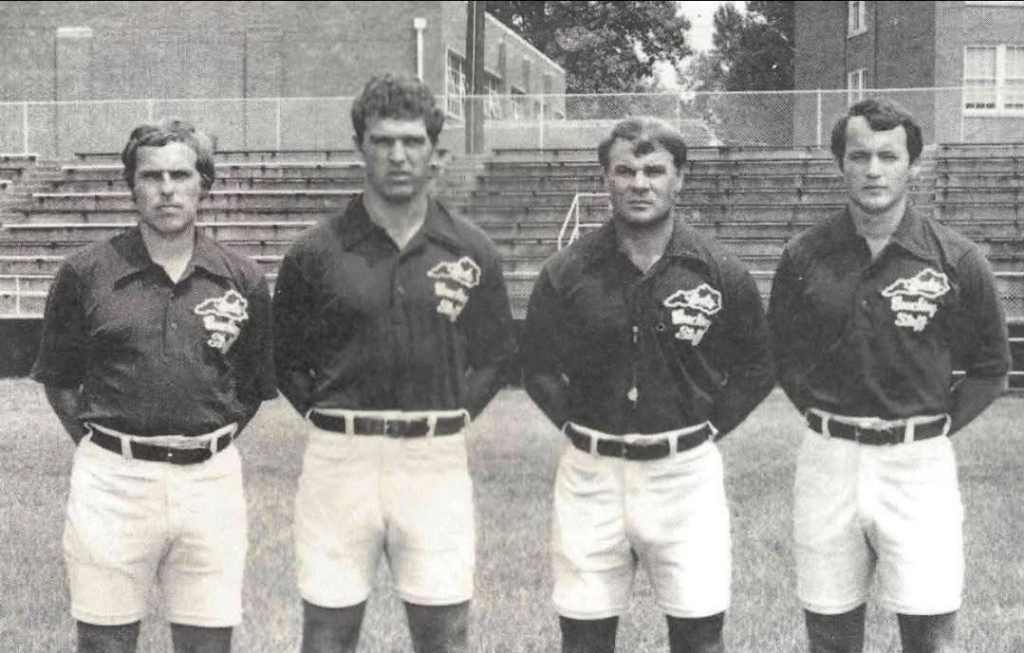
Tuttle was one of three assistant coaches during Herb Conley’s last two seasons at Ashland in 1975 and 1976. The other assistants were Bill Tom Ross and Holtzapfel.

Tuttle helped design and build Heritage High School in Florida, where he was principal when the first graduating class went through. He served in that role from 2009 to 2012.

Tuttle’s legacy is tied to Heritage Stadium, which serves as a symbol of his impact on education and athletics. His career was marked by dedication to student success, leadership in school administration and a passion for sports, making the stadium a fitting tribute to his contributions to the community.

If you are visiting Heritage Stadium, you can see it as a lasting monument to John Wayne Tuttle’s work in building and leading schools, as well as his role in shaping the athletic and academic environment for generations of students. 

Before leading Heritage High School, he coached football, baseball and golf at Palm Bay High School, leading his 1985 baseball team to the state championship. He later served as Assistant Principal at Cocoa Beach High, Principal at Mila Elementary, Southwest Middle School and Bayside High.

The family of John Tuttle celebrated the renaming of Heritage Stadium to Tuttle Stadium earlier this month in Florida.

Brevard Public Schools officially dedicated the Heritage High School football stadium as Tuttle Stadium to honor his foundational leadership and impact.

Tuttle kept officiating basketball and appeared in several Florida state championship games as referee. Also, an avid golfer, he could shoot his age and shared a hole-in-one plaque with his son, Lance, and grandson, Cole, at Spessard Holland Golf Course.

He was from Winchester, Ky., and was married to his high school sweetheart, Karlene, for 55 years. Tuttle is survived by his wife and son and 10 grandchildren.

Tuttle was lured to Florida by friend John Thomas, a former star baseball player at Ashland, in 1980. Thomas was coaching in Florida and Tuttle followed him there to coach football and baseball at Palm Bay High.

He was also an assistant principal at Cocoa Beach High School and was a principal at Mila Elementary, Southwest Middle School and Bayside High. He was instrumental in designing Heritage High School before retiring after four decades in education.

Tuttle kept officiating basketball and appeared in several Florida state championship games as referee. Also, an avid golfer, he could shoot his age and share a hole-in-one plaque with his son, Lance, and grandson, Cole, at Spessard Holland Golf Course.

He was from Winchester, Ky., and was married to his high school sweetheart, Karlene, for 55 years. Tuttle is survived by his wife and son and 10 grandchildren.

Ashand’s 1975 coaching staff: Bill Tom Ross, Mike Holtzapfel, Herb Conley, John Tuttle.

A big maroon Hart: Former EKU assistant, Ashland Tomcat head coach going into EKU Hall of Fame

Before leading the Ashland Tomcats’ football program to 78 victories in 10 seasons from 2003-2012, Leon Hart spent a dozen years in propelling the Eastern Kentucky University offense as an assistant coach under legendary Roy Kidd that included the 1979 and 1982 national championship seasons and the 1980 and 1981 national runner-up seasons – an incredible four-year span illustrating EKU’s dominance in Division I-AA.

Hart is one of seven individuals who will be inducted into the EKU Athletics Hall of Fame on Oct. 11 at the EKU Center for the Arts.

Hart coached wide receivers, running backs and quarterbacks, and then served as offensive coordinator from 1981-88.  While he was an EKU assistant, the Colonels won two national titles (1979 and 1982) and finished as the national runner-up twice (1980 and 1981).  Hart also helped EKU make the playoffs in 1983, 1984, 1986, 1987 and 1988. 

In 1985, EKU missed the playoffs, but the team went 8-3 and closed out the season with 45-21 rout of Louisville.  The Colonels compiled an overall record of 120-37-2 in his 13-year stint on the staff, which included eight OVC titles to go along with the two national titles and two national runners-up finishes.

Leon Hart guided Ashland to 78 victories in 10 seasons as head coach.

He came to the Tomcats in 2003 and put high-tech offenses on the field throughout his tenure where he had six seasons of nine victories and made the playoffs in all but one of his 10 seasons.

Hart led Ashland into the state quarterfinals in 2003 and 2004. Three of his last four seasons with the Tomcats resulted in nine victories. He had a 9-9 record in the postseason while often being matched against northern Kentucky powers.

Hart finished his Tomcat coaching career with a 78-40 record, which is the third-most victories in Ashland history behind Vic Marsh (112) and Tony Love (81).

Besides his elite coaching ability on the football field, he was also a tremendous special education teacher in the Ashland school system.

The 2025 EKU HOF class includes: Soufiane Bouchikhi (track/cross country, 2010-14), Billy Burton (men’s basketball, 1968-72), Ernest Dalton (track/cross country, 1959-63), Leon Hart (football, 1976-88), Leanna Pittsenbarger (softball, 2012-15), John Revere (football, 1972-76) and Mark Sandy (administration, 2005-15, 2019-20).  The entire 2004-05 women’s basketball team will be inducted as a team of distinction. 

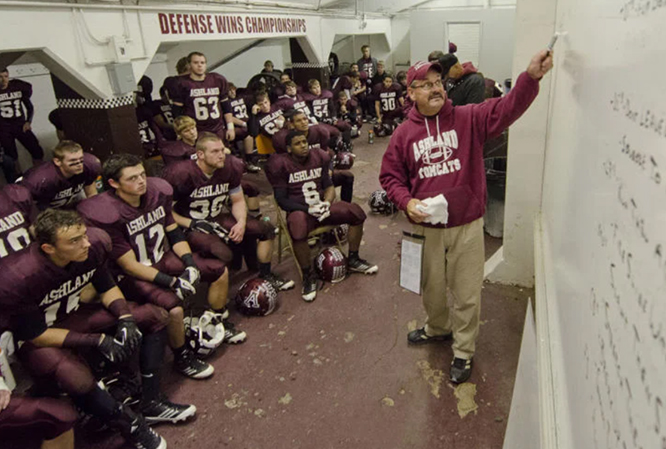
Leon Hart’s teams at Ashland from 2003-2012 were prolific and wide open on offense. The Tomcats were regular postseason participants.