Jody Hamilton part of 2026  Dawahares’ KHSAA Hall of Fame class

LEXINGTON, Ky. – Jody Hamilton, whose remarkable 41-year high school baseball coaching career includes 1,038 victories, two state championships and National Coach of the Year recognition, is part of the Dawahares’ Kentucky High Schol Athletic Association 2026 Hall of Fame class.

Hamilton, a 1976 graduate of Ashland, won state championships at Boyd County in 2001 and West Jessamine in 2015. He also captured the All-A State title in 2024 at Owensboro Catholic and was the All-A runnerup at that school in 2025.

Hamilton was at Boyd County and West Jessamine for 16 years apiece and at Raceland for four years. This spring will be his fifth season at Owensboro Catholic,

He became only the fifth coach in Kentucky history to reach 1,000 victories, crossing that milestone in 2024. He is the only coach with state championships at two different schools.

The top four coaches on the Kentucky win list accomplished their 1,000-plus victories while coaching at the same school. All-time wins leader Mac Whitaker is still coaching at Harrison County and Bill Krumplebeck of Covington Catholic retired after last season. 
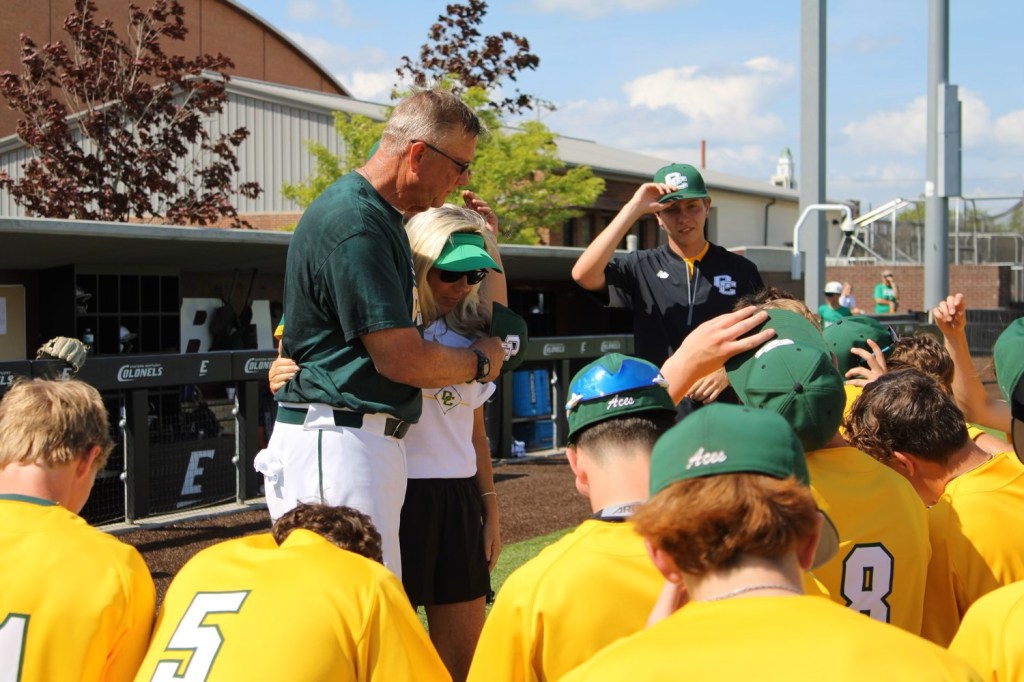
Jody Hamilton with wife Denise after Owensboro Catholic captured the All-A state title in 2024.

Taking his place in the KHSAA Hall of Fame is an honor that is well deserved for one of the best high school baseball coaches in Kentucky history. He has helped countless players – his own and rivals alike – to college scholarships and was largely responsible for elevating baseball programs through the 16th Region during a dominating run there from 1987 to 2002.

Programs were forced to improve facilities and skills to try and keep pace with the Lions who were also state runnerups twice under Hamilton.

Hamilton, who is still the head coach at Owensboro Catholic, was the 2016 National High School Coaches Association Coach of the Year. He was a charter member in the Kentucky High School Coaches Hall of Fame, the 2016 NHSCA Coach of the Year and the Kentucky High School Baseball Coaches Association Coach of the Year in 2001 and 2015.

He was also a charter member of the Ashland Baseball CP-1 Hall of Fame in 2015 and is a member of the Morehead State Athletic Hall of Fame after an illustrious playing career that included being named Ohio Valley Conference Player of the Year after winning the league Triple Crown in 1977. His 49 career home run record stood until being eclipsed in 2024.

Jody played one year professionally for the Paintsville Yankees, including debuting the same night that Darryl Strawberry did for the Kingsport Mets.

Despite a successful first season in pro ball where he hit better than .300 with the prospects of moving up in the Yankee organization, he decided to embark on a coaching career that has been full of highlights. His career began as the head coach at Raceland High School in 1983. He later moved to Boyd County, then West Jessamine and is currently at Owensboro Catholic.
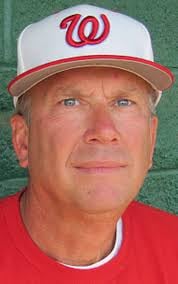
Jody Hamilton led West Jessamine to the 2015 state championship.

Hamilton coached golf from 2007-2010 where his teams were four-year regional champions and finished third at state in 2010 and seventh in 2009 at West Jessamine. He served as an assistant football coach at Raceland and West Jessamine in a career defined by success.

He endured only one losing season in his career, going 15-17 in his last year at Raceland in 1986 when every game was played on the road. Raceland won the district crown in ’86, anyway, and was the home team on the scoreboard for the first time — in 28 total games — in the opening round of the 16th Region Tournament.

Hamilton moved to Boyd County and captured his first of 11 region championship trophies with the Lions in 1988, taking them to the state championship game. Casey Hamilton, Jody’s son, helped bring Boyd County to a state title in 2001. He started at West Jessamine in 2004 and the Colts collected four region crowns (2008, ’10, ’15, ’16) under his leadership. He has two regional titles at Owensboro Catholic.

Winning the state championship and getting attention from college recruiters for his players was always the goal for Hamilton, who estimated 70 percent of the seniors who played for him found themselves on college rosters.

The secret sauce for Hamilton’s teams have been pitching and defense. All but “one or maybe two” of his starting catchers throughout his 41 seasons have gone on to play college baseball. Two of his pitchers at Boyd County, Jason Keyser and Casey Davis, were drafted in the eighth and ninth rounds, respectively. He has helped more than 125 players find a place to play in college.

Hamilton operated a baseball school while coaching at Boyd County and one of the pupils was Brandon Webb, a future Cy Young Award winner for the Arizona Diamondbacks. Webb was 10 when his father, Phil, took him to Hamilton. He worked with him for five years before telling him he had to stop because Webb would soon be pitching for Ashland, Boyd County’s biggest rival.

“I said, ‘Brandon, here’s what’s going to happen. I have to stop giving you lessons because, if I keep giving you lessons, you’re going to beat me. People aren’t going to like that. If I don’t keep giving you lessons, I’m going to recruit you, and then I’m going to get fired.’”

In an unusual twist, Webb never faced Boyd County as a Tomcat. Coaches held their top pitchers during the regular season for a potential district matchup. Ashland and Boyd County never drew in the first round through his junior year. Webb’s senior season was cut short by an injury.

“How many coaches can say they gave lessons to a Cy Young winner?” Hamilton asked.

Jody and wife, Denise, have two grown children and several grandchildren and live on a farm in the Owensboro area.
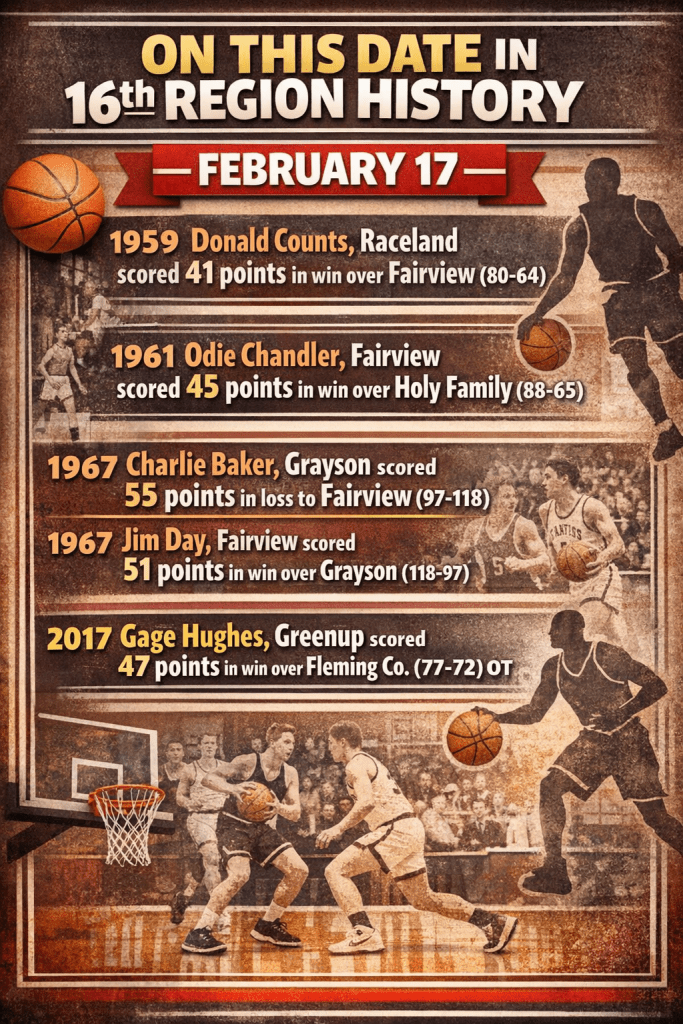
On this day 59 years ago, the 16th Region witnessed a scoring dual that will never be matched

Curtis Crye, the 16th Region statistical guru, reminds us that February 17 is a night in area basketball history where points come out in bunches.

One game particularly stands out though and here is a column written a few years ago about that individual scoring battle that will likely never be matched.

Grayson and Fairview met late in the season with little on the line. Neither team was above .500, and neither was expected to make postseason noise.

But for one February night in 1967, none of that mattered.

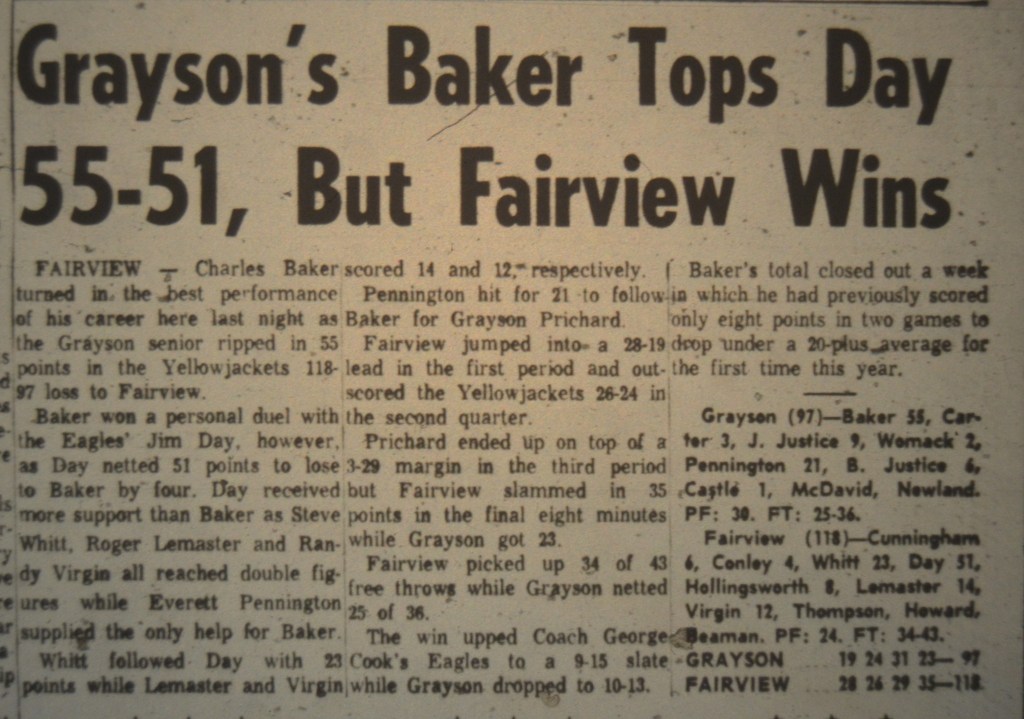
Grayson’s Charles Baker and Fairview’s Jim Day staged one of the greatest scoring duels in 16th Region history. Baker poured in 55 points. Day answered with 51. Fairview won, 118-97.

The outburst capped a strange week for Baker, who had scored just eight total points in his previous two games, dropping his average below 20 for the first time all season. Against Coach George Cooke — the original “Wizard from Westwood” — in Fairview’s old gym, Baker couldn’t miss.

The tiny gym was packed, helped by the presence of University of Kentucky assistants Harry Lancaster and Joe B. Hall, there to watch Day play for Adolph Rupp.

“They weren’t coming to see me,” Baker said. “But there was a buzz in the crowd.”

There was plenty to buzz about. Baker and Day matched each other shot for shot in a relentless, up-and-down showcase. In the end, Fairview pulled away with 64 second-half points.

Steve Whitt added 23 and Roger Lemaster 14 for the Eagles. Everett Pennington scored 21 for Grayson, giving Baker the support he needed.

“Looking back, I couldn’t ask for a better bunch of guys,” Baker said of his teammates. “They’d say, ‘We need you to win.’ We still have a good relationship today.”

Grayson coach Dick Vincent understood scoring, too. He once had 67 points in a game for Hitchins — a school record.

Baker remembers being completely in rhythm.

“Looking back, it was what everybody calls being in the zone,” he said. “It was going in. Day would turn around and shoot it, then I’d come back on the other end. It was like a fast-moving picture.”

The game was physical — the teams combined for 79 free throws — and it came during an era built for scorers. Pistol Pete Maravich was lighting up college basketball at LSU, and Oscar Robertson had recently dropped 46 for the Cincinnati Royals.

Day, the area’s leading scorer that season, had already scored 60 in a win over Wurtland earlier that month, breaking Brice Thornbury’s record of 58. The 6-foot-9 standout finished with 23 field goals and 14 of 16 free throws in that game.

“Jim Day was a tremendous player,” Baker said. “He had great hands and touch. Just a natural shot.”

Day went on to an outstanding career at Morehead State, earning All-Ohio Valley Conference honors. Baker also played in college, shifting from scorer to facilitator at Rio Grande.

“I was an assist man and defense man,” he said. “If I wanted to start, I had to find my role. We already had All-American scorers.”

Some players struggled with that adjustment.

“They wondered why they weren’t playing,” Baker said. “I knew the secret — sometimes you have to adjust your role.”

In high school, though, both Baker and Day had one job: score. They were part of a region loaded with offensive talent in 1967, a season that featured multiple players averaging 20 or more points per game even though the 3-point shot was still 20 years away.

Late in the 1967 high school season, the top 10 scorers included Day (30.2), Louisa’s Herb  Lemaster (22.9), Louisa’s Larry Edwards (21.1), Greenup’s Reece Stephenson (20.7), Hitchins’ Kevin Young (20.1), Raceland’s Mike Hewlett (20.0), Baker (19.6), Catlettsburg’s Roger Zornes (18.8), Boyd County’s Phillip Dowdy (18.1) and Blaine’s Roger Young (18.0).

Russell, which would go on to win the region, had five — Tookie Hilton (16.0), Roger Vanover (15.3), Tom Roberts (13.6), Lanny Miller (11.8) and Steve Radcliff (10.9) — scoring in double figures.

Ashland had four, led by Bob Lynch (17.9), Dan Owens (14.3), John Sieweke and Joe Conley (both 12.0).

Holy Family had four in double figures, too — John Layne (14.7), Tom Davis (13.2), Bucky Morris (12.5) and Maynard Thomas (12.1).

Dave Stultz was Greenup’s second-leading scorer at 12.

But on that February night, there were no better scorers in the 16th Region — and probably not in the state — than Jim Day and Charles Baker.

It was a night to remember.

High-scoring George Carroll and the first AIT 70 years ago

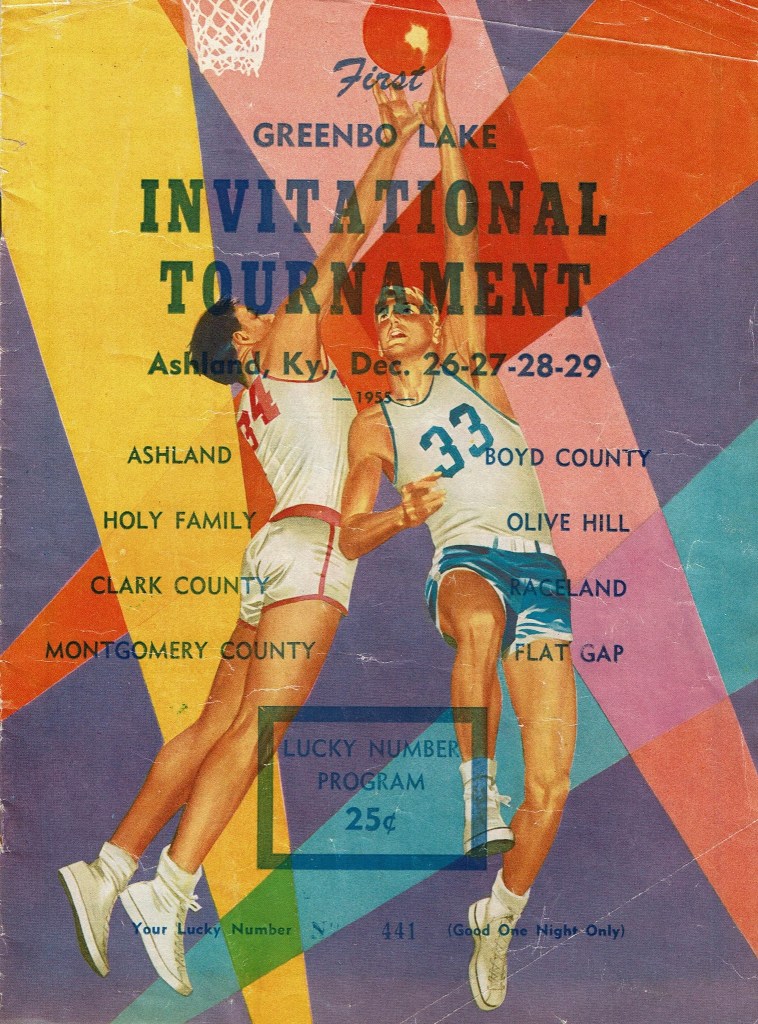
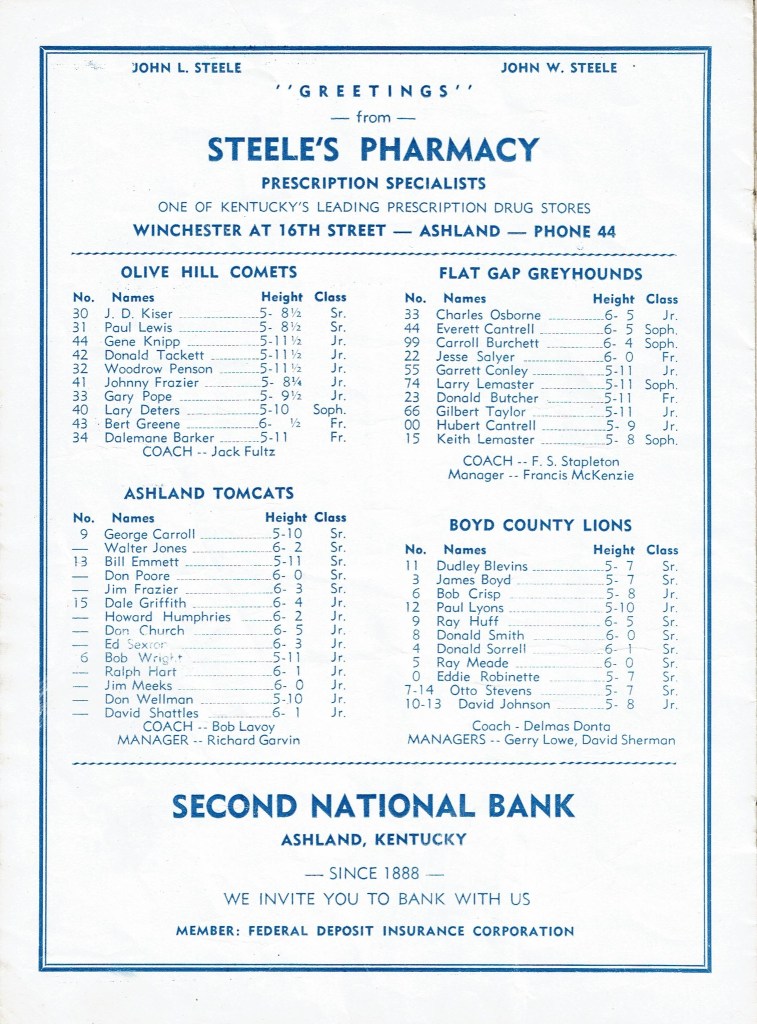
Ashland’s first game in the Ashland Invitational Tournament – originally called the Greenbo Lake Invitational – took place on Dec. 27,1955 at the Ashland Armory against Raceland.

George Carroll poured in 24 points, and it was only a sign of things to come for the little guard with the dead-eye shooting touch. The Tomcats defeated Raceland 66-47 in the opening game.

Carroll scored 35 as Ashland defeated Holy Family 79-66 in the semifinals and then the Tomcats upended Flat Gap and the great Charlie Osborne, 72-66, in the first championship with Carroll scoring 39.

That’s 98 points in three games, a nearly 33 points per game average, from the senior guard.

Here are the scores from the first tournament:

Opening round

Olive Hill 77, Clark County 61

Ashland 66, Raceland 47

Flat Gap 96, Montgomery County 78

Holy Family 88, Boyd County 67

Semifinals

Flat Gap 62, Olive Hill 56

Ashland 79, Holy Family 66

Championship

Ashland 72, Flat Gap 66

It was a star-studded tournament that came about because of ADI sports editor John McGill. Here is how some of the postseason honors for players in the AIT that first season.

Kenny Meyer of Montgomery County, All-State second team.

Charlie Osborne of Flat Gap, All-State second team.

George Carroll of Ashland, All-State third team.

J.D. Kiser of Olive Hill, All-State third team.

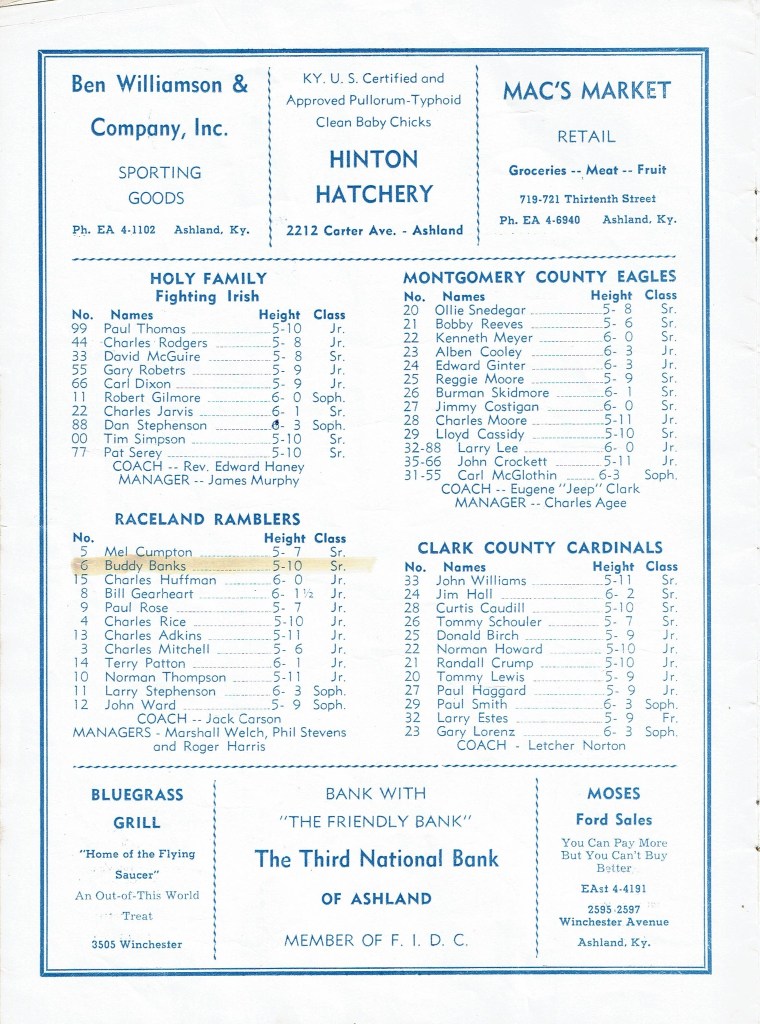
Bill Emmett of Ashland, Buddy Banks of Raceland and Bert Greene of Olive Hill were All State Honorable Mention.

The tournament was called the Ashland Holiday Tournament the second year before becoming the Ashland Invitational Tournament in the third year.

The Ashland Armory was good for Carroll later when he put 52 points on Carr Creek in a game thar preceded the Harlem Globetrotters putting on a show for a packed house of 1,500.

The Tomcats won the game 98-90 in an old-fashioned shootout. It featured Carr and Bobby Ray Shepherd from Kingdom Come. He transferred to Carr Creek and was probably the key to them winning the 1956 state championship a month after playing Ashland. Shepherd was a strong center known for his natural strength, like lifting 100-pound sacks of corn with ease.

His move in 1954-55 from Kingdom Come’s Wildcats to Carr Creek was likely a recruiting issue but due to economic reasons, given his coal-miner family. But he was a big reason the Indians won the crown that March

Two other important people crammed their way into the Armory to watch – Kentucky coaches Adolph Rupp and Harry Lancaster who came to scout Shepherd and got an eyeful from Carroll, too.

The game was played there because it was a preliminary game to the Harlem Globetrotters and basketball magician Meadowlark Lemon. The Globetrotters came out to watch the Ashland-Carr Creek game when they heard the fans stomping and cheering.

What everybody saw was the amazing Carroll scoring what was then a Tomcat record 52 points. He made shots from every conceivable angle as the Tomcats knocked off sixth-ranked Carr Creek. The two-team total of 188 was also an Ashland High School record at the time.

Carroll’s 52-point outburst stood as the Ashland record until Marty Thomas broke it in 1993 with 54 points in the 121-33 win over Jellico, Tenn., that also represents the most points scored by a Tomcat team. Carroll’s total pushed him past Bill Gray’s 48 points in the district win over Wurtland in 1954.

It was an age of basketball when the object was more to outscore the opponent than stop them. Most teams stayed back in 2-3 zone defenses and tried to outrun the opponent in racehorse-style games.

A big reason for that was the coming of age of the jump shot. It had been around just long enough for teams to have players almost perfect it. Ashland had its share of shooters during that time — Earl “Brother” Adkins, Gray and Carroll among them. The fans were eating it up.

Holy Family had Fred Simpson and later his brother, Tim, putting in points from deep outside.

Some of Carroll’s teammates included Don Church, Don Wellman, Dale Griffith, Howard Humphreys and Bill Emmett. Church was a rebounder supreme for the Tomcats who never minded feeding it back out to Carroll, who could stop on a dime from behind the circle and pop them in.

The 5-foot-10 Carroll scored in double figures every game in the 1955-56 season and finished with a 24.3 scoring average. Ashland finished 20-9 after losing to Mt. Sterling in the regional semifinals.

Remember, of course, this was all 30 years before the 3-point line came into being. Carroll and Gray were both bombers from well behind what is now the 3-point arc.

The Globetrotters were so entertained by the Ashland-Carr Creek game that when a reporter came up to talk to them, Meadowlark Lemon told them they needed to talk to those boys. “I’ve never seen a game anything like this,” he said. “These boys are the stars tonight.”

The Globetrotters came out and put on a show for the 1,500 who had jammed their way into the armory. But they couldn’t outscore Ashland or Carr Creek, recording a 74-69 win over the Honolulu Surfriders in a game marked more by showmanship than anything else. The newspaper report said the fans especially howled when the Trotters warmed up with the invisible ball routine.

Remembering Don McReynolds: A coach, fan and faithful friend of the Ashland Tomcats

Don McReynolds—a former Ashland Tomcats assistant coach, dedicated fan, and longtime sideline photographer—passed away Friday. He spent a decade coaching Tomcat football and more than 30 years afterward capturing the action through a camera lens, becoming a familiar presence at games long after his coaching days ended.

McReynolds also coached girls track and field at Ashland and was known as a well-liked, effective high school history and science teacher. Though his role as a coach placed him in the press box as an offensive coordinator, his later role behind the camera made him just as recognizable to generations of players and fans. He first served as offensive coordinator for his longtime friend and classmate Mike Manley, and later for Vic Marsh.

Though he became synonymous with Ashland athletics, McReynolds wasn’t an Ashland native. He grew up in Mt. Sterling and played receiver on the 1967 state runner-up team that shocked McKell and star athlete Don Gullett, 21-13, in the semifinals before falling to Bardstown in the Class A championship. That title game was played just before Ashland claimed its own Class AA championship with a win over Elizabethtown.

Don McReynolds loved the hobby of photography after his coaching days ended.

That Mt. Sterling team also featured a future Tomcat connection: Manley, who would later coach Ashland for the 1980 season, was the quarterback. His punt return for a touchdown sealed the semifinal win over McKell, and years later he would help bring McReynolds to Ashland.

Thirteen years after their high school run, Manley was hired to revive an Ashland program coming off three straight losing seasons following Herb Conley’s successful 1971–76 run. After one season, Manley left to become offensive coordinator and quarterbacks coach at Morehead State—just 29 years old at the time.

McReynolds had been coaching at Fleming County before Manley persuaded him to join the Tomcat staff in 1980. Marsh, then the defensive coordinator and the only holdover from Mike Holtzapfel’s staff, would eventually take over as head coach after Manley departed.

Manley and McReynolds shared more than a backfield history—they even shared a birthday. Their close friendship played a major role in McReynolds’s move to Ashland. He recalled the phone call in December 1979 when Manley invited him to the Ashland Invitational Tournament to watch the Tomcats face Phelps and high-scoring Ervin Stepp.

Don McReynolds

“I told him, ‘We won’t be able to get tickets,’ and he said, ‘Don’t worry about that,’’’ McReynolds once said. “So I told him I’d go with him. He also told me Ashland had a head coaching opening and he might apply for it. I said, ‘They’ll never hire you.’”

Manley slipped away during the first quarter of the opening AIT game for a meeting and didn’t return until the fourth quarter. “He told me he was going to apply and he was going to get the job,” McReynolds said. “He asked me if he did, would I come with him. That’s what brought me to Ashland.”

He may not have known it then, but that trip set the course for the rest of his life.

In 1980, McReynolds worked from the press box as offensive coordinator, though Manley—an offensive mind himself—was eager to call plays. It took some adjusting.

“I remember the first game against Scott County,” McReynolds said of the 35–0 win. “I was upstairs and didn’t get to call one play. He was calling everything. I came down after the game madder than a hornet. I told him if he was going to call all the plays, what am I supposed to be doing? … We came to an understanding. It got better as the season went along.”

Their offensive spark helped the Tomcats finish 9–4, led by junior quarterback Scott Crank (1,127 passing yards; 516 rushing), halfback Dave Hall (1,353 yards, 11 TDs), receiver and future MLB pitcher Drew Hall, lineman Tony Consiglio, future Tomcat quarterback Greg Conley, and hard-running Paul McPeek (563 yards, 8 TDs). The season ended in the quarterfinals with a 21–6 loss to Henry Clay.

After Manley left, Marsh took over and eventually became Ashland’s all-time wins leader, taking the Tomcats to a state championship in 1990. Ashland wouldn’t win another state title until 2020. Though McReynolds left coaching after the 1989 season, he had coached many of the players who would hoist the trophy the following year.

I got to know Don best through his photography. For two decades or more, he shot assignments for the newspaper, and we knew we could rely on “Donnie Mac” for quality work. He also photographed Kentucky football games for us. His talent behind the camera was matched by his easy humor—something our staff appreciated every bit as much.

He even once helped prevent what could have become a family feud. My daughter and her boyfriend had been using our UK football tickets all season, but when LSU came to town ranked No. 1, my son decided he wanted to go. My daughter was not pleased. Then Don called on Friday afternoon and offered me two extra tickets. I took them, crisis averted—and Kentucky went on to stun No. 1 LSU that night. I thanked Don more than once for keeping the peace in my household.

McReynolds and former Tomcat assistant Mark Renfroe remained close friends for years, bonding over football and traveling together on their own SEC stadium tour. Those who coached with Don could talk football with him for hours.

Students, coaches, players and fellow teachers admired him. He was respected, warm-hearted and deeply appreciated by those who knew him.

Former Tomcat quarterback Greg Conley, a player from that first 1980 team, remembered him fondly:

“He was a great person, coach, and had a creative offensive mind. He loved his players and coached with passion. He brought energy to every practice and game. Everyone loved being around coach. Lifting his family up in prayer. Another Tomcat who will be greatly missed.”

Amen to that.