Sports Day honoree Greg Jackson big part of 1975 Ashland JAWS defense

This fall one of Ashland’s most beloved and feared football teams will celebrate a golden anniversary.

Ashland’s 1975 JAWS team struck fear in opponents throughout the state with a defense that lived up to its nickname.

Elks Sports Day honoree Greg Jackson, who is best known as a community champion and the ramrod behind the rebuild of Putnam Stadium, was an outside linebacker on the famed defense that led to a 14-1 season.

Jackson was a two-sport star for the Tomcats, also serving as a captain and starting third baseman on consecutive regional championship teams.

Even after suffering a broken foot in the first game of the football season, a game where he fought through the pain in the first half and rushed for 95 yards and a touchdown against Johnson Central. His foot swelled up so much at halftime he could not stand. He came back four games later, returning to the outside linebacker position on defense but was used less on offense.

Greg Jackson, left, gets a hug from Steve Conley, who worked beside him during the rebuild of Clark’s Pump-N-Shop Putnam Stadium.

Jackson’s speed and strength made him a natural for outside linebacker in the 4-4 scheme.

Although his carries were limited because of the foot injury, Jackson still rushed for 350 yards and was second on the team in yards per carry at 8.1.

Jackson was replaced in the backfield by Jeff Slone, who went on to have a 1,000-yard rushing season on a team that also had a 1,700-yard rusher in Gary Thomas and a bulldozing fullback in Jay Shippey. The quarterback, Chuck Anderson, doubled as one of the toughest middle linebackers in the state.

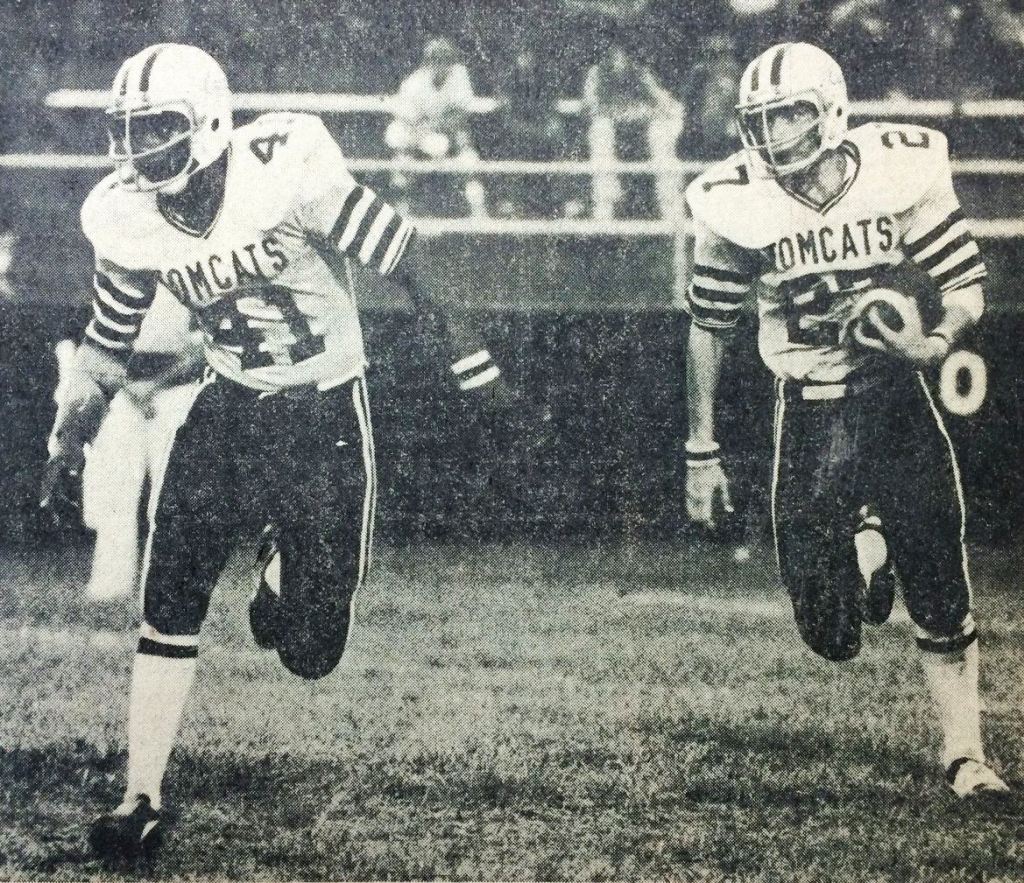
Jackson was still used in the backfield and had some valuable runs during the Tomcats’ playoff stretch including a touchdown against Lafayette in a 21-6 victory. He put Ashland ahead 7-0 on a fourth down, four-yard scoring run in an eventual 13-7 victory over Paducah Tilghman in the Class AAAA State At-Large championship game in Paducah.

Thomas broke a 7-7 deadlock with a 74-yard scamper late in the fourth quarter that put Ashland in the Class AAAA Super Bowl against Jefferson County champion St. Xavier.

Rick Sang hauls in a touchdown pass. He was one of the top athletes on the 1975 JAWS team starting both ways and punter on the way to being selected All-State.

“There were a lot of what ifs in that Paducah game,” Jackson said. “As coach (Herb) Conley has said to me, ‘I remember that play because the first three times (assistant) coach (Bill Tom) Ross wanted to run it up the gut and we weren’t getting anything.’ And a great call, Chuck had the fake to Gary and the linebacker would at least be stymied for split second. We were strong to our right and I knew it was going left. I see the end zone. It’s clear halfway between the pitch and the end zone. I feel like something just trips my foot. I got the video about 15 years ago. I always thought, and never knew for sure, until I looked at the video. When I looked at it, the defensive end got sucked in to Chuck, which is why Chuck pitched it to me. That’s the option. The defensive end recovered, and he dove and did swipe the bottom of my foot.” But Jackson made it to the end zone for his third touchdown of the season and second in the postseason.

That was the first year that the Kentucky High School Athletic Association instituted the Super Bowl type setup for the state’s largest class. The State At-Large champion, which included the biggest schools in the state outside of Louisville, played the Jefferson County champion for the overall Class AAAA title. Both Ashland and St. Xavier have trophies that say state champion, but St. Xavier has another one with overall champion in 1975. The KHSAA lists them as the sole champion in 1975. They scrapped that setup after eight years.

Terry Bell was a force on the offensive and defensive lines for the Ashland JAWS team in 1975. He was first-team All-State and named the top lineman in the state.

The Tomcats missed some scoring opportunities in the first half and still played St. Xavier to a near deadlock. The Tigers led 7-0 at the half and their depth – St. Xavier had separate offensive and defensive units – was simply too much to overcome and Ashland fell 20-0 in Louisville. St. Xavier’s strong senior class had not lost since they were freshmen.

Whether state champion or not, the beloved JAWS team remains one of the favorite and best remembered teams in Tomcat history. Coach Conley, who was an assistant on Ashland’s 1967 Class AA state championship team, said this to reporters after the game in 1975. “You can say whatever you want to, but this has just been a great year for us. These kids have given their all. They have done everything we have asked them to do. I think they’re better than the state champions of 1967. We beat everybody in the state but Louisville, and we didn’t have to play Louisville in ’67.”

In baseball, the Tomcats were regional champions in Jackson’s junior and senior seasons. He was inducted into the CP-1 Hall of Fame in 2022.

A born leader who graduated from the U.S. Military Academy at West Point in 1980, Jackson is also a community champion who has served on countless boards and is a leader at his church. Jackson also played on freshmen football and baseball teams at West Point. He served six years in the Army after graduating.

He went there with classmate and teammate, Chuck Anderson, a past Sports Day honoree, who went on to a career in the Army that saw him rise to become a Two-Star General. Anderson will introduce Jackson at the Sports Day banquet on June 14 at the Elks Lodge where tickets are on sale for $30. The event is open to the public, not just Elks members, which is a popular misconception. Mark Maynard, also a former Sports Day honoree, is the featured speaker.

Beyond playing, Jackson served as an assistant coach for Ashland Kittens softball for eight seasons, including six regional champions, and was president of the Tomcat Band Booster Club for one year and active for eight years when his daughters were in band. He also was a youth softball, baseball, football, and basketball coach when his three children were young.

All that while working 34 years in Human Resources with Ashland Oil and Marathon Petroleum Corporation and serving on a dozen community boards.

However, his claim to community fame may be the long hours and dedicated work he did as the chairman of the Putnam Stadium Restoration committee from the beginning in 2008 to the completion last fall.

Greg Jackson, community champion and driving force of the Putnam Stadium project, selected as Sports Day honoree

ASHLAND – Greg Jackson, who spearheaded and practically willed the rebuilding of Putnam Stadium from rubble to spectacular showcase, will be honored this summer on Elks Sports Day.

Jackson spent countless hours overseeing the Putnam Stadium restoration project for 17 years, serving as everything from fundraiser to cheerleader to give the Tomcats and their fans one of the most complete and impressive stadiums in the South. Nobody could question the resolve of Jackson whose expansive vision for what Putnam Stadium could be came to life this fall.

A born leader who graduated from the U.S. Military Academy at West Point in 1980, Jackson is also a community champion who has served on countless boards and is a leader at his church. He was a two-sport star in high school for Ashland. Jackson was a running back and outside linebacker on the famed JAWS 1975 champions and a third baseman for the 1975 and 1976 regional baseball champions.

Jackson also played on freshmen football and baseball teams at West Point. He served six years in the Army after graduating from West Point. He went there with classmate and teammate Chuck Anderson, a past Sports Day honoree, who went on to a career in the Army that saw him rise to become a Two-Star General. Anderson will introduce Jackson at the Sports Day banquet.

Greg Jackson spent 17 years as chairman of the Putnam Stadium Restoration Committee, finishing the job in the fall of 2024.

Beyond playing, Jackson served as an assistant coach for Ashland Kittens softball for eight seasons, including six regional champions, and was president of the Tomcat Band Booster Club for one year and active for eight years when his daughters were in band. He also was a youth softball, baseball, football, and basketball coach when his three children were young.

All that while working 34 years in Human Resources with Ashland Oil and Marathon Petroleum Corporation and serving on a dozen community boards.

The exhaustive list of accomplishments checked all the boxes for making him the perfect choice for Sports Day, said Dale Sexton, who is serving as co-chairman with Steve Towler. Sexton said Jackson was a unanimous selection of the committee.

Greg Jackson with his coach, Herb Conley, in September 2024 to dedicate the stadium’s new look.

“He’s definitely somebody that needed to be honored for all he’s done for the Ashland community,” Sexton said. “He is very deserving, and we are glad to have him as the honoree. I think it will be a great night to honor a great man who obviously loves Ashland.”

The banquet is on June 14 at Elks Lodge. Jackson’s portrait will be hung on the lodge’s back wall joining the honorees who have come before him. Mark Maynard, another former Sports Day honoree and former editor of The Daily Independent, will be the speaker.

“You look at those names and it is hard to feel like you’re in that group,” Jackson said. “I’m humbled to have even been considered but appreciative of being selected by the committee.”

Jackson, 67, was inducted in 2022 to the CP-1 Ashland Baseball Hall of Fame.

Jackson is the ultimate volunteer, using his time and skills to make Ashland a better place throughout his life. His board work was exemplary, even reaching the state level where he was on the state United Way board from 2015-2018.

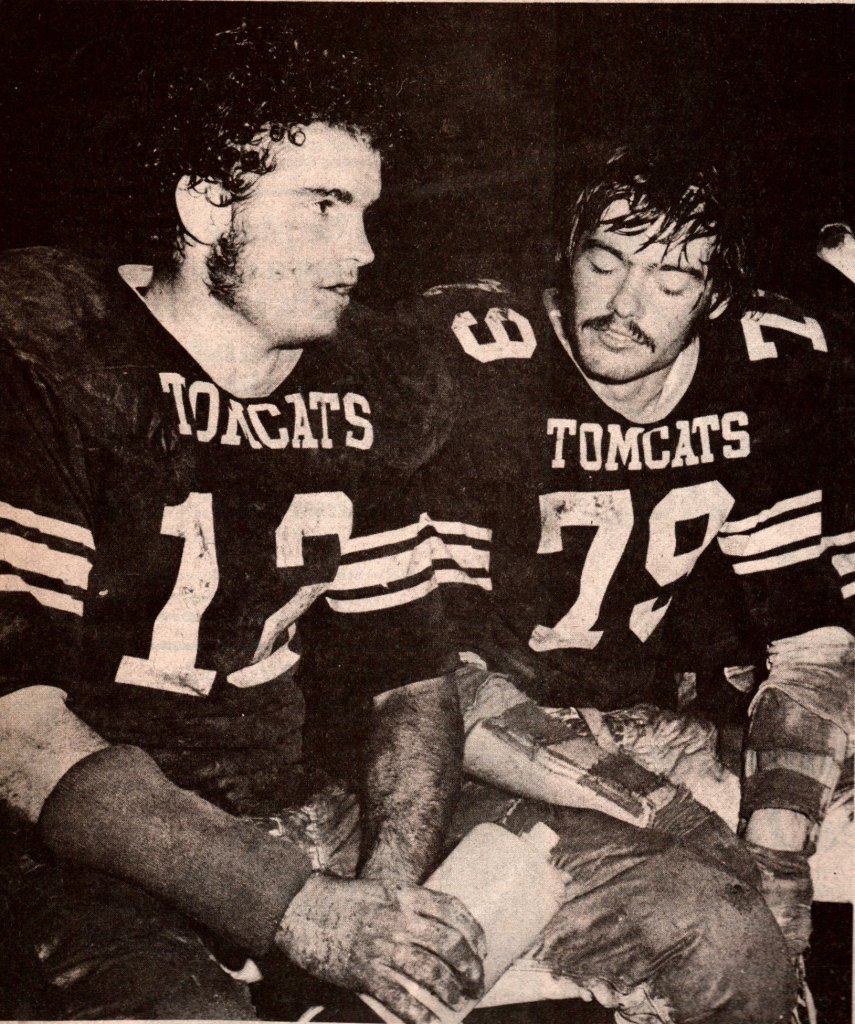
As an athlete, few played harder than Jackson, who missed five weeks of his senior football season with a broken foot. Although he did not know it, he had broken the foot two days before the opener against Johnson Central.

JAWS 1975 team was the State At Large champions.

The night before the opener he had a temperature of 102 but tried to hide the injury from the coaches because he wanted to play the first game of his senior season. Jackson played and on his first carry dashed 53 yards for a touchdown. Jackson carried three more times and had 100 yards rushing at halftime.

His foot was throbbing and after sitting through halftime, it swelled so much that he could not put weight on it. An x-ray the next morning revealed the break. Jackson said he asked the doctor if he could just give him a cortisone shot on game days and was met with a resounding no.

“I didn’t think so, but I thought it was worth asking,” he said.

Jackson eventually returned to the playing field and was a key player on defense for the famed JAWS team that finished 14-1, losing their last game to St. Xavier 20-0 in the Class AAAA overall state championship. The week before against Paducah Tilghman, Jackson had a fourth-down touchdown run that put the Tomcats in front 7-0 in a 13-7 victory in the Class AAAA State At-Large state championship.

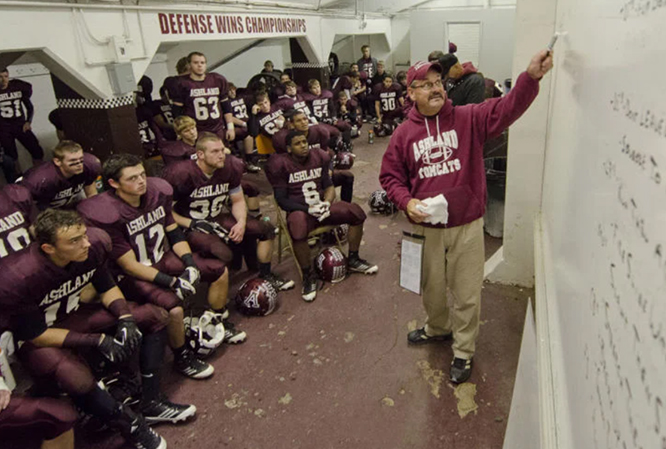
JAWS defense dominated Class AAAA in 1975.

Although his carries were limited because of the foot injury, Jackson still rushed for 350 yards and was second on the team in yards per carry at 8.1.

That Ashland team became the first in Kentucky to fly to a game. The Tomcat Boosters raised money to transport the team to Paducah to save them from a long bus ride across the state.

The Tomcats have always been high on Jackson’s priority as evidenced by taking on the job of rebuilding Putnam Stadium. He became chair in 2008 and finished the project last fall. His advice to others is to volunteer time and expertise.

“Get involved in all the things you can for your community to make it a better place,” Jackson said. “I would not trade my time coaching for anything. You do for others what people did for me. My first coach was my father passing ball with me in the backyard.”

He worked with strong board members throughout his time serving in the community.

“It takes so many people to take on big projects. You must have volunteers. It does not just happen. The stadium is a prime example.”

Jackson’s inner determination made the project happen. Not only was the old stadium razed because of safety concerns but the new one was built with the same footprint. It took years to accomplish everything on his to-do list including a turfed field, flags to display championship seasons and new flagpoles and flags behind the end zone, Tomcat Donor Corner to honor those who gave, a statue of coach Herb Conley representing Ashland’s past and present, a Tomcat statue at the top of the stairs going down to the field to motivate players, the (Jumbotron) video scoreboard, LED lights, a sound system with mics for the referees, a banked end zone, new press box, bucket seating, locker rooms, wall dedications, a catch net behind the open end zone and decorative screens along the walls to tie colors together.

There was no stone left unturned for Jackson who was determined to make it all happen. Anything less was a failure in his mind.

“Fortunately, I got support from the school board, superintendents and the stadium restoration committee all along,” Jackson said. “They supported everything. Also, Donna (Suttle) was instrumental in fundraising early on and Steve (Conley) was with me every step of the way.”

Longtime stadium groundskeeper Steve Conley hugs Jackson.

Jackson said fundraising was not one of his strengths, but he found himself in that role with the stadium project. He was able to bring in one-third of the total cost through fundraising efforts including Clark’s Pump-N-Shop donation and naming rights to bring turf to the stadium, which was one of the biggest pieces.

“There were times when I thought, ‘Are we really going to get there?’” he said. “I know what I wanted to do and kept adding things and told everybody we were going to get it done.”

He had everything but the video (Jumbotron) scoreboard by the end of April but had no more money in the stadium account and it was going to cost $260,000. Jackson told his wife, Cindy, that he had to raise a quarter million in the next month.

“I wasn’t going to stop until I have it,” he said.

Not only did he raise enough for the football scoreboard but also was able to add almost another $100,000 for a video board that was put in the gymnasium on the Ashland campus.

Jackson is an avid Ashland Tomcat, Kentucky Wildcat, and Army fan (Go Army! Beat Navy!). He remains active in church leadership at Unity Baptist serving as a deacon. He and his wife have three grown children – Josh Griffith (Marie), Becca Doss (Roger), and Kathryn Jackson – who came up through the Ashland school system and two grandchildren (Joshua Griffith and Talula Mae Griffith).

Jeep Clark, who laid foundation for powerhouse basketball at Boyd County, has died at 92

Eugene “Jeep” Clark, who brought the intoxicating man-to-man defense that became the calling card of Boyd County basketball, died on Wednesday in Hattiesburg, Miss. He was 92.

Clark’s six-year coaching stint from 1976 to 1982 including back-to-back 16th Region championships in his last two seasons, paving the way for Roger Zornes to take the baton and carry the Lions’ tradition for the next 20 years.

Clark was a fierce competitor, and one of the nicest men you would ever meet. He taught more than great basketball to the players he coached.

Brock Walter, who was an exhausting, relentless presence as a point guard that epitomized what Clark wanted from his defense for the two-time regional champions, called him an “elite coach and person.”

“He assembled an unbelievable (coaching) staff allowing them each to have a unique input and impact on so many student athletes,” Walter said. “As a mentor to so many, his knowledge and wisdom became invaluable for both personal and professional growth throughout life. He grew us to be resilient, loving us and pushing us beyond our natural potential. He inspired us to be better individuals, better people. There were none with more class than Coach Jeep Clark.”

Jeep Clark led Boyd County basketball from 1976-1982, winning 16th Region championships his last two seasons. (Photo by Daily Independent)

Clark was 118-51 in six seasons at Boyd County before serving seven years as the school athletic director while watching Zornes continue to build on the foundation that he laid for the program. The Lions became a 16th Region powerhouse and a team that could compete anywhere because of that same relentless defense.

Clark was nothing but class in how he handled winning and losing. He dealt well with the rivalry with Ashland, too. Clark, who grew up on 32nd Street, was a terrific basketball and baseball player for the Tomcats in the late 1940s. He was an All-State basketball player as a senior on Ashland’s 1949 region runners-up. That Tomcat team fell to Clark County 46-33 in Winchester in the regional finals. Clark County was the No. 1 team in the state.

The game ended with coach Letcher Norton’s team clutching the championship trophy, just as it had the previous year when Clark County defeated Ashland 39-38 in Ashland.

Clark was the team captain and led the team with a 12.3 scoring average, but it was adept ballhandling that separated him from the rest.

Clark eventually went to Southern Mississippi after playing for a year at Ashland Junior College where he was the leading scorer in 17 of 27 games. Clark’s teammates included Marvin Meredith, Charlie “Stick” Stewart of Olive Hill and Jim Highley, a high school teammate.

Southern Miss went 76-31 during his playing days there. He also coached at Southern Miss for four years, going 41-61, before coming to Boyd County.

Clark had several high school coaching stopovers out of college, including a couple in Kentucky at Montgomery County (1954-59) and Paris (1954-62).

Clark eventually went to play at Southern Mississippi after playing a year at Ashland Junior College where he was the leading scorer in 17 of 27 games. Clark’s teammates included Marvin Meredith, Charlie “Stick” Stewart of Olive Hill and Jim Highley, a high school teammate.

Southern Miss went 76-31 during his playing days there. He also coached at Southern Miss for four years before coming to Boyd County.

Clark had several high school coaching stopovers, including a couple in Kentucky at Montgomery County (1954-59) and Paris (1954-62).

Former East Carter coach Charles Baker broke into coaching when Clark came to Boyd County. In an interview in 2006, when Clark was being recognized by the Ashland Elks on Sports Day, Baler called him “a mastermind of the game.”

“The way he carried himself with so much confidence but no arrogance. He makes you feel so at ease when talking to him,” he said. “Here I was, up and coming, trying to make it, and this guy has been around the world in the coaching area. He was so humble.”

Baker said Clark’s philosophy of aggressiveness and hard-nosed defense took the program to great levels.

“It was nothing dirty,” Baker said. “He had his players take your space away. They would bang on you and bang on you. They (the referees) would get tired of blowing the whistle. It proved out and it carried over. He had his stamp on it.”

Much like Coach Baker starting in the business, I was just starting in the journalism business when Jeep Clark came to Boyd County. He was always a gentleman – win or lose – and always complimentary of the opponent. I cannot recall him ever questioning a referee’s call, at least in public, or making excuses for losses. He was so kind to this still green-behind-the-ears sportswriter.

Zornes was an assistant under Clark for seven years and carried that same defensive philosophy with him. It served him well with multiple regional crowns and his name on the gymnasium wall at Boyd County.

“The big thing on Jeep was just the way he handled people,” Zornes said in a 2006 interview. “He had a knack of getting things out of kids without the fussing and hollering at them. I really liked the way Jeep did things. I picked up a lot from him.”

Zornes said Clark was also good at giving his assistant coaches responsibility.

“Jeep would listen to his assistant coaches,” he said. “I had a lot of ideas. Of course, he was going to make the final decision. But he allowed me to do a lot of things.”

Clark, a strong Christian man of the Methodist faith, was married for 69 years to wife, Mary, who passed away in 2020 at the age of 88. He also had a son, Gary, who preceded him in death.

Arrangements have not been made.

RIP Mike Johnson, Tomcat Legend

Mike Johnson was an iconic figure in Ashland sports. He played on state championship teams in Little League (1963) and high school football (1967) and was on Ashland’s state baseball runners-up in 1969. He was the first honoree in the Coaching Legends of the now defunct Ashland Junior/Senior League, named a Distinguished Tomcat in 2013 and a CP-1 Hall of Fame member in 2019.

Johnson was practically an institution in Ashland Babe Ruth, coaching the Reds for 19 seasons. Former players sought him out long after their playing days were over. They often came back and thanked him for inspiring them.

What better testimony can there be for a coach?

Johnson told me once the when the players would come back to see him that he would do a double-take because the boys who were 13 to 15 years old when he coached them were now grown men. But if they told him their name, he remembered them and could recall details they may not even recall.

Mike Johnson during the 2019 CP-1 Hall of Fame induction ceremony in Central Park.

And they sure loved him and the impact he had on their lives.

Johnson has a passion for Ashland youth baseball that carried on for more than 50 years, starting back in his Little League days in the early 1960s. It was a turbulent time for African-Americans and it was during Johnson’s days as a Little League All-Star that he his eyes were first opened to prejudice.

Johnson was a member of the Ashland American 1963 Little League team that would eventually become state champions and came within one victory of making it to the Little League World Series. They played the State Tournament in Lexington and the Ashland team stayed at a motel that would not allow the team’s two Black players – Charlie Jackson and Johnson – to get in the swimming pool.

“On the last day before we left, I dove into that pool with all my clothes on,” Johnson said with a grin in an interview with me.

After the team won its first game in the State Tournament, he remembered the coaches wanted to treat the players to something special. They tossed around ideas like bowling and swimming before settling on a game of miniature golf because there was a course just down from where they were staying.

“I’d never played miniature golf in my life,” Johnson said. “I was looking forward to it. Everybody was excited.”

The team went together to the course and grabbed a club. But the owner stopped Jackson and Johnson from picking one up, telling the coaches that those two boys wouldn’t be allowed to play.

The team decided if their two friends weren’t welcome, they weren’t staying. It was a unanimous decision.

“Growing up in the ‘60s for a black kid was kind of rough,” Johnson said. “Sports was kind of a relief.”

While Johnson learned about prejudice during that trip to Lexington, he also learned about friendship and respect.

“It meant a lot to us that our teammates and coaches stood behind us,” he said. “They wouldn’t do anything or go anywhere that we couldn’t go.”

He said it also may have inspired the Ashland American All-Stars, who went on to win the State Tournament.

“I think it made us play harder, I really do,” Johnson said.

Johnson later played on a Babe Ruth state champion and was a starting cornerback on Ashland’s 1967 state championship football team and was the quarterback on coach Herb Conley’s first Tomcat team in 1968.

His oldest son, Mike Jr., was an all-around athlete and one of the greatest running backs in Tomcat history. He’s now a (track) state champion coach too at Mercer County and an outstanding assistant football coach. A younger son, Charlie, was a member of Ashland’s 1990 state championship team making them the only father-son duos to win state football titles in Tomcat history. His daughter Angie was a tremendous high school and college basketball player and college coach at Georgia and Florida State. He and Anyetta, his wife of 54 years, had reason to be proud.

His speeches to All-Star teams always underscored Ashland’s tradition and how much fun it is to ride the fire truck after winning a state championship. He was a man who knew through life experiences in this Tomcat town that riding the fire truck meant you were something special.

Johnson coached many All-Star teams during his 19 years and, while he never won a state championship, the players left with good memories. Players always liked playing for Johnson because he was fair and he made the game fun. He expected the players to give him their best effort every time and they knew it. I had the honor of coaching with him during my son’s three years on Babe Ruth All-Star teams. I learned so much about coaching and even more about him. He was an inspiration.

His coaching skills were not limited to baseball. He was a constant with the Ashland Junior Football League as well. If you can coach, coach. This man could coach.

And If not for some health issues that were eventually too much to overcome, he might have never stopped coaching.

But Mike Johnson left an imprint on Ashland sports that has few equals. He will always be a Tomcat Legend.