1975 JAWS Tomcats clamped down on rival Boyd County in a game with high stakes

In 1975, the stakes for the Boyd County-Ashland football rivalry moved beyond bragging rights. It meant everything. The season was on the line. For the winning team, it meant a trip to the Class AAAA state playoffs. For the losing team, it meant basketball season.

Unlike today’s playoff format, where four teams from each district advance, only the district champion went to the postseason party in 1975. As if it didn’t already mean everything, that made the game even bigger. There were no second chances. It was take-your-breath-away football.

It was played in the last week of the regular season, only adding to the drama that was building since before the season started when fans began comparing the rivals. The game was always big, and the series was tied 5-5 going into the 1975 battle between the Tomcats and Lions. Both came in with outstanding teams and the game was played in Cannonsburg.

They played in the preseason, meeting in a Grid-O-Rama game in Putnam Stadium on a rainy night that ended with Ashland winning 12-0. The teams played only for about a half on a muddy turf, so it wasn’t a true measure of what could be and everybody knew it. But it still added to the discussion throughout the week leading up to the game.

Herb Conley was the architect of the Ashland JAWS Tomcats in 1975.

Boyd County was coming off consecutive seasons where it made the Class AAA playoffs. The Lions were ranked No. 1 in 1974 and were stunned by Middlesboro 28-14 in the opening round. That came after the 1973 season when Boyd County roared into the state championship game before losing 27-8 to Paducah Tilghman at Hanger Field on EKU’s campus.

The Lions had beaten the Tomcats both of those years, albeit by narrow margins – 14-13 in 1973 and 20-8 in 1974. Those were the kind of scores that most fans expected when the bitter rivals met, no matter which team was superior. Ashland’s last win in the series was 24-8 in 1972 with a team that reached the Class AAA finals against Tates Creek, losing 16-7, at Stoll Field in Lexington.

The Boyd County and Ashland programs were recognized and highly respected statewide for their hard-nosed and hard-hitting styles of play.

Ashland went into the 1975 game looking for perfection and a district championship. It could be a historic night with the last undefeated Tomcat team coming in 1958 when Herb Conley was playing. Even that team had a blemish – a tie against Huntington East – in a 10-0-1 season.

Casey Jones was a standout tackle for the Tomcats.

The last undefeated and untied team in Ashland history came in 1942. The JAWS Tomcats were chasing history. They were more interested in making their own legacy in the Tomcat program and knew they had the makings of greatness.

The Ashland-Boyd County games of the 1970s and 1980s were almost always played on the last Friday of the regular season, always had high stakes and always drew a massive number of fans. Everybody in the area was watching and interested In the outcome. It was just that kind of game.

Given the Tomcats proudly using the JAWS nickname for its defense throughout much of the season, Boyd County’s fans decided to have some fun, calling their team the JAWBREAKERS. Electricity was in the air, the fans were packed in on Boyd County’s large home side and the smaller set of bleachers were full for the visiting fans. The hillside on the home side was crowded with a mix of fans too with the expectation that something special could happen no matter which side won.

Ashland came in a confident 10-0 and feeling good after blowing out Covington Catholic 56-14 the week prior. Boyd County was 7-3 and coming off a defensive battle with Russell won with a goal from Mark Rice that provided a 3-0 victory. The Lions had a star running back in James Tackett who was heading to play at West Virginia. He came into the game injured but still played, gaining 58 yards on 10 carries.

The Tomcats were ready and when big Terry Bell, Ashland’s All-State lineman, busted through a hoop coming onto the field it almost sent an instant message.

“Terry came running out there in the front,” remembered tight end Alan Mayo. “Terry, Chuck (Anderson) and Rick (Sang), were our captains. People came running out (behind them) and sprinted to the middle of the field. Everybody in the stadium went quiet. You knew he (Bell) was there and was going to give it his all.”

Mayo figured in setting up the game’s first touchdown. He slipped past the Lions defenders to pull in a catch and ran 41 yards to the Boyd County five. Mayo looked headed for the end zone until Tim Powers tripped him up from behind. But a three-yard run from Gary Thomas set up a two-yard plunge from Jay Shippey for the touchdown. Kevin Ward’s extra point made it 7-0 on Ashland’s first possession.

Terry Bell breaks through the hoop and runs onto the field.

Ashland made it 15-0 early in the second quarter when Jeff Slone finished off a drive with a seven-yard touchdown run. Anderson hit Mayo on the two-point conversion try.

Anderson, the quarterback-linebacker, played a huge role with a 6-for-13 passing performance that included a 20-yard touchdown pass to Sang eight seconds before halftime for a 23-0 lead. Anderson also rushed for 46 yards on 11 carries out of the wishbone.

In the second half, Thomas returned a punt 85 yards for a touchdown and Greg Jackson ran in the two-point conversion to push the margin to 31-0. Anderson later scored on a 13-yard run and the last touchdown, set up by a 25-yard strike from Anderson to Jim Johnson, moved the Tomcats inside the 20. Shippey rumbled into the end zone on a 16-yard run with 2:27 remaining to bring the final score to a whopping 43-0.

Ashland outgained Boyd County 477-175 as the JAWS defense stated its case, clamping down on the Lions from start to finish. Boyd County made it inside Ashland’s 30 only once in the game and that came on the last series. Tackett had a short run and a facemask penalty put the ball on the 22. But any hope of ruining the shutout ended when quarterback Wayne Chaffin was sacked for a 10-yard loss on the last play of the game.

Greg Jackson (27) runs behind Jim Johnson for a big gain.

A 43-0 shutout victory over its biggest rival was enough to put Herb Conley in rare form and he did not hold back his excitement over the victory that was the biggest margin in the series. It also sent Ashland into the state playoffs as the top-ranked team in Class AAAA.

“The best team showed that it was the best tonight. We have the best team in the Tri-State and I can say it now. I’ve kept my mount shut all year, but I can say it now … we’ve beaten them all. This win was especially good after the last two years.”

The perfect season was intact and the victory over Boyd County was sweeter than ever for the Tomcats. But now the fun would begin. Despite being undefeated and ranked No. 1, the Tomcats only had one playoff game in Putnam Stadium. They played at Dixie Heights, home against Lafayette, at Paducah Tilghman and in Louisville against St. Xavier for the state championship.

‘Shorty’ Blanton, Tomcat state championship baseball coach in 1968, dies at 94

Leonard “Shorty” Blanton, who coached the Ashland Tomcats baseball team for only three years but his legacy includes a state championship in 1968 and state runner-up finish in 1969, died in Florida on Aug. 30. He was 94.

Blanton took over the Tomcats’ baseball job in 1968 after Zeke Meyers had led Ashland to back-to-back state titles in 1966 and 1967. Meyers, who took an administration position at Marshall University following his time in Ashland, went 47-4 in two seasons including a perfect 25-0 in 1967.

Even though the cupboard was hardly bare, who wanted to replace that coaching legend?

Blanton told me a few years ago in an interview for the book Tomcat Dynasty he got the job because “no one else wanted it.” During those days the principal selected the coaches for the so-called “minor” sports of track and baseball. He appointed Blanton to be the baseball coach.

A good football coach at several levels in the Ashland system, including the junior varsity coach the year the Tomcats won the state title in 1967 and the head coach at Coles Jr. High in 1971, Blanton admittedly didn’t have a wealth of baseball knowledge and had never coached the sport on any level. And now he was taking over the two-time defending state champions with a wealth of returning players, including Bobby Lynch, John Mullins, Steve Hemlepp, Fred Leibee, Tim Huff, Bo Carter, Dave Staten and Mike Tackett. These days people would be knocking each other over to get that job.

Leonard “Shorty” Blanton celebrates after winning the 1968 state baseball championship as coach for the Ashland Tomcats. It was the third consecutive title for the Tomcats.

Lynch and Hemlepp were like unofficial assistant coaches and knew the team better than anyone. Blanton said he welcomed their suggestions and knew these Tomcats were not just good at baseball, they were good at winning.

It proved to be true as those Tomcats became Kentucky’s first program to win three consecutive state championships. It did not happen again until Pleasure Ridge Park won it from 1994-96.

Blanton said the players taught him a lot about baseball and were “easy to coach.”

The ’68 champions finished 23-3 and surrendered only one run in three games in the state tournament. Lynch won two of those games, including being the winning pitcher in the finals for the second time in three years. If not for a strange scoring decision, he would have been the winning pitcher in all three championship games.

But what Blanton did with the ’69 team was the most surprising. He took them back to the state tournament and reached the finals where they dropped a 1-0 decision to Owensboro in heartbreaking fashion.

In the state championship game against Owensboro, a pair of errors brought home the winning run – and only run of the game – in the bottom of the seventh inning. There may have been three errors since the baserunner was thought to have missed third. Ashland never protested. Leonard talked about that play nearly 50 years later.

“Someone told me the runner didn’t even touch third base,” he said. “I missed it and none of my boys saw it either. Who knows? The umpire may not have noticed either. I guess we’ll never know.”

The Tomcats finished 19-4 including a 1-0 victory over Don Gullett-led McKell in the regional semifinals in Morehead. Ashland had only one hit in the game, a triple from Dave Damron who then scored the game’s only run on Tackett’s sacrifice fly. Gullett struck out 11 and allowed the lone hit but Huff outdueled him.

“Those guys were outstanding, some of the best in the state, and they knew how to win, too,” Blanton said. “It’s a shame it turned out like it did.”

Blanton was not planning on coming back for the 1970 season after that stinging loss and announced in the newspaper that Steve Gilmore would be replacing him. But that didn’t happen until the following year. Blanton coached the Tomcats to a 12-10 season in 1970, losing in the regional finals to Russell.

He finished his high school coaching career with a 54-17 record. Not bad for somebody who admitted having limited baseball coaching knowledge when he took the job.

Blanton was much more than a good coach, though. He was a fine Christian gentleman, husband and father and a friendly and popular man in Ashland. His wife, Ada, who died in 2020, was a beautiful lady and powerful singer who was crowned Mrs. Kentucky in 1968. She represented the state along with the 1968 Miss Kentucky and Col. Harland Sanders of Kentucky Fried Chicken fame on the Kentucky state float during the inauguration parade for President Richard Nixon in Washington, D.C., in 1968.

Shorty and Ada sang together in church at Unity Baptist and in local dramas and musicals. They have a son, Ted Blanton, who played on Ashland’s 1967 state football championship team.

Blanton was born in 1931 and graduated from Ashland High School in 1949. He played on the Tomcats’ 1946-1948 football teams. He rushed for 339 yards and had 152 yards receiving while scoring five touchdowns on a 5-4-1 team in ’48 that was ranked No. 3 in the final AP state poll. The losses and tie came to four out-of-state teams (Charleston, Stonewall Jackson, Huntington High, Ironton and Portsmouth).

Jeep Clark, who laid foundation for powerhouse basketball at Boyd County, has died at 92

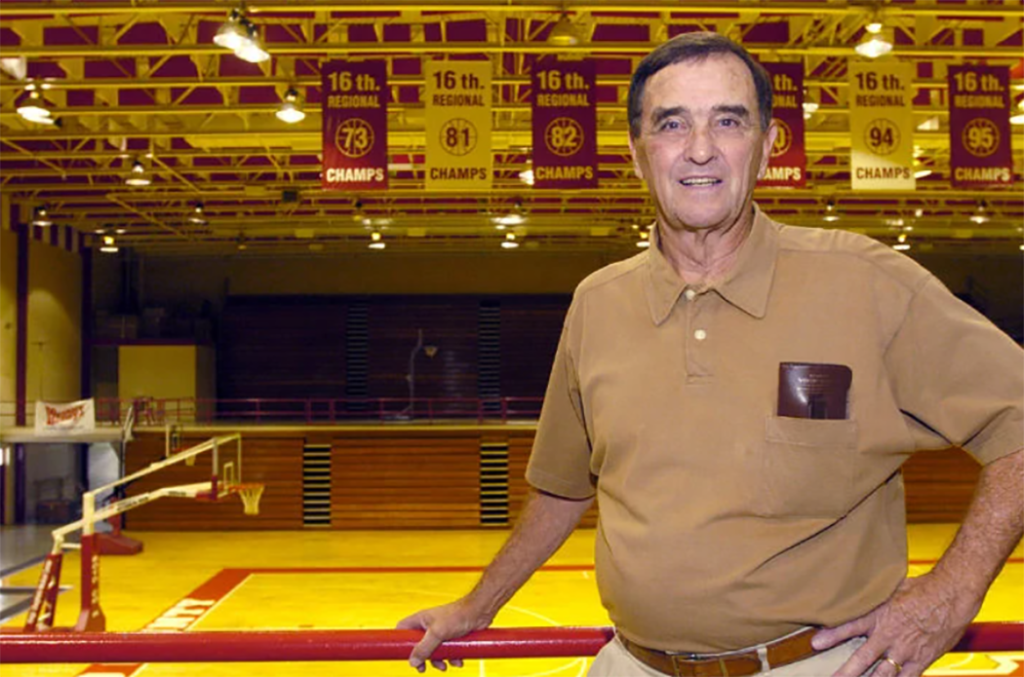
Eugene “Jeep” Clark, who brought the intoxicating man-to-man defense that became the calling card of Boyd County basketball, died on Wednesday in Hattiesburg, Miss. He was 92.

Clark’s six-year coaching stint from 1976 to 1982 including back-to-back 16th Region championships in his last two seasons, paving the way for Roger Zornes to take the baton and carry the Lions’ tradition for the next 20 years.

Clark was a fierce competitor, and one of the nicest men you would ever meet. He taught more than great basketball to the players he coached.

Brock Walter, who was an exhausting, relentless presence as a point guard that epitomized what Clark wanted from his defense for the two-time regional champions, called him an “elite coach and person.”

“He assembled an unbelievable (coaching) staff allowing them each to have a unique input and impact on so many student athletes,” Walter said. “As a mentor to so many, his knowledge and wisdom became invaluable for both personal and professional growth throughout life. He grew us to be resilient, loving us and pushing us beyond our natural potential. He inspired us to be better individuals, better people. There were none with more class than Coach Jeep Clark.”

Jeep Clark led Boyd County basketball from 1976-1982, winning 16th Region championships his last two seasons. (Photo by Daily Independent)

Clark was 118-51 in six seasons at Boyd County before serving seven years as the school athletic director while watching Zornes continue to build on the foundation that he laid for the program. The Lions became a 16th Region powerhouse and a team that could compete anywhere because of that same relentless defense.

Clark was nothing but class in how he handled winning and losing. He dealt well with the rivalry with Ashland, too. Clark, who grew up on 32nd Street, was a terrific basketball and baseball player for the Tomcats in the late 1940s. He was an All-State basketball player as a senior on Ashland’s 1949 region runners-up. That Tomcat team fell to Clark County 46-33 in Winchester in the regional finals. Clark County was the No. 1 team in the state.

The game ended with coach Letcher Norton’s team clutching the championship trophy, just as it had the previous year when Clark County defeated Ashland 39-38 in Ashland.

Clark was the team captain and led the team with a 12.3 scoring average, but it was adept ballhandling that separated him from the rest.

Clark eventually went to Southern Mississippi after playing for a year at Ashland Junior College where he was the leading scorer in 17 of 27 games. Clark’s teammates included Marvin Meredith, Charlie “Stick” Stewart of Olive Hill and Jim Highley, a high school teammate.

Southern Miss went 76-31 during his playing days there. He also coached at Southern Miss for four years, going 41-61, before coming to Boyd County.

Clark had several high school coaching stopovers out of college, including a couple in Kentucky at Montgomery County (1954-59) and Paris (1954-62).

Clark eventually went to play at Southern Mississippi after playing a year at Ashland Junior College where he was the leading scorer in 17 of 27 games. Clark’s teammates included Marvin Meredith, Charlie “Stick” Stewart of Olive Hill and Jim Highley, a high school teammate.

Southern Miss went 76-31 during his playing days there. He also coached at Southern Miss for four years before coming to Boyd County.

Clark had several high school coaching stopovers, including a couple in Kentucky at Montgomery County (1954-59) and Paris (1954-62).

Former East Carter coach Charles Baker broke into coaching when Clark came to Boyd County. In an interview in 2006, when Clark was being recognized by the Ashland Elks on Sports Day, Baler called him “a mastermind of the game.”

“The way he carried himself with so much confidence but no arrogance. He makes you feel so at ease when talking to him,” he said. “Here I was, up and coming, trying to make it, and this guy has been around the world in the coaching area. He was so humble.”

Baker said Clark’s philosophy of aggressiveness and hard-nosed defense took the program to great levels.

“It was nothing dirty,” Baker said. “He had his players take your space away. They would bang on you and bang on you. They (the referees) would get tired of blowing the whistle. It proved out and it carried over. He had his stamp on it.”

Much like Coach Baker starting in the business, I was just starting in the journalism business when Jeep Clark came to Boyd County. He was always a gentleman – win or lose – and always complimentary of the opponent. I cannot recall him ever questioning a referee’s call, at least in public, or making excuses for losses. He was so kind to this still green-behind-the-ears sportswriter.

Zornes was an assistant under Clark for seven years and carried that same defensive philosophy with him. It served him well with multiple regional crowns and his name on the gymnasium wall at Boyd County.

“The big thing on Jeep was just the way he handled people,” Zornes said in a 2006 interview. “He had a knack of getting things out of kids without the fussing and hollering at them. I really liked the way Jeep did things. I picked up a lot from him.”

Zornes said Clark was also good at giving his assistant coaches responsibility.

“Jeep would listen to his assistant coaches,” he said. “I had a lot of ideas. Of course, he was going to make the final decision. But he allowed me to do a lot of things.”

Clark, a strong Christian man of the Methodist faith, was married for 69 years to wife, Mary, who passed away in 2020 at the age of 88. He also had a son, Gary, who preceded him in death.

Arrangements have not been made.

An open letter to Colin Porter

Dear Colin,

Just a note of congratulations and appreciation for how you handle yourself not only on the basketball court, which is nothing short of sensational, but how your faith and belief in Jesus Christ comes shining through.

You are the most valuable leader of a team that has made it to the NCAA tournament by playing the kind of basketball that should make others envious while offering a blueprint for wild success. Your play at point guard for Liberty University is the model and something that Ashland fans witnessed and will never forget during your three seasons as a Tomcat.

Even though everyone was sad to see you graduate early from Ashland (academics was never a problem either, obviously), we can clearly see it was the right decision. You were ready for college basketball.  

Watching your teammates gather around and celebrate with you during the national television interview after the win over Jacksonville State in the CUSA championship game Saturday night warmed hearts in Ashland. Through the magic of ESPN+, most every Liberty game has been on our televisions. We love the Wildcats but the Flames have a little fire, too.

Colin Porter will lead Liberty into the first round of the NCAA tournament Friday against Oregon. (Liberty photo)

Future Tomcats going through the program and the ones already there have no one better to admire and strive to be like on and off the court than you. “Be Like Colin” should be stamped on headbands and passed out to potential point guards.

Your mother and father certainly should take a bow, too, to raise a son with the characteristics that you possess. In these days and times, that is no simple task.

Basketball is something you do extremely well but you are winning at life, too, and that is far more important. People want whatever it is that is inside of you. Basketball gives you a platform to share that life-changing message of Jesus and you use it well. Your competitive spirit, those (Tom)cat-like reflexes and instincts, your flair for the dramatic play and leadership skills make people and teammates stand up and notice.

Through it all, you have remained a humble, hard-working young man who would rather watch a teammate succeed more than yourself. Liberty has a rare gem.

Ashland will be watching on Friday when the Flames take on fifth-seeded Oregon in the NCAA tournament. Anybody who has watched Liberty play this season (or the last three for that matter) will hesitate before choosing Oregon on their bracket. Those who see only “the 12th seed vs. the 5 seed” without knowing how Liberty plays could well be sorry when the clock strikes midnight.

But whether that happens or not, Porter has joined an exclusive club of former Ashland Tomcats (and Kittens) who have had the opportunity to be in the Big Dance. It is a smaller list than I imagined. This may not be an exhaustive list – and if somebody is left off please let me know –  but it is certainly a who’s who of Ashland Tomcat (and Kitten) basketball.

Colin, put your name beside the great ones: Earl “Brother” Adkins (UK), Larry Castle (WKU), Warner Caines (WKU), Gene Smith (Cincinnati), Larry Conley (UK), Ray Kleykamp (WKU), Clint Wheeler (UK), Jeff Kovach (Tulsa), Jim Harkins (Miami of Ohio), Jeff Tipton (Morehead State), Adam Howard (WKU) and Mykasa Robinson (with Louisville on the women’s side) who were on teams that played in the NCAA tournament.

 Our greats from the 1920s and 1930s like Ellis Johnson and Darrell Darby came before the NCAA tournament started in 1939 although they played in the national tournament of that time .

The humble Porter can take his place among the all-time greats in Ashland history. He is an absolute maestro with the basketball, with passing skills reserved for big stages and bright lights. His clutch playmaking during a pivotal sophomore season when Ashland went 33-0 during the COVID year that is part of a run of seven consecutive 16th Region championships, was the bittersweet season of a lifetime. Undefeated and uncrowned state champions.

Colin, basketball is what you do so well and have done well for most of your life, and this week is a dream come true for you. But God has a bigger purpose and plan. Just wait and see.