Don McReynolds—a former Ashland Tomcats assistant coach, dedicated fan, and longtime sideline photographer—passed away Friday. He spent a decade coaching Tomcat football and more than 30 years afterward capturing the action through a camera lens, becoming a familiar presence at games long after his coaching days ended.
McReynolds also coached girls track and field at Ashland and was known as a well-liked, effective high school history and science teacher. Though his role as a coach placed him in the press box as an offensive coordinator, his later role behind the camera made him just as recognizable to generations of players and fans. He first served as offensive coordinator for his longtime friend and classmate Mike Manley, and later for Vic Marsh.
Though he became synonymous with Ashland athletics, McReynolds wasn’t an Ashland native. He grew up in Mt. Sterling and played receiver on the 1967 state runner-up team that shocked McKell and star athlete Don Gullett, 21-13, in the semifinals before falling to Bardstown in the Class A championship. That title game was played just before Ashland claimed its own Class AA championship with a win over Elizabethtown.
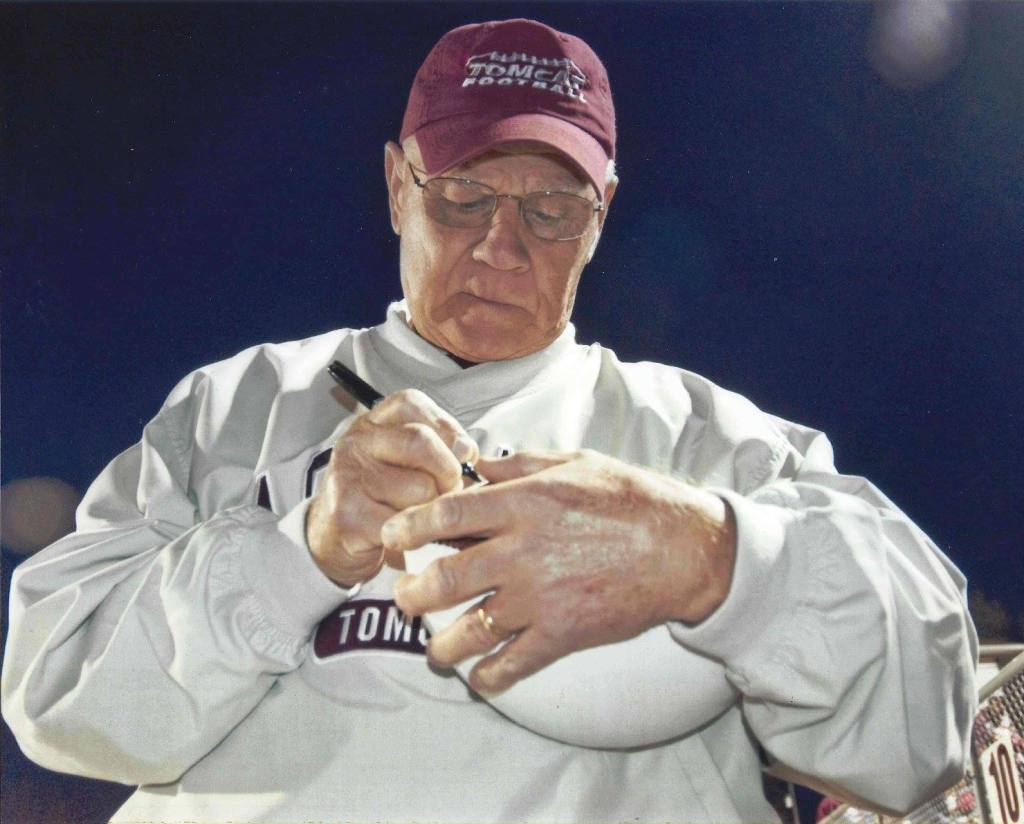
Don McReynolds loved the hobby of photography after his coaching days ended.
That Mt. Sterling team also featured a future Tomcat connection: Manley, who would later coach Ashland for the 1980 season, was the quarterback. His punt return for a touchdown sealed the semifinal win over McKell, and years later he would help bring McReynolds to Ashland.
Thirteen years after their high school run, Manley was hired to revive an Ashland program coming off three straight losing seasons following Herb Conley’s successful 1971–76 run. After one season, Manley left to become offensive coordinator and quarterbacks coach at Morehead State—just 29 years old at the time.
McReynolds had been coaching at Fleming County before Manley persuaded him to join the Tomcat staff in 1980. Marsh, then the defensive coordinator and the only holdover from Mike Holtzapfel’s staff, would eventually take over as head coach after Manley departed.
Manley and McReynolds shared more than a backfield history—they even shared a birthday. Their close friendship played a major role in McReynolds’s move to Ashland. He recalled the phone call in December 1979 when Manley invited him to the Ashland Invitational Tournament to watch the Tomcats face Phelps and high-scoring Ervin Stepp.
Don McReynolds
“I told him, ‘We won’t be able to get tickets,’ and he said, ‘Don’t worry about that,’’’ McReynolds once said. “So I told him I’d go with him. He also told me Ashland had a head coaching opening and he might apply for it. I said, ‘They’ll never hire you.’”
Manley slipped away during the first quarter of the opening AIT game for a meeting and didn’t return until the fourth quarter. “He told me he was going to apply and he was going to get the job,” McReynolds said. “He asked me if he did, would I come with him. That’s what brought me to Ashland.”
He may not have known it then, but that trip set the course for the rest of his life.
In 1980, McReynolds worked from the press box as offensive coordinator, though Manley—an offensive mind himself—was eager to call plays. It took some adjusting.
“I remember the first game against Scott County,” McReynolds said of the 35–0 win. “I was upstairs and didn’t get to call one play. He was calling everything. I came down after the game madder than a hornet. I told him if he was going to call all the plays, what am I supposed to be doing? … We came to an understanding. It got better as the season went along.”
Their offensive spark helped the Tomcats finish 9–4, led by junior quarterback Scott Crank (1,127 passing yards; 516 rushing), halfback Dave Hall (1,353 yards, 11 TDs), receiver and future MLB pitcher Drew Hall, lineman Tony Consiglio, future Tomcat quarterback Greg Conley, and hard-running Paul McPeek (563 yards, 8 TDs). The season ended in the quarterfinals with a 21–6 loss to Henry Clay.
After Manley left, Marsh took over and eventually became Ashland’s all-time wins leader, taking the Tomcats to a state championship in 1990. Ashland wouldn’t win another state title until 2020. Though McReynolds left coaching after the 1989 season, he had coached many of the players who would hoist the trophy the following year.
I got to know Don best through his photography. For two decades or more, he shot assignments for the newspaper, and we knew we could rely on “Donnie Mac” for quality work. He also photographed Kentucky football games for us. His talent behind the camera was matched by his easy humor—something our staff appreciated every bit as much.
He even once helped prevent what could have become a family feud. My daughter and her boyfriend had been using our UK football tickets all season, but when LSU came to town ranked No. 1, my son decided he wanted to go. My daughter was not pleased. Then Don called on Friday afternoon and offered me two extra tickets. I took them, crisis averted—and Kentucky went on to stun No. 1 LSU that night. I thanked Don more than once for keeping the peace in my household.
McReynolds and former Tomcat assistant Mark Renfroe remained close friends for years, bonding over football and traveling together on their own SEC stadium tour. Those who coached with Don could talk football with him for hours.
Students, coaches, players and fellow teachers admired him. He was respected, warm-hearted and deeply appreciated by those who knew him.
Former Tomcat quarterback Greg Conley, a player from that first 1980 team, remembered him fondly:
“He was a great person, coach, and had a creative offensive mind. He loved his players and coached with passion. He brought energy to every practice and game. Everyone loved being around coach. Lifting his family up in prayer. Another Tomcat who will be greatly missed.”
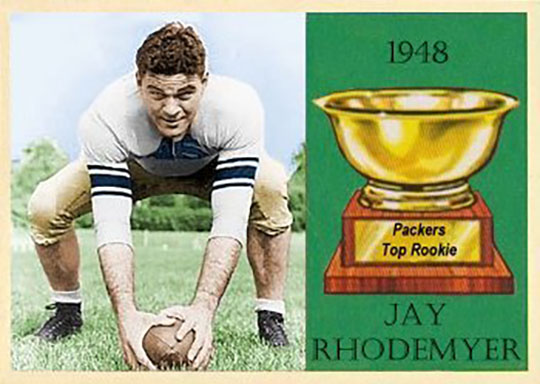
Jay Rhodemyer isn’t a name many Ashland Tomcat fans may recognize today, but they should. The 1940 Ashland graduate may be the most accomplished football player in school history — an All-SEC and third-team All-American center for Bear Bryant at Kentucky and a second-team All-Pro with the Green Bay Packers.
Rhodemyer was a first-team All-State center for a 5–4 Ashland team in 1940 after earning second-team All-State honors as a junior guard. His performance drew the attention of the University of Kentucky, which offered him the opportunity to play college football.
He enrolled at UK in 1942, but when World War II intensified, he left to join the Army Air Corps, serving as a bomber pilot. After the war, Rhodemyer returned to Lexington for the 1946 season — Bryant’s first — and became a cornerstone of the Wildcats’ resurgence. He earned second-team All-SEC honors in 1946 and followed that with first-team All-SEC and third-team All-America recognition in 1947.
He played in the 1947 Blue-Gray Game in Montgomery, Ala., and was named Most Valuable Player of the 1948 College All-Star Game at Soldier Field against the NFL champion Chicago Cardinals. The All-Stars lost 28–0, but Rhodemyer’s stellar performance earned him MVP honors.
Bryant said of Rhodemyer, “He was the doggondest best center I ever coached or have seen.” The Hall of Fame coach made that remark in 1968 after Rhodemyer died of a heart attack at age 45 in Lexington.
Rhodemyer was drafted in the seventh round (51st overall) of the 1948 NFL Draft by the Packers. He played center and linebacker, intercepting five passes and recovering a fumble during his career. Green Bay, then coached by Curly Lambeau, struggled during his tenure — going 3–9 in 1948 and peaking at 6–6 in 1952. He played in 1948, 1949, 1951, and 1952; records do not indicate why he did not play in 1950.
Two future Hall of Fame quarterbacks — Bobby Layne and Y.A. Tittle — were selected in the first round of that 1948 draft.
Rhodemyer, listed at 6-foot-1 and 210 pounds, appeared in 45 NFL games and was named second-team All-Pro by the New York Daily News in 1951. After retiring, he returned to Lexington, where he was part-owner and secretary-treasurer of Thermal Equipment Sales Co. and a member of Calvary Baptist Church. Following a memorial service in Lexington, his body was returned to Ashland for a second service at Steen Funeral Home and burial in Ashland Cemetery.
Arliss Beach and the NFL
Arliss Beach, a record-setting Tomcat running back from the Class of 2002 and a former UK standout, is the only other Ashland alum with NFL ties. He signed with the Green Bay Packers as an undrafted free agent in 2006 and impressed the staff enough to make the active roster. But in the final preseason game against the Cincinnati Bengals, he suffered a high ankle sprain and spent the season on injured reserve. Beach appeared on track for a spot on the 53-man roster before the injury. Green Bay released him the following June.
Beach signed with the Dallas Cowboys in August 2007 but was released before the season. He later joined the Houston Texans’ practice squad in December 2007, signed a futures contract in January 2008, and was waived that May.
At Kentucky, Beach played during a period of coaching turnover and was often underutilized, though he delivered one unforgettable performance against highly ranked Florida. UK lost 24–21, but Beach scored all three Wildcat touchdowns. He finished his UK career with 951 yards and 14 touchdowns.
Beach’s 2001 senior season at Ashland remains one of the greatest in program history: 2,533 rushing yards and 39 touchdowns on just 244 carries (10.4 yards per attempt), including three games over 300 yards. He ended his Tomcat career with 4,711 rushing yards, 62 touchdowns, 5,073 total yards, and 426 points.
Rhodemyer and Beach remain the only Tomcats ever to reach the NFL — one earning second-team All-Pro honors and the other coming agonizingly close to playing in a regular-season game.
In 1975, the stakes for the Boyd County-Ashland football rivalry moved beyond bragging rights. It meant everything. The season was on the line. For the winning team, it meant a trip to the Class AAAA state playoffs. For the losing team, it meant basketball season.
Unlike today’s playoff format, where four teams from each district advance, only the district champion went to the postseason party in 1975. As if it didn’t already mean everything, that made the game even bigger. There were no second chances. It was take-your-breath-away football.
It was played in the last week of the regular season, only adding to the drama that was building since before the season started when fans began comparing the rivals. The game was always big, and the series was tied 5-5 going into the 1975 battle between the Tomcats and Lions. Both came in with outstanding teams and the game was played in Cannonsburg.
They played in the preseason, meeting in a Grid-O-Rama game in Putnam Stadium on a rainy night that ended with Ashland winning 12-0. The teams played only for about a half on a muddy turf, so it wasn’t a true measure of what could be and everybody knew it. But it still added to the discussion throughout the week leading up to the game.
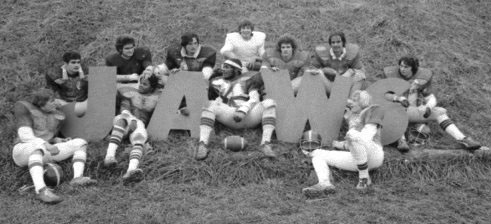
Herb Conley was the architect of the Ashland JAWS Tomcats in 1975.
Boyd County was coming off consecutive seasons where it made the Class AAA playoffs. The Lions were ranked No. 1 in 1974 and were stunned by Middlesboro 28-14 in the opening round. That came after the 1973 season when Boyd County roared into the state championship game before losing 27-8 to Paducah Tilghman at Hanger Field on EKU’s campus.
The Lions had beaten the Tomcats both of those years, albeit by narrow margins – 14-13 in 1973 and 20-8 in 1974. Those were the kind of scores that most fans expected when the bitter rivals met, no matter which team was superior. Ashland’s last win in the series was 24-8 in 1972 with a team that reached the Class AAA finals against Tates Creek, losing 16-7, at Stoll Field in Lexington.
The Boyd County and Ashland programs were recognized and highly respected statewide for their hard-nosed and hard-hitting styles of play.
Ashland went into the 1975 game looking for perfection and a district championship. It could be a historic night with the last undefeated Tomcat team coming in 1958 when Herb Conley was playing. Even that team had a blemish – a tie against Huntington East – in a 10-0-1 season.
Casey Jones was a standout tackle for the Tomcats.
The last undefeated and untied team in Ashland history came in 1942. The JAWS Tomcats were chasing history. They were more interested in making their own legacy in the Tomcat program and knew they had the makings of greatness.
The Ashland-Boyd County games of the 1970s and 1980s were almost always played on the last Friday of the regular season, always had high stakes and always drew a massive number of fans. Everybody in the area was watching and interested In the outcome. It was just that kind of game.
Given the Tomcats proudly using the JAWS nickname for its defense throughout much of the season, Boyd County’s fans decided to have some fun, calling their team the JAWBREAKERS. Electricity was in the air, the fans were packed in on Boyd County’s large home side and the smaller set of bleachers were full for the visiting fans. The hillside on the home side was crowded with a mix of fans too with the expectation that something special could happen no matter which side won.
Ashland came in a confident 10-0 and feeling good after blowing out Covington Catholic 56-14 the week prior. Boyd County was 7-3 and coming off a defensive battle with Russell won with a goal from Mark Rice that provided a 3-0 victory. The Lions had a star running back in James Tackett who was heading to play at West Virginia. He came into the game injured but still played, gaining 58 yards on 10 carries.
The Tomcats were ready and when big Terry Bell, Ashland’s All-State lineman, busted through a hoop coming onto the field it almost sent an instant message.
“Terry came running out there in the front,” remembered tight end Alan Mayo. “Terry, Chuck (Anderson) and Rick (Sang), were our captains. People came running out (behind them) and sprinted to the middle of the field. Everybody in the stadium went quiet. You knew he (Bell) was there and was going to give it his all.”
Mayo figured in setting up the game’s first touchdown. He slipped past the Lions defenders to pull in a catch and ran 41 yards to the Boyd County five. Mayo looked headed for the end zone until Tim Powers tripped him up from behind. But a three-yard run from Gary Thomas set up a two-yard plunge from Jay Shippey for the touchdown. Kevin Ward’s extra point made it 7-0 on Ashland’s first possession.
Terry Bell breaks through the hoop and runs onto the field.
Ashland made it 15-0 early in the second quarter when Jeff Slone finished off a drive with a seven-yard touchdown run. Anderson hit Mayo on the two-point conversion try.
Anderson, the quarterback-linebacker, played a huge role with a 6-for-13 passing performance that included a 20-yard touchdown pass to Sang eight seconds before halftime for a 23-0 lead. Anderson also rushed for 46 yards on 11 carries out of the wishbone.
In the second half, Thomas returned a punt 85 yards for a touchdown and Greg Jackson ran in the two-point conversion to push the margin to 31-0. Anderson later scored on a 13-yard run and the last touchdown, set up by a 25-yard strike from Anderson to Jim Johnson, moved the Tomcats inside the 20. Shippey rumbled into the end zone on a 16-yard run with 2:27 remaining to bring the final score to a whopping 43-0.
Ashland outgained Boyd County 477-175 as the JAWS defense stated its case, clamping down on the Lions from start to finish. Boyd County made it inside Ashland’s 30 only once in the game and that came on the last series. Tackett had a short run and a facemask penalty put the ball on the 22. But any hope of ruining the shutout ended when quarterback Wayne Chaffin was sacked for a 10-yard loss on the last play of the game.
Greg Jackson (27) runs behind Jim Johnson for a big gain.
A 43-0 shutout victory over its biggest rival was enough to put Herb Conley in rare form and he did not hold back his excitement over the victory that was the biggest margin in the series. It also sent Ashland into the state playoffs as the top-ranked team in Class AAAA.
“The best team showed that it was the best tonight. We have the best team in the Tri-State and I can say it now. I’ve kept my mount shut all year, but I can say it now … we’ve beaten them all. This win was especially good after the last two years.”
The perfect season was intact and the victory over Boyd County was sweeter than ever for the Tomcats. But now the fun would begin. Despite being undefeated and ranked No. 1, the Tomcats only had one playoff game in Putnam Stadium. They played at Dixie Heights, home against Lafayette, at Paducah Tilghman and in Louisville against St. Xavier for the state championship.
Terry Bell said going to a postseason award ceremony in Lexington after the 1975 high school football season didn’t interest him.
But at the urging of Ashland coach Herb Conley – and insistence of Bell’s mother – he went.
“I didn’t want to go down there,” Bell said. “Coach Conley talked to mom and them. They made me go. I was sitting there with Coach Conley, (assistant) coach (Mike) Holtzapfel, (assistant) coach (Bill Tom) Ross and (teammate) Casey (Jones). They announced the award for Lineman of the Year and said my name. They said: ‘Terry Bell of Ashland Blazer.’ I was surprised. I never expected it.”
The award meant a lot to Bell – not for his ego but because he understood the work it took to achieve it. He tragically lost the award in a house fire.
Bell, a two-way starter, was chosen as the “Lineman of the Year” in the entire state of Kentucky following his impressive play with the 1975 Ashland JAWS football team that finished 14-1, with the only loss coming 20-0 to undefeated St. Xavier in what was the first time a Jefferson County team played a team from within the rest of the state for the Class 4A championship, a new classification at the time.Even with that defeat, the 1975 JAWS team is one of the most beloved in Tomcat history. They have a 50th reunion celebration on Friday at the Clark’s Pump-N-Shop Putnam Stadium.
Terry Bell was the state’s Lineman of the Year after Ashland’s 14-1 season in 1975. He was also All-State in AP and the Courier Journal.
When it came to intimidation and toughness, Terry Bell was very much made in the image of his head coach and everybody knew it.
“Terry was silent, but he was probably the baddest of the Tomcats,” said Rick Sang, an All-State receiver for the Tomcats in 1975. “They gave the Bad Cat award for big hits every week but everybody on that team knew who the Bad Cat was, and it was Terry Bell. It was kind of unspoken, but they wouldn’t mess with Terry Bell. I’d be shocked if anybody didn’t agree with that.”
That Bell was there with Jones, who may have been a nominee for the top lineman award himself, was a statement as to how good Ashland’s line play was in 1975. Bell was a captain along with quarterback Chuck Anderson and Sang.
‘THEY WERE THE REASON WHY WE WON’
Bell was a guard and Jones a tackle on the Tomcats’ right side to propel a wishbone offense that terrorized opponents as much as the defense that carried the JAWS nickname of the blockbuster movie that had people afraid to go to the beach. The formula for what made Ashland’s 1975 team so memorable was Football 101: They knew how to block and tackle.
“He and Casey both were so good, it’s hard to say which one was better,” said Alan Mayo, a senior tight end and outside linebacker in 1975. “They were the reason why we won. The things we won with were defense and offensive line. You can find skill players out of 1,200 kids in school.”
Casey Jones (73) and Terry Bell (67) wait for instruction from inside linebacker Chuck Anderson.
Bell’s “Lineman of the Year” recognition was representative of all classes – from Class A to Class 4A – and it made him one of the most decorated linemen in Tomcat history. He was first-team All-State offensive guard by The Courier Journal (coaches vote) and the Associated Press (media vote) and made All-Area (The Daily Independent). The state’s “Lineman of the Year” award has not continued so there is some uniqueness to it as well. That same night, Herb Conley was named as the state’s Coach of the Year – the only time an Ashland coach has captured that award statewide.
It was a big night for the Tomcats and one that Bell has been able to carry with him for 50 years – except that’s not in his character to talk about himself. He’d rather talk about his teammates and appreciates how fans still remember them with great respect and fondest of memories.
Raymond Hicks, left, and Yancey Ramey were powerful offensive linemen.
Jones, who lined up beside him, was tremendous as well. He went to the University of Kentucky on scholarship and did as much as anyone to keep the wishbone machine in motion. And great line play did not end with Bell and Jones. There were also center Terry Lewis, guard Yancey Ramey, tackle Raymond Hicks and Sam Nunley and David Early, who added important depth.“Terry Lewis was the rock,” Bell said. “He was the anchor. I always respected him. He did his job. Yancey, you knew he was going to do it then you had Raymond. We went all the way through school together, starting with the Wylie Bulldogs. Raymond wasn’t big but he was tall, and he could block.”
Terry Lewis was a center and the anchor of the offensive line, said Terry Bell.
Mayo said Lewis had an often-overlookd quickness about him. “Terry could snap the ball onehanded, and he had quick feet. He was moving as he snapped the ball. He couldn’t beat you with sheer size and strength, but he was proficient and quick. Coach Conley ran all those counters with everything we did. Our timing was impeccable by the time those guys were seniors.”
The tight ends – Sang and Mayo – and wide receivers Keith Hillman and Doug Paige were outstanding blockers, too, as were the running backs who all picked off defensive backs down the field, resulting in long carries and breakaway touchdowns.
“One thing about us,” Bell said, “everybody could block.”
The outside running lanes for halfbacks Gary Thomas, Jeff Slone and Greg Jackson were wide open while Anderson, who was as much bulldozer as quarterback, and fullbacks Jim Johnson and Jay Shippey made opponents pay with hard runs up the middle and off tackle.
BELL CREDITS MIKE HOLTZAPFEL FOR BUILDING TOMCATS’ LINE
When it came to the offensive line play, Bell said one important ingredient made it all mesh – line coach Mike Holtzapfel who played at Notre Dame and carried a similar toughness and no-nonsense attitude as Coach Conley, was the architect. He also called the defensive line and linebacker signals. Ross was the secondary coach.
“We had a helluva coach in him,” Bell said of Holtzapfel. “He was all right. He had his ways, but he made us learn and we learned. He knew so much about the line play and taught us so much. We became a great line because of him. He got out the old Notre Dame stuff.”
Assistant coaches Bill Tom Ross, left, and Mike Holtzapfel.
Holtzapfel would replace Conley as the head coach after the 1976 season and led Ashland for three seasons.
What the Tomcats had for that 1975 season was a veteran offensive line with four of the five interior linemen returning as starters in the 1974 season. That included Bell, although he missed a lot of his junior season due to a knee injury in a Sept. 13 game against Franklin County. He was clipped from behind while blocking on an interception return.
The injury did not require surgery, but it did mean two months of rehabilitation. Bell made it back for the last game of the season against Boyd County. Meanwhile, the rest of the linemen that would make the JAWS team special were gaining valuable experience. Terry Fish was the only starting senior lineman for the 1974 team.
Bell was healthy again going into the offseason and came back better and bigger for the 1975 season. “l played the whole season, all 15 games,” he said. “They taped my knee up every game; used three to four rolls of tape. Between Coach Conley and coach Holtzapfel, they get it on and got it tight,” he said.
Jackson said Bell set the example of hard work equaling success, coming back from the injury stronger than ever.
“He was not only a big lineman, he was one of the fastest linemen I have ever seen. As a running back, he is the one you wanted blocking for you. He would open holes you could take a truck through. They all worked so well as a set of linemen which made our jobs much simpler.”
As for his speed, Bell was clocked at 4.8 in the 40 – a fast time for a running back and an extremely quick time for a lineman.
Bell carried an intimidating presence even walking the hallways at the high school, often seen wearing a bandana. However, he could be a gentle giant and was seen as a protector to some in his class. He was a rare athlete who had speed and athleticism to go along with his power. He could dunk a basketball and was freakishly strong.
‘JUST A NATURALLY GIFTED ATHLETE’
Sang said the first time he met Bell was when they were in physical education class at Coles Junior High. “He grabs me and picks me up with one arm, has me leaning up against the wall. I thought, ‘Nobody except my dad can do that.’ He was just having fun. He wandered off and did something else. What a strong human being. He could jump and he could run, and he was quick, too. He could move laterally, fill in the gaps and he could run you down too. Just a naturally gifted athlete.”
Bell said the JAWS theme on the season made it fun and he can vividly recall the games and said the 22-12 win over No. 1 Bryan Station in the second week of the season was the springboard for what was to come. He said wins over Ironton with Kenny Fritz, Russell and Boyd County were all memorable moments. He also recalled the Class 4A State At-Large championship game at Paducah Tilghman, the flight – his first for him along with many teammates – to get there, and Gary Thomas breaking free on a 74-yard touchdown to win that game 13-7. “I remember seeing Gary’s back, and that was a good thing,” Bell said. And, of course, the St. Xavier game in Louisville in the overall Class 4A championship game.
“I told somebody years ago if we could have played that game in Ashland, it might have been different because it’s a different atmosphere,” he said. “They never had to leave Louisville, and we had to fly to one of our games and played all but one (in the playoffs) on the road. I’d liked to have played them in Putnam Stadium.”
Depth was also a factor, he said. “There were so many of them. They had different players on offense and defense, special teams, everything. It was a tough loss.”
SNAPPING FOR FUTURE NFL GREAT PHIL SIMMS
Bell was a college prospect and he signed with Morehead State and coach Wayne Chapman. He played noseguard as a freshman and was switched to center his sophomore season before a knee injury ended his career.
Bell said he promised his mother he would stay two years and after the knee injury and a trip to the Cleveland Clinic, he decided that was enough. His hips and knee still bother him to this day, he said. Bell came home and graduated from vocational school.
Marshall talked to him and Kentucky came into the Ashland locker room after the game with St. Xavier and offered him a chance to play but would not guarantee a full scholarship. Bell said he signed with Morehead and was the center for quarterback Phil Simms’ sophomore season.
Bell said Simms and Anderson, his high school quarterback, had similar work ethic when it came to preparation. They studied film regularly and came to games ready to deliver, Bell said. He said Morehead State receivers would have Xs on their chests from catching Simms’ passes. Simms, of course, became a first-round NFL draft choice with the New York Giants and eventually was a winning quarterback in the Super Bowl.
A CHANCE TO PLAY FOR ROY KIDD AT EASTERN KENTUCKY?
Sang, who signed and played for four years at Eastern Kentucky, was on a recruiting visit to meet with coach Roy Kidd after the 1975 season. When he introduced himself to Kidd, the response from the Hall of Fame coach was “Where’s Terry Bell? Didn’t he come with you?” Kidd apparently wanted Kidd and Sang to both become Colonels. He left the room, made a phone call and learned that Bell had committed to Morehead. Kidd came back into the room seething,
It made for an uncomfortable visit although Sang was offered and had an outstanding career at EKU as a punter and tight end/wide receiver. He was on the 1979 Division I-AA national championship team and later was an assistant coach on EKU’s 1982 national champions.
Bell said he never talked to EKU coaches but did attend a game. Morehead State extended an offer and Bell accepted it.
During Bell’s freshman season at MSU, he lined up at noseguard opposite EKU center Roosevelt Kelly, an All-America center who was drafted into the NFL, and held his own against him, Sang said.
BELL GIVES SHOUTOUT TO TOMCATS’ 1972 STATE RUNNERUPS
Bell said while he appreciates the accolades that are heaped on the JAWS Tomcats, he feels bad for the 1972 Tomcats that were the Class AAA runner-up to Tates Creek who is seldom remembered or mentioned. His brother, Dwight, was on that team, he said, and he remembers the family going to Stoll Field in Lexington for the championship game that the Tomcats lost 16-7.
Bell said he modeled his game after a lineman from that team – All-State guard Steve Justice – and often wondered how the 1972 and 1975 offensive lines compared. Coach Conley has been asked but often shies away from any comparisons for understandable reasons. But strong line play was a common denominator for his best teams.
“They had a great team and a great line like we did,” Bell said of the ’72 team. “I always felt bad because they didn’t get as much recognition as we do. It doesn’t seem right.”





 MARK MY WORDS 2