Having a ball: Tom Clay gets a surprise gift with some Cincinnati Reds history to it

When Tom Clay pulled into a gas station the other day he got a surprise – and he said it wasn’t that he had to “give my first born to get a gallon of gas.”

There were five or six bikers around, trying to get respite from the rain. A man came over to him and, without introducing himself, said “I’ve got something I want you to have. I figured it was a fish net or lure or something. Then he said, ‘I have a signed baseball for the entire Cincinnati Reds baseball team from the early 1960s. I wanna give it to you.’”

Clay said, “Can you give me a lottery ticket, too?”

The man was Brent Dickison, who grew up across the road from Clay’s grandfather. Dickison, now 56, told Clay he had received the baseball years ago while playing outside as a child.

Tom Clay with Brent Dickison, who gave him a baseball that Tom’s grandfather had given him years ago from the 1962 Cincinnati Reds.

“Clay said Dickison told him my grandfather came outside with the baseball and wanted to give it to him,” Clay said.

The story only deepened the mystery.

“The surprise to me is, I don’t think my grandpa is a Reds’ fan,” Clay said. “Shelby Jean, his sister, she is a Reds’ fan. Shelby took her older brother, Randy, to Crosley Field. If the ball came from there, I don’t know. I know dad went to Crosley Field and took his mother. I don’t recall the ball being on the mantle or anything.”

A few days later, Dickison tracked Clay down again and handed over the baseball.

Hall of Famer Frank Robinson’s signature came be seen on this 1962 Reds’ team ball

That’s when the detective work began.

Clay started comparing signatures against old Reds rosters and quickly realized the ball wasn’t from the 1961 National League pennant-winning team, as he first suspected. The giveaway was pitcher Jim Maloney’s signature. Maloney was a rookie in 1962, and the rest of the names lined up with that season’s roster.

The baseball includes signatures from Reds legends such as Frank Robinson, Vada Pinson, Joe Nuxhall and manager Fred Hutchinson. Despite being yellowed with age, Clay said the ball remains in remarkably good condition for being 64 years old.

Being a fan of “Antique Roadshow,” Clay naturally looked into what the baseball might be worth. Thanks in part to the Robinson and Hutchinson signatures, he found estimates ranging from $750 to $1,000.

“Of course, that’s if you can find somebody who will give you that much for it,” Clay said.

The baseball also led to a little good-natured family humor.

Clay told his mother about the discovery, and she had her own response.

“Does this make up for me throwing away all your ball cards?” she told him.

Clay said he appreciated Dickison thinking enough of him to return the baseball after all these years. Not many people stop at a gas station and leave with a piece of family history.

And even with today’s prices, that’s worth more than a gallon of gas.

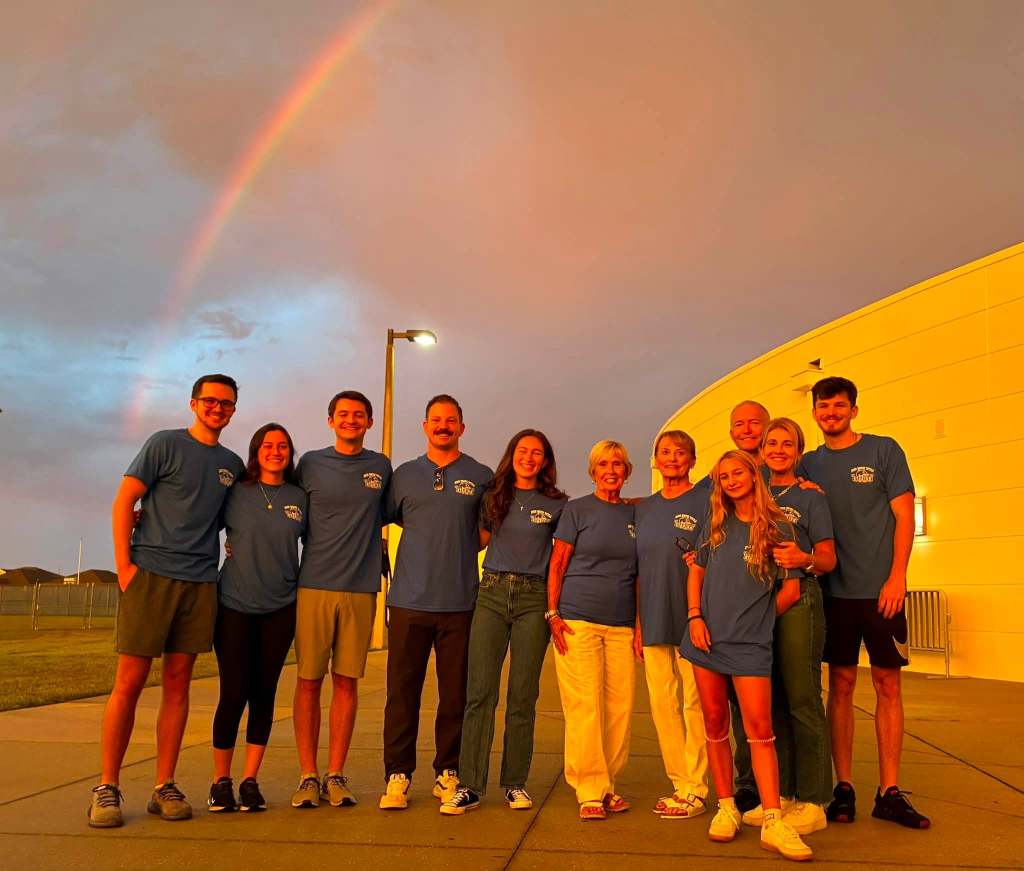
Tom Clay with family members at a Reds’ game this season.

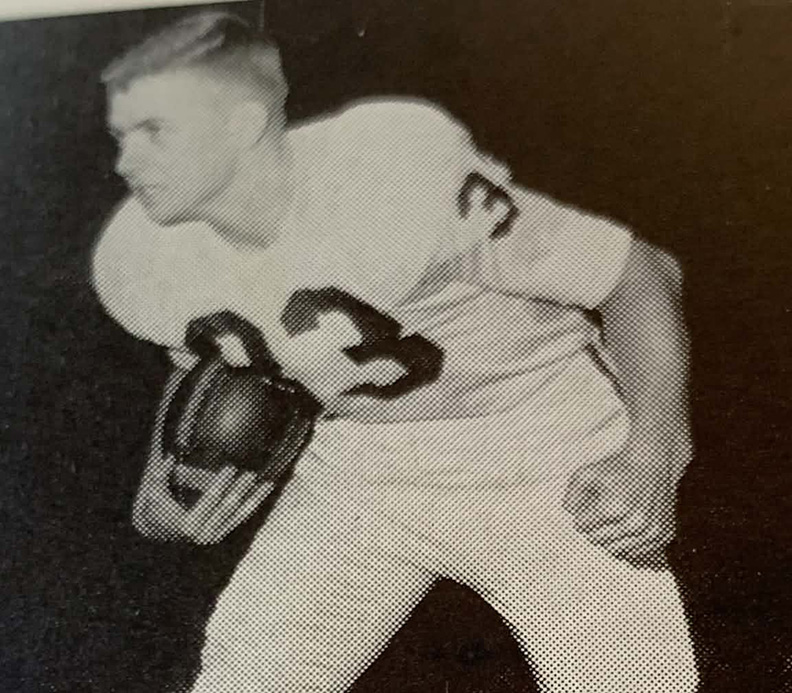
Herb Conley was a Tomcat for the ages

Herb Conley was the kind of man communities are built on and sustained by — tough, faithful, loyal and unwavering in his convictions. He was, in every sense, a man’s man, but also a steady friend, a devoted husband, and a guiding presence to generations who needed one. And in Ashland, he will forever stand as a Tomcat for the ages.

His passing Tuesday night leaves a void that won’t soon be filled. It is a sad day for Tomcats everywhere. But for Conley, it was also a day of fulfillment. He lived with a deep and abiding faith in Jesus Christ, one he didn’t keep to himself. He shared it often — especially with his former players — and in his final chapter, he embraced that calling even more, becoming, as some would say, an “overnight evangelist.” He stepped into eternity with what he believed was the ultimate victory, holding fast to the promise of 2 Corinthians 5:8.

There is comfort, too, in knowing what that moment meant to him. He was reunited with Janice, his wife and the love of his life. That reunion was something he spoke of in his final days, a hope that eased the weight of goodbye. No more pain. No more suffering. Only peace.

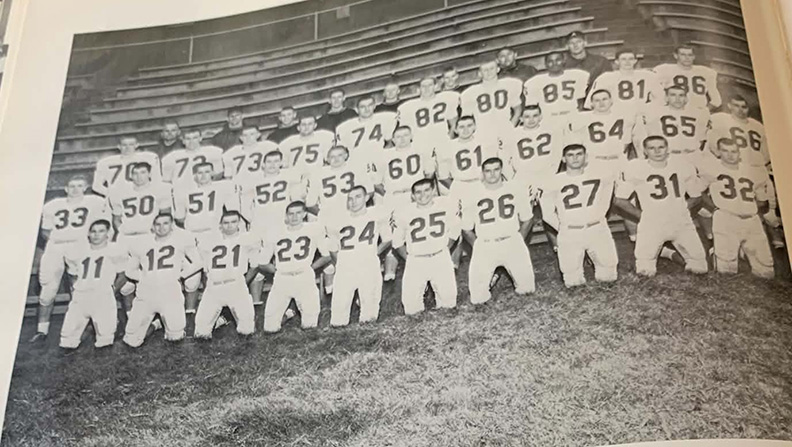
Conley’s story began in South Ashland, where he grew up admiring the great Tomcat teams of the 1950s. As a boy, he looked up to players whose names echoed through the community, never knowing he would one day join — and redefine — that legacy. When he broke onto the varsity roster as a sophomore in 1956, it was almost unheard of. But once he stepped on the field, he never stepped off. That moment sparked a three-year run that culminated in an undefeated 1958 season, a feat that stood unmatched for more than six decades.

He carried that same drive into his playing career beyond high school and later into coaching, where his true imprint was made. Herb Conley didn’t just coach football — he shaped men. His philosophy was simple and unmistakable: get tough. His teams reflected him — physical, relentless and unyielding. When you played against an Ashland team under Conley, you didn’t forget it by Monday morning.

Herb Conley’s legacy and connection with Tomcat football is everlasting.

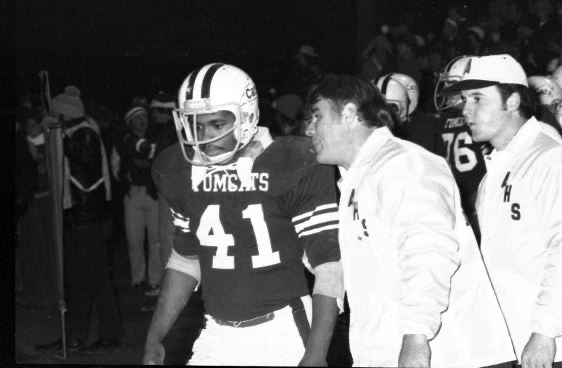
From his early days as an assistant to his tenure as head coach from 1968 to 1976, Conley built a program rooted in grit. His teams earned respect across the state, highlighted by a runner-up finish in 1972 and a championship run in 1975. That same year, he was named Kentucky’s Coach of the Year — a fitting recognition for a man whose teams mirrored his identity.

But his influence didn’t stop on the field. Conley stepped away from coaching to invest in his family, raising his three sons with Janice, whom he often called “my inspiration.” Even in education, first as an assistant principal and later as a principal, he carried the same standard. Discipline, accountability and respect weren’t optional — they were expected. And whether you were a student, teacher, or player, you understood quickly that he meant every word.

There was an edge to him, no doubt. A certain look, a scrunch of the nose, and you knew you were in for it. But beneath that toughness was consistency — and a desire to bring out the best in people, whether they appreciated it in the moment or not.

In Ashland, his legacy is etched in more than memory. It stands in bronze at Putnam Stadium, overlooking the field he loved in a familiar stance — watchful, commanding, present. It is a fitting tribute, but even that can’t fully capture what he meant to the program and the community.

If there were a Mount Rushmore for Ashland, Herb Conley would be the first name carved in stone.

He lived every role imaginable — player, coach, mentor, administrator, father, grandfather, fan. His influence stretched across generations, touching lives in ways that statistics and records never could.

Some legacies fade with time. His won’t.

Because in Ashland, and in the hearts of those who knew him, Herb Conley isn’t just remembered.

He endures.

Bert Johnson ranks among Tomcat football’s all-time greats

Any list of the greatest athletes in Ashland High School history must include Bert Edward Johnson. A standout for the Tomcats before continuing his career at the University of Kentucky and later in the NFL, Johnson left a lasting legacy at every level he played.

Johnson’s high school career unfolded during the Great Depression, before Putnam Stadium existed. From 1930 to 1932, he starred as a dynamic running back, scoring 247 points while earning All-State honors twice and All-South recognition as a senior. Ashland captured state titles in all three of those seasons and was even named the nation’s top team in 1931. The Tomcats went 10-0 in both 1930 and 1931 and 8-2 in 1932.

Despite the rarity of sophomores seeing playing time, Johnson not only played but started in the backfield alongside standout Eck Allen. Known for his explosive acceleration, he contributed as a running back, quarterback and punter.

David Patton, a 1950s star in baseball and basketball for the Tomcats and a former college basketball coach, was a nephew of Johnson’s. He provided the cartoon from The Cats Pause printed in 1977.

During Johnson’s three-year tenure, Ashland compiled a 28-2 record, claiming three mythical state championships and the 1931 national title. His 30-game totals are remarkable:

  • 2,700 rushing yards on 245 carries (11.0 yards per carry)
  • 46 rushing touchdowns
  • 56 completions on 87 attempts for 945 yards and 15 touchdowns
  • 5 receptions for 144 yards and one touchdown

Johnson often delivered his best performances against Louisville teams. In October 1930, Ashland traveled by train to face unbeaten Louisville Manual and returned with a stunning 91-0 victory. Back home, fans gathered on 17th Street outside The Daily Independent, cheering as scores were relayed via ticker-tape from a second-floor window.

The following year, Ashland again traveled to Louisville and defeated Male, a top contender, 31-6. Johnson rushed for 194 yards, while teammate Glenn Overley added 170 in a dominant showing. Later that season, the Tomcats crushed Decatur, Georgia, 85-6 in the Southern Bowl, with Johnson setting career highs of 213 rushing yards and 37 points. National polls later crowned Ashland the best team in the country.

In 1932, Johnson quarterbacked one of the most dramatic games in program history. Ashland’s 66-game unbeaten streak (62-0-4) ended in a heartbreaking 19-13 loss to Erie East, Pennsylvania. After tying the game late and setting up for a final drive, a pass by Johnson was intercepted and returned for a touchdown as time expired. It was Ashland’s first loss since 1925, leaving players and fans stunned.

The Tomcats’ only other defeat that season was a 7-6 loss to Huntington High, but they remained unbeaten against Kentucky opponents and still claimed the state title.

Johnson’s high school success drew national attention, but he chose to stay close to home and attend the University of Kentucky. There, he lettered in football from 1934 to 1936 and briefly played basketball, scoring two points in a single appearance during the 1934-35 season.

Nicknamed “Man o’ War” for his burst off the line, Johnson’s standout college performance came in 1934 against Alabama, when he scored both of Kentucky’s touchdowns in a 34-14 loss. That Alabama team would go on to an undefeated season capped by a Rose Bowl victory. Johnson became Kentucky’s second All-Southeastern Conference selection, earning the honor as a sophomore.

He went on to play six seasons in the NFL, suiting up for Brooklyn, the Chicago Bears under legendary coach George Halas, the Chicago Cardinals and the Philadelphia Eagles. Among his highlights were a pair of 50-yard runs—one with the Bears and another in an exhibition game for Brooklyn in Louisville.

Athletic success ran in the family. His son, Phil Johnson, later played basketball for Kentucky from 1956 to 1959, appearing in 64 games.

Bert Johnson passed away in 1993 at the age of 81. He was the third inductee into the Ashland Sports Hall of Fame, selected by the late John McGill. His legacy remains firmly cemented among the greatest in Tomcat football history.

Adam Howard was born to coach

Adam Howard always seemed destined to become a head coach, so it came as no surprise to those who have followed his career that Troy selected him Saturday night to lead one of the Sun Belt Conference’s most successful basketball programs.

Coaching has been in his blood since he was a kid. More on that in a moment.

Howard was essentially a coach on the floor for Mike Flynn during his high school basketball days at Ashland. He rarely made mistakes, didn’t force bad shots and kept the offense running smoothly. Flynn proved to be a tremendous coaching mentor. Howard was a solid player for the Tomcats, but he understood that playing wasn’t going to be his long-term ticket.

When he signed with Western Kentucky University, he was given no promises about playing time. That didn’t matter. He remained a great teammate despite limited minutes, and what he was really doing was learning. He watched and absorbed everything from the best seat in the house.

Adam Howard, holding his 7-month-old son, after Troy captured the Sun Belt Conference tournament to qualify for the NCAA tournament.

Howard spent most of his four seasons at WKU on the bench, but it was far from wasted time. Not for someone like him, who was like a sponge when it came to learning the game and the coaching profession. And no one worked harder. As it turns out, he was also a strong student.

From 2009 to 2026, Howard built his coaching résumé as an assistant coach, associate head coach, recruiting specialist and defensive guru at eight different schools. He was on Donnie Tyndall’s staff at Morehead State in 2011 when the Eagles stunned Louisville in the NCAA Tournament. As a player at WKU, he was also part of two postseason teams.

Howard’s coaching stops include Morehead State (2009–12), Southern Miss (2012–14), Tennessee (2014), South Alabama (2018–22) and Nebraska (2022–25), along with stints at Troy and NC State. He served as associate head coach at South Alabama during the 2021–22 season.

Adam Howard on the bench during Troy’s 2017 Sun Belt Conference play in 2017. He has become the head coach of Troy on Saturday night.

He now takes over a Troy program that has won 20 games in each of the last five seasons and reached the NCAA Tournament in the last two. The Trojans lost to Nebraska in the first round of this year’s tournament on March 19.

Howard previously served on the Troy staff under fellow Kentuckian Phil Cunningham from 2016–18, helping the Trojans win the Sun Belt Conference Tournament and reach the NCAA Tournament in 2017. He spent this past season as an assistant coach at North Carolina State.

Every step along the way, Howard has continued to learn, soaking up knowledge from every coach he worked with. Head coaches admired his work ethic and relied on it.

Howard replaces Scott Cross, who left last week to take the Georgia Tech job. Cross coached the Trojans to 125 wins in seven seasons, including Sun Belt regular-season and tournament championships and NCAA Tournament appearances in each of the last two years.

Now Howard moves over one chair and becomes the man in charge. He’ll have to be a good salesman in his new role. He will try to keep much of Troy’s roster together, but senior guard Victor Valdes has already entered the transfer portal. Among key returning players with eligibility remaining are All-Sun Belt forward Thomas Dowd and starting guards Cooper and Cobi Campbell.

If there’s one thing Howard can do, it’s recruit. He has an electric personality and is known as an outstanding recruiter, something that should serve him well at Troy.

Howard comes from a great family. His parents, Rick and Chris, are his biggest supporters, along with sister Jenni and brother Chad. They are down-to-earth Ashland people who have proudly worn whatever school colors their youngest son represented.

Now, here’s how I knew years ago that Adam Howard was born to coach.

He played Little League for the Ashland American Indians coached by Tony Grossl and was teammates with my son for a couple of years. Stephen was two years older than Adam, who at age 10 put on the catching gear because we didn’t have anyone better suited for the job.

That’s not a knock on our team — he was simply the best option, even though the catching gear looked a few sizes too big on him. To this day, I still picture that 75-pound Little Leaguer wearing that oversized catcher’s gear.

One game, Stephen was throwing a no-hitter and had two outs in the bottom of the sixth inning. He fired a fastball right down the middle, but the umpire called it a ball. Stephen was visibly upset and thought the game was slipping away. Adam called timeout, walked to the mound and calmly settled him down. On the next pitch, a ground ball to second base ended the game.

Without whatever Adam said in that moment, that no-hitter might have disappeared quickly. And he was only 10 years old. As a side note, Stephen pitched that game with a black eye – the result of a bad-hop grounder in practice the day before – and Adam was battling pink eye.

I enjoyed following Adam’s career as a basketball player at Ashland, including his first varsity game when he lit it up from 3-point range, and have continued to follow his coaching journey. He once gave my wife, me and some friends a tour of the basketball facilities at Tennessee when he was an assistant there. He always returned my calls when he took a new coaching job. Adam Howard has simply been a joy to follow.

Troy and Liberty University will now be two of my must-watch teams during the college basketball season especially when Kentucky frustrates me (often here recently). I believe Adam will be successful has a head because he’s successful in life. He and his wife, Renee, have three children. Their life is immersed in basketball. Make that Troy basketball now.

The bottom line with Adam Howard is simple: He is a winner who was born to coach.