Joltin’ Joe in Ashland

(This originally published in September 2009)

My phone rang the other day and on the other end of the line wasn’t a familiar voice, but it was a familiar name.

Jimmy Rose was calling me. I’d heard about him through my many conversations with Jack Fultz over the years. Rose was Fultz’s high school basketball coach at Olive Hill. He was 20 years old at the time, the youngest man to ever take a team to the State Tournament. He did that with Olive Hill in 1944 and darn near won the thing.

The Comets defeated tournament favorite Brooksville 23-20 in the quarterfinals but fell the next day in a heartbreaking semifinal against Harlan and “Wah Wah” Jones. Jack Fultz, I remember, never got over that loss.

Rose’s brother is Gayle Rose, who played on Kentucky’s 1954 undefeated national championships. “One of the best ballhandlers ever,” said big brother Jimmy. Gayle Rose’s jersey is hanging in the rafters at Rupp Arena.

Jimmy Rose coached Olive Hill High School to a 49-4 record in 1946. It was the most victories in a season ever in Kentucky. “We had dropped football and I had to give the boys something else to do,” he said. “We started playing games in October.” He was also the first coach to play an all-black team when Olive Hill met Booker T. Washington before the public white schools were even allowed to play the black schools.

But Jimmy Rose wasn’t calling to talk about basketball.

He wanted to talk baseball.

More specifically, he wanted to talk baseball in Ashland in 1940.

Jimmy Rose is 85 and in failing health. He is housebound in central Kentucky and suffers from dementia and short-term memory loss. “I’ve forgotten so much of my past,” he said. “But I’ve got a great story for you. For some reason or another, I’ve never forgotten it.”

Over the next 45 minutes or so, Rose took me on a journey to Ashland in 1940 and one afternoon in April that he will never forget.

You would never have known this was a man who had “forgotten his past.” He spoke with such clarity and detail that it was like these events happened yesterday. I was simply mesmerized.

Yankee fan

Even though he lived in northeastern Kentucky, in the heart of Reds Country, Jimmy Rose always loved the Yankees.

“I heard Babe Ruth hit a home run when I was 6 years old,” he said. “From then on, I was hooked. It was dangerous living in Olive Hill because everybody there was for the Reds.”

Not Jimmy Rose. He loved the Yankees and especially Joe DiMaggio.

Rose learned that the Yankees and Brooklyn Dodgers were going to stage an exhibition game at Armco Field on their way north for the start of the 1940 season. Rose, who was 15 at the time, was going to be there, even if he had to walk from Olive Hill.

“I went in the night before and spent the night with friends,” he recalled. “My daddy was a doctor and he gave me a prescription pad for autographs.

“I couldn’t sleep; I slept very little. At daylight the next morning, I went down to the old railroad depot in Ashland. Walking up and down past the Pullman (sleeper) cars, I was wondering which one Joe DiMaggio was in? He was my hero. The Yankees were my heroes.”

Rose watched and waited, anticipating when the Yankees would be coming off the train.

“I saw some man get off the train. I could tell by his size and build, he wasn’t a Yankee,” Rose said. “That day they were to meet the Brooklyn Dodgers at Armco Field. He said to me, ‘Young man, where are we?’ I said ‘We’re in Ashland, Kentucky.’ He said ‘Oh yes, we have a game here today with the Dodgers.’ I asked him ‘Are you with the Yankees?’ He said ‘I’m their equipment manager.’’’

Rose’s ears perked up. “That got my attention real quick,” he said. “I’ve told this story so many times I’ve got it memorized. I asked if he knew Joe DiMaggio. The greatest player in the game. What a question!”

But the man just smiled. “He started to get back on the train and he said ‘Young man, I need a couple of young men to help me today. Do you know where I could find them?’ I said ‘You’ve already got one of them right now.’’’

The equipment manager told Rose to recruit a friend and meet him at the Henry Clay Hotel at 10 o’clock and he’d give them instructions.

“I called my friend Buster Cartee, who later coached at Olive Hill,” Rose said. “I said ‘Buster, get your mother to drive you in here quick. We’re going to be batboys for the Yankees’ and he came.”

In awe of Joltin’ Joe

Rose watched as the Yankees filed into the hotel. He got them to sign autograph after autograph. He got one from Red Ruffing, the top pitcher in the American League, but the one he wanted was DiMaggio.

“The last one to make an appearance – and he didn’t come in the same door as the other guys, he came in the side door instead of the front door – was guess who? He was dressed like a Philadelphia lawyer. I got up and started to get his autograph and I couldn’t get up my nerve to do it. I stood in awe of him.”

Rose and Cartee were given instructions on what to do from the equipment manager. One assignment was to carry the uniforms and gloves to the players’ rooms.

“They didn’t carry their own uniform,” he said. “They were all in suits and ties. They looked like businessmen rather than ballplayers. That was one of their marks, looking like professionals.”

They delivered the uniforms to each room and had the thrill of meeting Joe Gordon (“His gloved looked like a piece of leather,” Rose said) and Red Rolfe. They met George Selkirk, Frank Crosetti and Charlie “King Kong” Keller.

The Yankees dressed in their rooms and then came to the lobby to board the bus. Rose and Cartee were the last ones on.

“We set on the steps going into the bus and drove from the Henry Clay (Hotel) to Armco (Field),” he said. “I happened to look up and one man had a seat all to himself. That was Joe McCarthy, the great manager of the Yankees. He smiled at us with the sweetest, kindest smile. He gave us the fatherly look.”

Once at the park, the players took the field for batting practice. Rose and Cartee were positioned behind the short right field fence to retrieve home run balls.

“They had so many left-handed batters, they wanted us to recover as many of the baseballs as we could and bring them back,” Rose said. “They hit balls over there one right after the other.”

It was then that Rose caught a glimpse of DiMaggio at the plate.

“When he took batting practice, everything came to a standstill,” Rose said. “I remember he hit a line drive that went almost all the way to the center field fence. That ball never got more than 10 feet off the ground. It was one of the hardest hit balls I’ve ever seen.”

When the game started, Lefty Gomez sat with Rose outside the dugout. “He had a little change in his pocket and he sent me for peanuts,” Rose said. “A little later, he sent me for peanuts again and then again. I came back one time and he said ‘What’s the score?’ He wasn’t paying any attention to the ballgame.”

After making numerous trips for peanuts, Rose said he was gathering himself when some man came and knelt beside them. “I was busy helping Mr. Gomez and I looked up and it was Joe DiMaggio. I couldn’t talk. I couldn’t say anything. I said ‘Joe, do you think you could hit a ball out of this ballpark?’ What a crazy thing to say to him.”

Rose can recall some details of the game, including when Yankee outfielder Jake Powell ran into the right field fence and injured himself so badly he had to stay in the hospital here for a week. The Yankees defeated the Dodgers 7-6.

“I’d never known it,” Rose said. “I was too busy getting peanuts for Gomez.”

One more chance

The batboys’ last job of the day was to go back with the team and collect the players’ uniforms and gloves and return them to the equipment manager.

“I still hadn’t gotten DiMaggio’s autograph,” Rose said. “After making that silly statement, I was in such awe, I couldn’t go in his room. I passed by it and looked in. He had a strawberry (abrasion) on his hip (from sliding into a base). It was angry looking really. I saw it. When I passed by the door, he recognized me as one of the batboys. He yelled at me ‘Kid, come in here!’ Naturally, I ran right up. I didn’t get too close, I was in awe of him.”

DiMaggio told him to go the equipment room and bring back the medical kit. “He told me with authority,” Rose said. “He wanted it right now. He wanted to treat the strawberry on that hip.”

Rose carried out DiMaggio’s order to the equipment manager, who gave him one of the two medical kits he carried.

“I set the medical kit down at his feet,” Rose said. “Then one of the greatest things that ever happened in my life happened. ‘He patted me on the shoulder and said ‘That’s my boy, that’s my boy.’ And I still couldn’t ask him for his autograph. But it’s one of the great thrills of my life. I didn’t think the world had anything else to offer me.”

Of course, it did, through his coaching, which he did at Olive Hill High School, Paris High School, Pfeiffer College in North Carolina and Asbury College. He later entered the ministry of the United Methodist Church.

But for one day in 1940, he was a batboy for the New York Yankees, right here in Ashland, when he had the thrill of a lifetime.

1970 Tomcats get their wish(bone) in last game of season

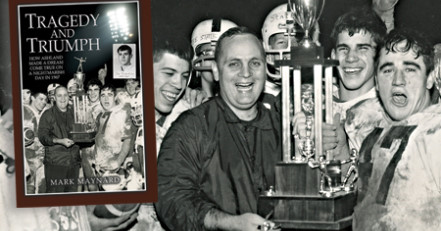
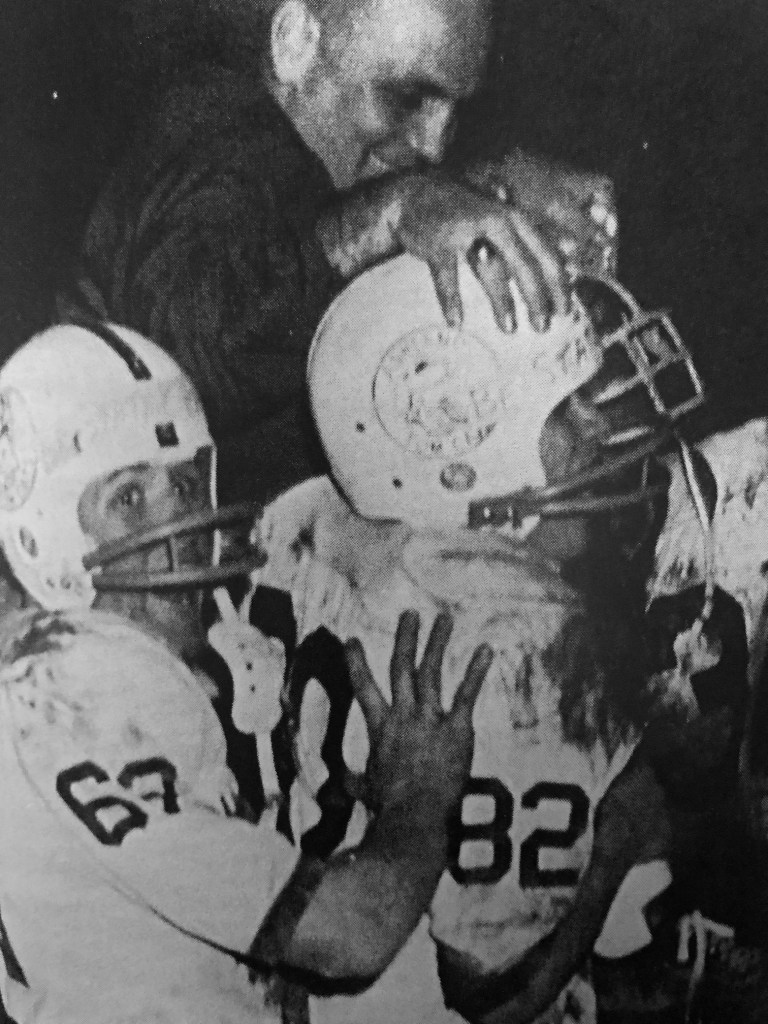
ASHLAND, Ky. – Ashland’s 1970 football season became a turning point in coach Herb Conley’s career.

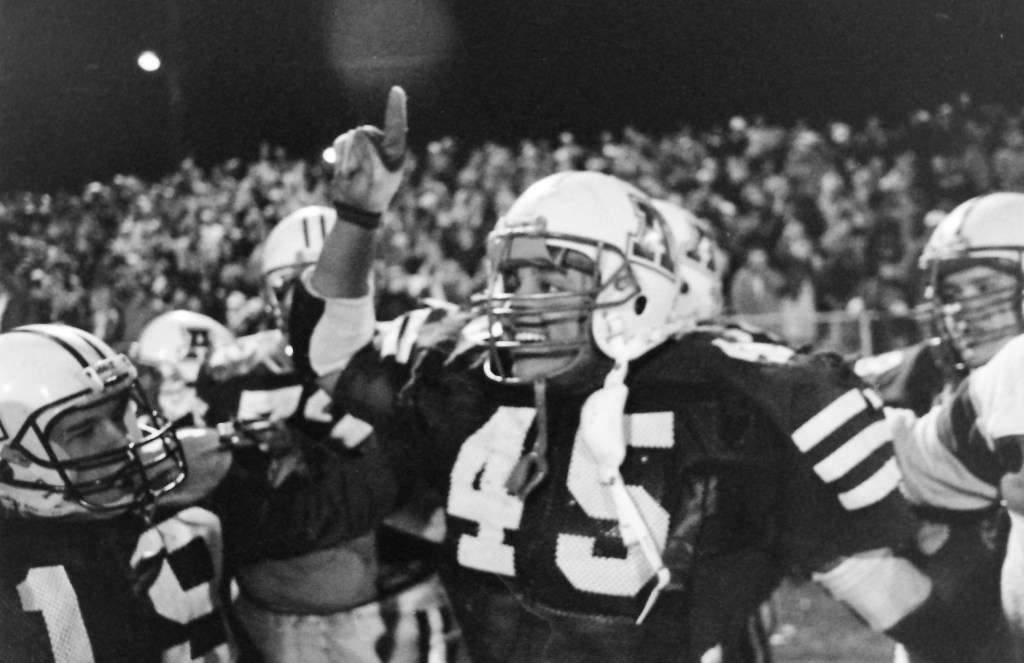
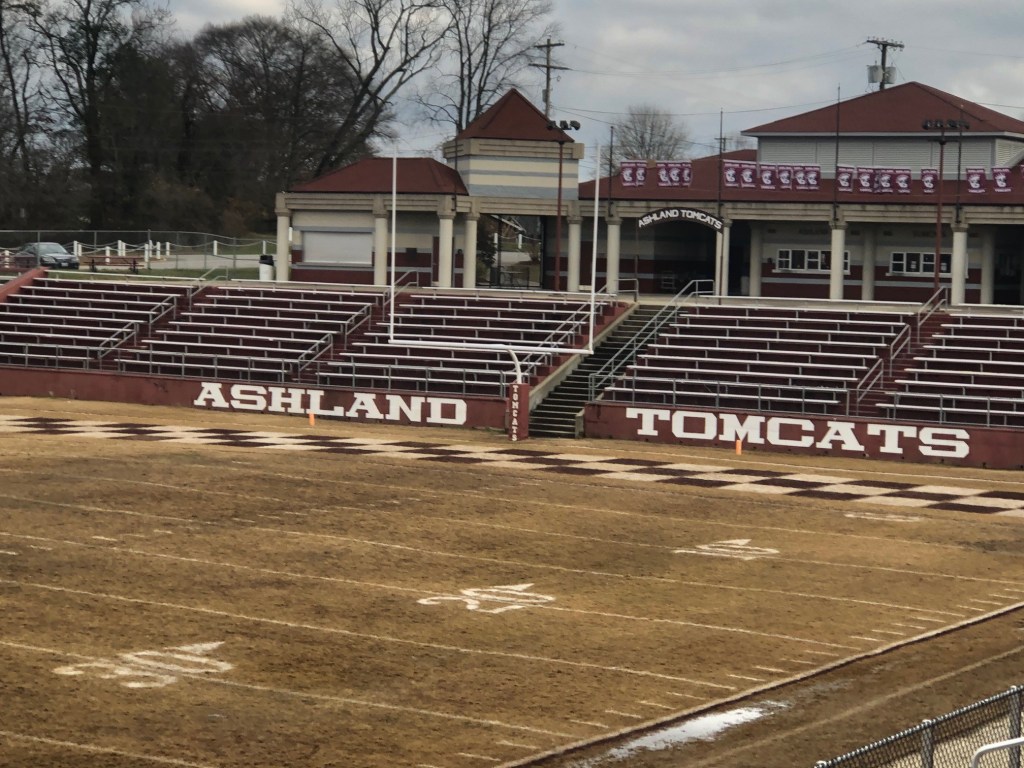
The Tomcats finished only 3-7 but it was a 7-3 victory over Ironton at Tanks Stadium in the last game that provided enough to keep Coach Conley around. He introduced the wishbone for the first time in that one and controlled the ball enough to pull off the upset.

ADI sports editor Mike Reliford had written a column about Conley, saying people needed to give him a chance, on the day of the game. Radio voice Dick Martin (Dicky’s father) did the same on the broadcast. Those strong voices and Ashland’s strong play on that fateful night set the stage for what was to come – a 56-16 record over the next six years.

In episode 3 of TOMCAT TALES podcast, Coach Conley talks about that 1970 season. Click here to listen.

Great start, tough finish for 1969 Tomcats

ASHLAND, Ky. – Ashland coach Herb Conley and journalist Mark Maynard delve into the 1969 Tomcat football season in the second episode of TOMCAT TALES the podcast.

Ashland opened the 1969 season with one-sided wins over Catlettsburg 75-0 and Middlesboro 42-0, stoking a fan base hungry for more. But it didn’t happen. The Tomcats fell to Stonewall Jackson, 14-8, and were 4-4 heading into a gauntlet of a stretch run: Fort Thomas Highlands, Covington Catholic and Ironton.

Ashland lost all three games to finish 4-7. That fan base, who was giddy after week two, was starting to look wonder if hiring young Herb Conley was the right move after winning the 1967 state title.

Click HERE to listen to the podcast.

Until next summer: A salute to the 2020 CP-1 Hall of Fame class

ASHLAND, Ky. – Today was supposed to be the day the Ashland Baseball CP-1 Hall of Fame opened its doors to the 2020 class.

But COVID-19 forced us to postpone the ceremony until August 2021. Maybe it was fitting that it rained this afternoon. It would have been about the time we were wrapping up the ceremony.

We’ve never had a rainout for a CP-1 ceremony. That record remains intact.

Just because we couldn’t have the ceremony today – and we’ll do our best to make up for it next summer – doesn’t mean we can’t take a second to honor this outstanding group of baseball players and coaches.

This class had some memorable names with it, including one man who has been described as the best athlete ever in Ashland. That would be Wilson Barrow, the flame-throwing black pitcher from the 1960s. His fastball ranked with lefties Bill Lynch and Don Gullett- now that’s fast.

In high school, Barrow bridged Booker T. Washington and Paul G. Blazer High School during the days of integration in 1962.

Barrow is part of a 10-man class that includes a mix of players and coaches and a few who did a little of both. Joining him are: Scott Crank, Mike Delaney, Brian Finkbone, Bill Hammond, French Harmon, Jon Hart, Cabot Keesey, Mark Moore and Mike Tussey.

The 10 inductees will bring the total to 70 on the way to 100 selections.

Here is a closer look at the 2020 inductees:

-Wilson Barrow, who played in Ashland’s inaugural Little League season in 1955, could make the mitt pop like few others who ever played in the park. Barrow’s fastball was compared to how Bill Lynch and Don Gullett threw later in the decade.

-Scott Crank was one of Ashland’s best three-sport athletes. He starred in football (quarterback), basketball (point guard) and baseball (shortstop) for the Tomcats in the late 1970s and early 1980s. He was a clutch hitter and slick-fielding shortstop for the Tomcats and Post 76.

-Mike Delaney is going in for his longtime coaching role with Post 76, basically keeping the program alive, but he was an outstanding player in his own rights as a middle infielder in the mid-1970s for the Ashland Tomcats and Post 76.

-Bryan Finkbone was the consummate leadoff hitter and the sparkplug for the Tomcats in the mid-1970s. His speed made him a pest for opposing pitchers who had a hard time keeping him off the bases. His all-out style made him a favorite with teammates.

-Bill Hammond has coached at CP-1 for many summers and continues as a co-coach with Delaney for Post 76. He was also a standout pitcher for the Tomcats and Post 76 in the mid-1970s and became an outstanding teacher of the pitching craft.

-French Harmon was a solid contributor as a player for the Tomcats in the late 1970s, but it was his coaching skills that make him a CP-1 Hall of Famer. He led a Connie Mack League resurgence in the late 1980s and early 1990s and was instrumental in CP-1 Hall of Famer Juan Thomas’ career, along with many others.

-Jon Hart’s smooth swing made him a feared hitter for the Tomcats, Post 76, Stan Musial and Marshall University. If he didn’t beat you with his bat, he’d do it with the glove. Hart was one of the top all-around players wherever he played in his career.

-Cabot Keesey spanned the late 1970s and early 1980s as well and was a pure hitter who swung the bat as well as anyone and was also a strong defensive player, both in the infield and outfield, throughout his playing career that included the Tomcats, Post 76 and Stan Musial.

-Mark Moore played for the Tomcats and Post 76 and then another 10 years on the Stan Musial level, making him one of the all-time veterans of the park. He hit for power and played flawlessly at shortstop, making every team he played for better.

-Mike Tussey, who coached youth league baseball for 22 years and won a state championship in 1988 with the Stan Musial adult league where he won more than 200 games in 10 seasons, was also a cable television broadcaster who was in the booth for countless high school and American Legion games in the 1970s and 1980s.