Morehead State University HOF broadcaster pens fictional baseball book to inspire kids to read more

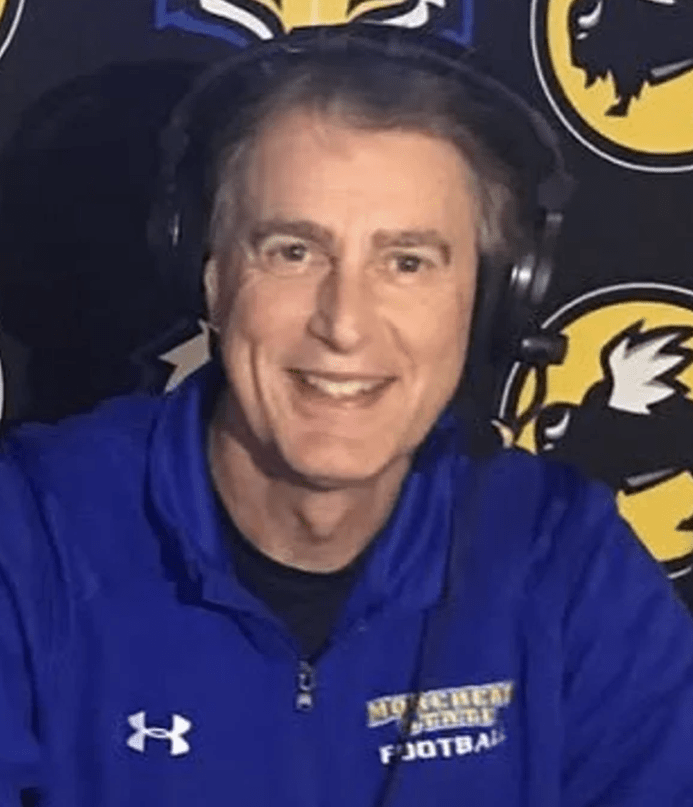
Congratulations to Chuck Mraz, a member of the Kentucky Broadcasters Association Hall of Fame and the longtime radio voice of the Morehead State Eagles football and basketball teams, on penning his first book. Over the years, Chuck has become not only a respected broadcaster, but also a good friend.

Now, he’s taking his storytelling talents in a new direction with his book, “Baseball Stories for Kids,” a collection of five fictional baseball stories aimed at encouraging elementary-age children to read more. The 220-page book features well-developed characters, relatable situations and stories that are both fun and meaningful.

In a world where children — and plenty of grandchildren, too — spend so much time in front of screens, books often get pushed aside. That concern was one of the biggest motivations behind Mraz writing this collection. He wanted to create something wholesome and engaging that could help spark a love of reading again. The stories are family-friendly and G-rated, free from the negativity and divisive issues that seem to dominate much of today’s media.

Baseball has always been one of Chuck’s greatest passions. He currently serves as an assistant coach for the Rowan County High School baseball team, and he drew from some of his own childhood experiences while writing the stories. Anyone who grew up in the 1960s or 1970s may especially enjoy the nostalgic feel woven throughout the book.

While the stories are written with younger readers in mind — perfect for elementary school libraries or family bookshelves — adults who remember their own sandlot baseball days will likely find themselves smiling along the way. Beyond baseball, the stories carry positive lessons about teamwork, perseverance, friendship and growing up.

Chuck said his hope is that the book motivates children to pick up more books — not just his — because reading remains “the foundation for academic careers.”

For years, Mraz used his voice to paint vivid pictures during Morehead State football and basketball broadcasts. He was always prepared, professional and passionate about his work. Now, he’s using those same storytelling skills on the printed page, hoping to encourage young readers to turn pages instead of scrolling screens.

Chuck Mraz

Although the book isn’t focused on teaching baseball fundamentals, it places its fictional characters in situations that young athletes — and their parents — will easily recognize. The messages are positive, the stories flow naturally from one to the next, and the overall reading experience is enjoyable from start to finish.

The project truly became a family effort. Chuck’s wife, Joni, and daughter, Megan, assisted with editing, while Megan also designed the cover and handled the page layout.

“Baseball Stories for Kids” is “Baseball Stories for Kids” is available on Amazon or by contacting Chuck Mraz at cmraz240@yahoo.com

FLASHBACK: Love and devotion

This was written back in 2014 following the death of Herb Conley’s wife, Janice. It is a tribute to her but also to every coach’s wife. They go through more than you think. Herb called Janice his “inspiration” and the thought of them reuniting made the sting of his death easier to bear.

Here is the column:

Nobody ever pushed around Herb Conley. Nobody ever dared.

He was tough as nails. As a kid growing up. As a blossoming athlete. As a coach. As a father. Always, tough as nails.

He was a Beast, and this Beast had a Beauty.

Her name was Janice.

Janice was the love of his life, the one person who could tame this Tough Guy who would become a football coaching legend in his hometown.

She could melt him with the batting of her eyes.

She had him at hello and, boy, was he ever glad she did.

Whenever things were tough, and they weren’t always easy for Herb Conley, he had Janice.

Always there to lift him up.

Always there to tell him how proud she was of him.

Always there to keep him in line.

Whenever Herb Conley needed a boost, she was there for him. She could pick up his spirit like he picked up weights. Effortlessly.

They lived a storybook life, these high school sweethearts did. That’s because anything they did together, they did well. They were soulmates who raised three boys in their hometown. Grew old together, yet still loved each other like school kids.

She had one of the toughest jobs on earth, that of being the wife of a high school football coach, in a town that expected a lot from its team. Every week. Every game. Every minute.

We’re with you win or tie, they would say.

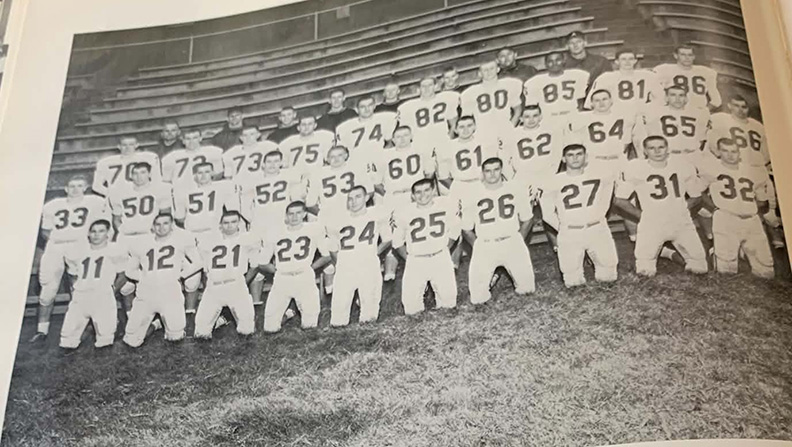
Conley was no newcomer when he became Ashland’s head coach in 1968. He was a former star player for the Tomcats, a member of their last undefeated team in 1958, and had been an assistant the prior two years under Jake Hallum. The ’67 Tomcats won a state championship and Herbie was a big reason why.

But when you step into that head coaching position, the pressure intensifies. Ask anyone who has coached here where your fate is determined every Friday night.

When the Tomcats weren’t winning like the fans thought they should be winning, the fingers started pointing and they were pointing in Herb’s direction in 1970.

Legend or not, they were ready to run him out of town.

Ashland had lost to Russell for the first time in school history and angry fans trashed Conley’s yard and home with garbage.

“Herb wasn’t always the legend he is now,” said longtime friend Bill Tom Ross. “Early in a coach’s career, you have difficulties. I had the same thing at Boyd County (his first head coaching assignment).

“Imagine being Herb Conley’s wife? The toughness, the mental toughness, raising three sons. That house was overflowing with testosterone.”

But Ross remembers Janice as being upbeat in the face of adversity. She was that to the end.

“I remember back in those days she was never down, never depressed,” said Ross, who credits his wife Brenda with his coaching success.

The life of the high school coach’s wife is never easy. The divorce rate is high. The criticism you hear from fans can be cruel.

“Not only in the stands but, when you’re coaching at a high-profile place like Ashland, you can’t go to the grocery store or the bank without hearing something,” Ross said. “Somebody is always talking about the game.”

But the wife must bite her tongue, smile and take it. They must be there for their husband and their family. They better be strong.

“I’m not sure in that household that Janice wasn’t the toughest one of the bunch,” Ross said.

Back in 1970, when things were tough, a letter came to the Conley’s house. Inside it had a cartoon drawn of a man with a noose around his neck with another man leading him out of town.

Janice never showed it to Herb, but he found it rummaging through a drawer a couple of years later.

“What’s this?” he asked her.

 “Oh, where do you find that?” she said. “I thought I threw that away. It was nothing.”

She told Herb it had come a few years ago, but she didn’t want to bother him with it. Truth is, Janice was protecting her man from one more dart being thrown in his direction.

The rest of the story went well for Herb Conley after he survived that 1970 season. The Tomcats took off on a six-year run that produced 56 victories, a state runner-up finish in 1972 and the 1975 state at-large championship.

Guess who was there cheering him all the way?

She loved her Tomcats. Always. Even in her last days of a losing battle with cancer, when she was mostly unresponsive, when Herb was wearing a Tomcat shirt she would look down at it and then up to his face. Down again and up to his face.

It’s been a difficult 19 months for the Conleys, who were set to enjoy a long retirement together with long walks on the beach. They loved their stretch of paradise on Myrtle Beach.

They enjoyed life together, right to the end. It was a never-ending love story like you wouldn’t believe.

Coaches’ wives are given something special inside. They are patient and thick-skinned. They know the importance of supporting their man through the good times and bad.

Janice Conley was like that for Herb.

“They were the ultimate team,” said Ross. “He didn’t lose her. He knows exactly where she is. He’s got that peace that passes all understanding.”

And he’ll never stop loving her.

Herb Conley was a Tomcat for the ages

Herb Conley was the kind of man communities are built on and sustained by — tough, faithful, loyal and unwavering in his convictions. He was, in every sense, a man’s man, but also a steady friend, a devoted husband, and a guiding presence to generations who needed one. And in Ashland, he will forever stand as a Tomcat for the ages.

His passing Tuesday night leaves a void that won’t soon be filled. It is a sad day for Tomcats everywhere. But for Conley, it was also a day of fulfillment. He lived with a deep and abiding faith in Jesus Christ, one he didn’t keep to himself. He shared it often — especially with his former players — and in his final chapter, he embraced that calling even more, becoming, as some would say, an “overnight evangelist.” He stepped into eternity with what he believed was the ultimate victory, holding fast to the promise of 2 Corinthians 5:8.

There is comfort, too, in knowing what that moment meant to him. He was reunited with Janice, his wife and the love of his life. That reunion was something he spoke of in his final days, a hope that eased the weight of goodbye. No more pain. No more suffering. Only peace.

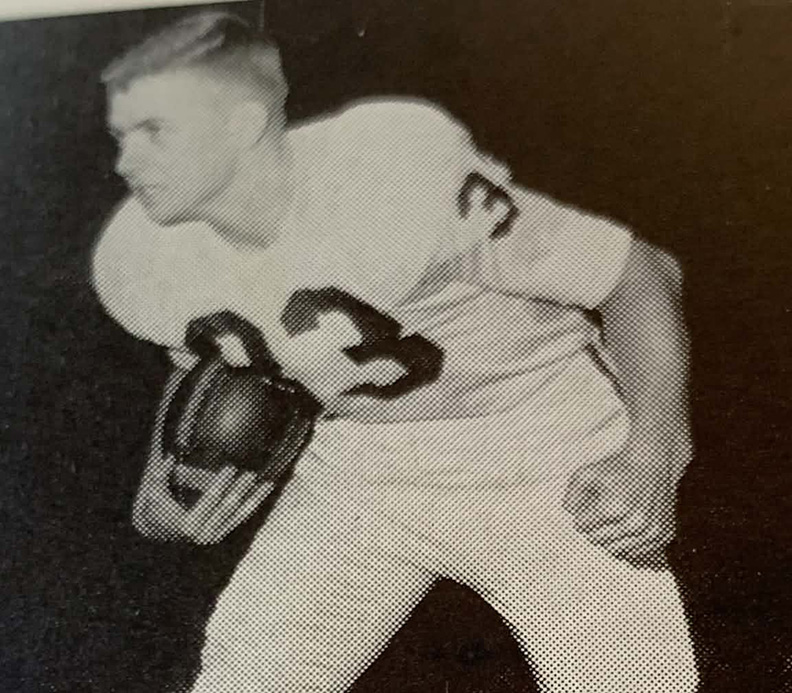
Conley’s story began in South Ashland, where he grew up admiring the great Tomcat teams of the 1950s. As a boy, he looked up to players whose names echoed through the community, never knowing he would one day join — and redefine — that legacy. When he broke onto the varsity roster as a sophomore in 1956, it was almost unheard of. But once he stepped on the field, he never stepped off. That moment sparked a three-year run that culminated in an undefeated 1958 season, a feat that stood unmatched for more than six decades.

He carried that same drive into his playing career beyond high school and later into coaching, where his true imprint was made. Herb Conley didn’t just coach football — he shaped men. His philosophy was simple and unmistakable: get tough. His teams reflected him — physical, relentless and unyielding. When you played against an Ashland team under Conley, you didn’t forget it by Monday morning.

Herb Conley’s legacy and connection with Tomcat football is everlasting.

From his early days as an assistant to his tenure as head coach from 1968 to 1976, Conley built a program rooted in grit. His teams earned respect across the state, highlighted by a runner-up finish in 1972 and a championship run in 1975. That same year, he was named Kentucky’s Coach of the Year — a fitting recognition for a man whose teams mirrored his identity.

But his influence didn’t stop on the field. Conley stepped away from coaching to invest in his family, raising his three sons with Janice, whom he often called “my inspiration.” Even in education, first as an assistant principal and later as a principal, he carried the same standard. Discipline, accountability and respect weren’t optional — they were expected. And whether you were a student, teacher, or player, you understood quickly that he meant every word.

There was an edge to him, no doubt. A certain look, a scrunch of the nose, and you knew you were in for it. But beneath that toughness was consistency — and a desire to bring out the best in people, whether they appreciated it in the moment or not.

In Ashland, his legacy is etched in more than memory. It stands in bronze at Putnam Stadium, overlooking the field he loved in a familiar stance — watchful, commanding, present. It is a fitting tribute, but even that can’t fully capture what he meant to the program and the community.

If there were a Mount Rushmore for Ashland, Herb Conley would be the first name carved in stone.

He lived every role imaginable — player, coach, mentor, administrator, father, grandfather, fan. His influence stretched across generations, touching lives in ways that statistics and records never could.

Some legacies fade with time. His won’t.

Because in Ashland, and in the hearts of those who knew him, Herb Conley isn’t just remembered.

He endures.

The toughest job in the 16th Region this season

The toughest job in the 16th Region this season had nothing to do with coaching, handling the basketball or knocking down shots from beyond the arc.

It had everything to do with following a familiar voice—one that had become iconic.

Tyler Rowland stepped into the enormous shoes of the late, great Dicky Martin. When Dicky passed away toward the end of the high school football season, the question of who could follow him wasn’t really meant to be answered.

Who could replace him?

The answer then—and now—is nobody.

Dicky Martin was an original. One of one. A voice so memorable that replays of his calls still circulate on Facebook, and people still stop to listen. He is missed, without question, and things simply aren’t the same.

Tyler Rowland has taken on the toughest job in the 16th Region – the challenge of replacing the legendary broadcaster Dicky Martin as the Voice of the Ashland Tomcats. He is near the end of his first season.

But the man who stepped into his place has done a remarkable job.

Tyler Rowland isn’t Dicky Martin—and expecting him to be would be unfair to anyone. What Tyler has done, though, is begin to grow comfortable in a seat Dicky occupied for more than 50 years of Tomcat sports. Dicky was loud, proud, and unmistakable—a voice even rival fans couldn’t help but hear night after night. He was must-listen radio.

Times have changed, even during Dicky’s era. High school sports once lived exclusively on the radio. Now, fans can watch games from their living rooms through streaming services like My Town TV and Kool Hits. I’m thankful for both. Watching is fun, though I hope radio never disappears. There’s a charm to it that pulls you back in time.

This region has produced a Hall of Fame list of broadcasters—so many that naming them risks leaving someone out. Tyler Rowland has the potential to belong in that conversation.

For Ashland fans especially, radio remains a lifeline. Whether it’s listening live during a game or tuning in afterward for Ryan Bonner’s postgame analysis with Tyler, people are still listening. And if you’ve tuned in, what you’ve heard is a polished broadcaster who improves with every call.

Tyler considers himself a disciple of Dicky, and it shows—especially in his preparation. An accountant by day, his command of numbers is impressive. He’s a savant with statistics. While he has years of broadcasting experience, including time with My Town TV, radio is a different animal. Early on, Tyler was known for his loud excitement on TV. As his voice has matured, it’s grown softer—but also stronger—on the radio.

Tomcat radio is unlike most broadcasts. The tradition built by the Martin family—Dicky and his father, Dick—set the standard for 75 years. Imagine being the person tasked with replacing that kind of history.

It’s overwhelming. But Tyler never let it swallow him, largely because of how much he admired the man who came before him.

The advice he heard most was simple: Don’t try to be Dicky. Be Tyler.

That’s exactly what he’s done. And by doing so, he’s validated the decision made by Tomcat athletic director Jim Conway to hand him the microphone. Tyler’s play-by-play is descriptive, his knowledge sound. You always know the score, the time on the clock, and how far that corner jumper really was. He paints a clear picture without being overly excitable. His strong vocabulary and statistical awareness make his calls both informative and entertaining.

I’ve listened to several of his broadcasts and come away impressed every time. Even when things aren’t going Ashland’s way, he doesn’t rush to blame officials. You might hear, “I’m not sure about that one,” and then he moves on. It’s professional broadcasting—with just the right tint of maroon.

I listened to his call of the most recent Ashland–Boyd County game, a high-scoring Tomcat win. I watched on YouTube while listening to Tyler’s call—barely a second of delay—and he didn’t miss a thing. What he described matched exactly what I was seeing. It was impressive.

If you haven’t listened to this young man yet, give him a chance.

Replacing Dicky Martin was a mission impossible. Everyone knew nobody could truly do it.

But Tyler Rowland is the next man up—and he is the right man to handle the toughest job in the 16th Region, and maybe in the entire state of Kentucky.

And I know this much: Dicky would approve of the job that Tyler has done.