
Gary Wright was an accomplished man, although his humble nature kept many people from fully realizing just how much he had achieved.
He was a tremendous businessman and entrepreneur who, after obtaining his master’s degree from Xavier University in Cincinnati, established the Southwestern College of Business in the Cincinnati area. By the time he retired to St. Pete Beach, Florida, in 2004, the college had grown to five locations.
Gary was successful in family life, too. He was married to Jean for 54 years and cared deeply for his daughters, Christine and Holly. Family was of utmost importance to him.
He was also a two-sport star at Ashland High School, starting at second base as a freshman in 1957 through the 1960 spring season. He would walk from Coles Junior High to practice during an era when it was unheard of for freshman to even make the varsity team. Most sophomores never saw a spot on a varsity roster. Gary was invited to try out because he was that good.
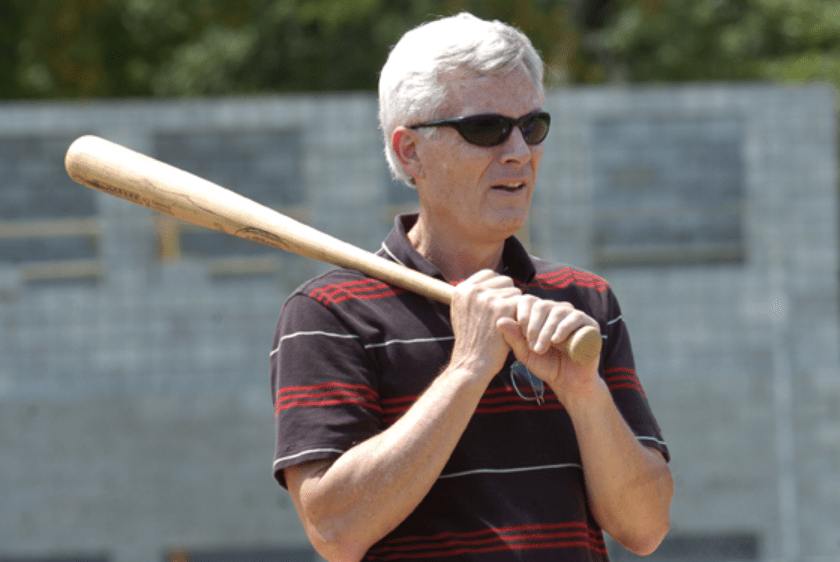
And then there was basketball. He played two years and helped coach Bob Wright’s first team at Ashland in 1960 win the 16th Region title and earn a berth in the Sweet Sixteen, where a first-round loss to Maysville ended the campaign. His teammates included Larry Conley, Harold Sargent, Gene Smith and the other stars from the 1961 state championship team.
He was instrumental in getting them to the Sweet Sixteen in 1960, scoring double figures in four of his final seven games and making the All-District team.
The two-sport athlete was good enough to earn a scholarship to Centre College, where he played both sports for four years while earning his undergraduate degree. Gary’s love of sports was paying off handsomely.
Among Gary’s many attributes was his love of family, friends and teammates. He also loved growing up in Ashland with his brothers, Robert and Tony, and with a mother (Geneva) and father (T.R.) who did what they could to help their boys succeed. All three brothers were good athletes, and that upbringing helped set Gary on a path that would serve him well.
He cherished his days in Ashland during the 1950s. Like many boys of that time, Central Park was his playground, a place where all worries went away, where skills were learned and then showcased on the big diamond they called CP-1. His father knew how important it was to get boys started young, putting together Pony League teams, taking them all over to play. He had a hand in bringing Babe Ruth baseball and American Legion baseball to town.
T.R. Wright coached his son — and many other boys — during the 1950s and helped lay the groundwork for a tremendous youth baseball program that brought state and even national acclaim to Ashland. He did it on the fields at Central Park, and the cathedral of them all was CP-1. It was called that because of the newspaper. When they ran the list of schedules for the week, they listed the fields as CP-1 and CP-2, which was later mostly used for softball and now soccer.
With Gary’s career established and retirement just beginning, he returned to Ashland in 2008 and visited that big diamond again. He ran onto the field, breathed in the air, ran his fingers through the sand, and the memories of those good days flooded his mind. He could picture scooping up the grounder – and a handful of sand – or delivering the game-winning hit with the crack of bat – not the ping we hear now. He could see how pleased his father was with all the boys as they practiced what he had preached.
Gary was overwhelmed by the emotions that came from his visit, and in true Gary Wright fashion, he did something about it. The field was badly in need of renovation, but talk wasn’t going to make that happen. He put $125,000 behind a renovation project that included a new press box named in his father’s honor.
That same day, when Gary visited his old playing grounds, he ran into his friend David Carter, who had similar experiences at CP-1. Together, they began what was coined the “CP-1 Movement,” and boy, did it ever move.
There were annual reunions for former players, coaches, umpires and fans who remembered playing on that diamond.
Carter, an entrepreneur himself, had the vision for a documentary. He put together “Ashland’s Field of Dreams,” and it aired on KET. It was so well done that it continues to air every year. Interviews with people who played at the park brought out raw emotion, and Carter, who passed away a couple of years ago, captured it brilliantly.
The reunions eventually evolved into the CP-1 Hall of Fame. That is when I became intimately involved, spearheading the event from 2015 through 2024, when 101 former players, coaches, umpires and one sportswriter were recognized each August.
It became a summer event that everybody looked forward to — a time for the reunion of teams and the reliving of days gone by. Treasured memories spilled out around that field again. There were tales of long home runs, bad hops in the sandy infield and the short right-field fence that gave us some cheap home runs.
You could almost see the kid come out in these men who may have played there decades earlier.
It never would have happened without Gary Wright’s compassion for what he had experienced there and his wildly generous donation that helped turn what had become a rundown baseball field into a showcase. When the old players came home, they could not believe their eyes.
This wasn’t the first time Gary’s generosity brought joy through baseball. His name adorns the baseball field at Centre College to this day.
But Gary was much more than a generous and kind man. He gave of himself — not just his money — to projects he cared deeply about helping. When I told him about a Christian ministry called Amy for Africa that was educating children in Uganda, he sent a large donation. Nobody asked him for it.
He simply wanted to make an impact wherever he could, and he had a soft spot for children.
You only get so many chances in life to make a difference, and it’s not always about finances. If you counted Gary Wright as a friend — and anybody who ever met him did — consider yourself fortunate.
His life had the kind of meaning everybody chases. He modeled a compassionate life in every way. How could he make his hometown — and, for that matter, the world — better? He did it with action, with thought and with confidence.
What he did by starting the CP-1 Movement brought joy to countless people. He stirred an abundance of memories and gave those who often thought they had been forgotten one more chance to be in the spotlight.
But not once did he want that spotlight on himself.
It was never about him.
It was always about others.
I loved calling him and talking about how the latest class of the CP-1 Hall of Fame reacted to the celebration — how some were overcome with emotion, choking back tears while giving their induction speeches.
“Chills!” he would say to me.
Gary died on August 20 at the age of 84 after a courageous battle with Parkinson’s. There will be no memorial service, per his wishes.
Gary Wright stayed humble to the end, but his impact will not be forgotten.


a great article, I had a good fortune to meet Gary and David Carter at the Don Caesar in Saint Petersburg, Florida and we spent the afternoon talking baseball and Ashland I had such a good time and you great article brought back that memory for me. Thank you Mark
LikeLike